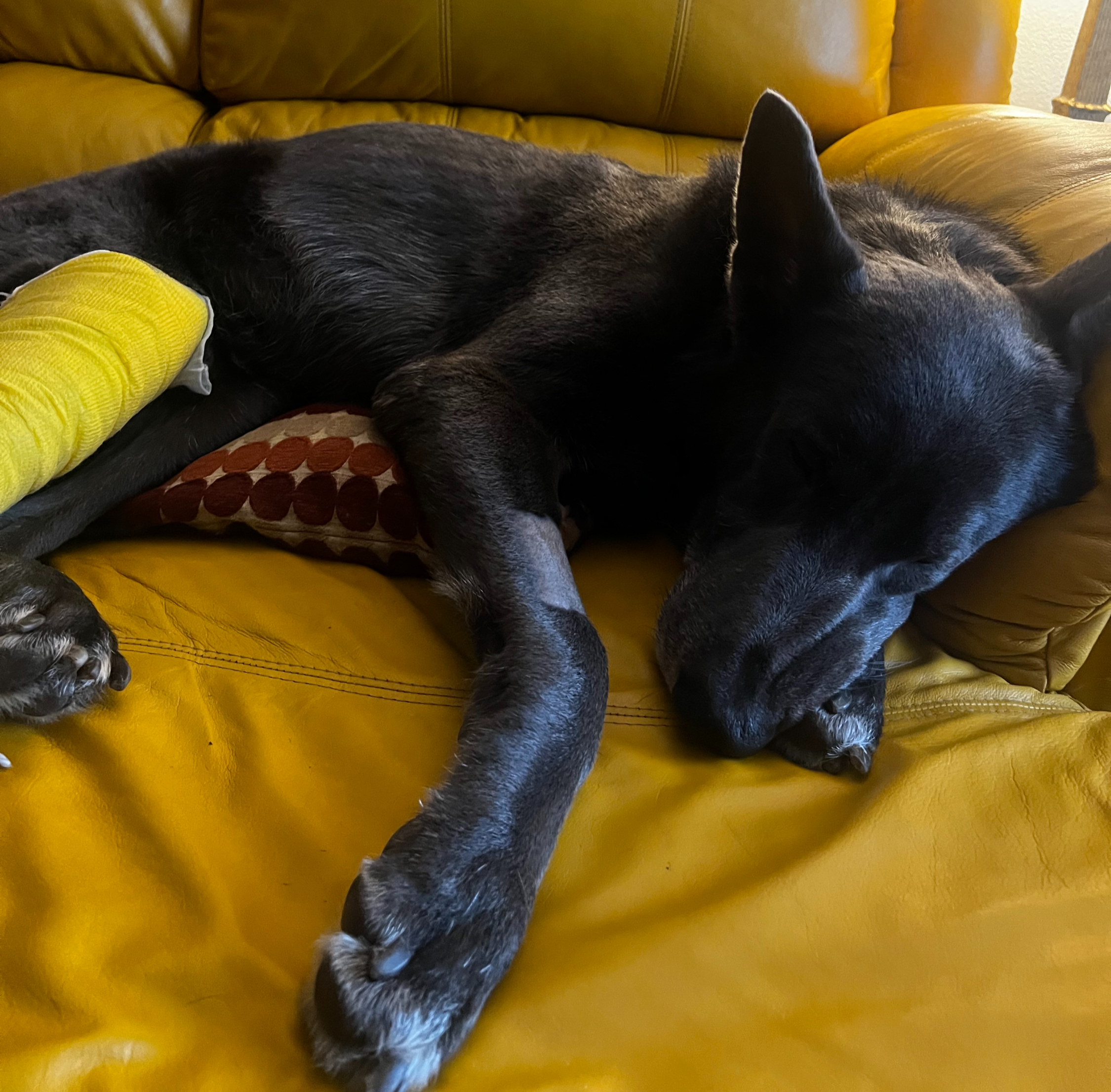
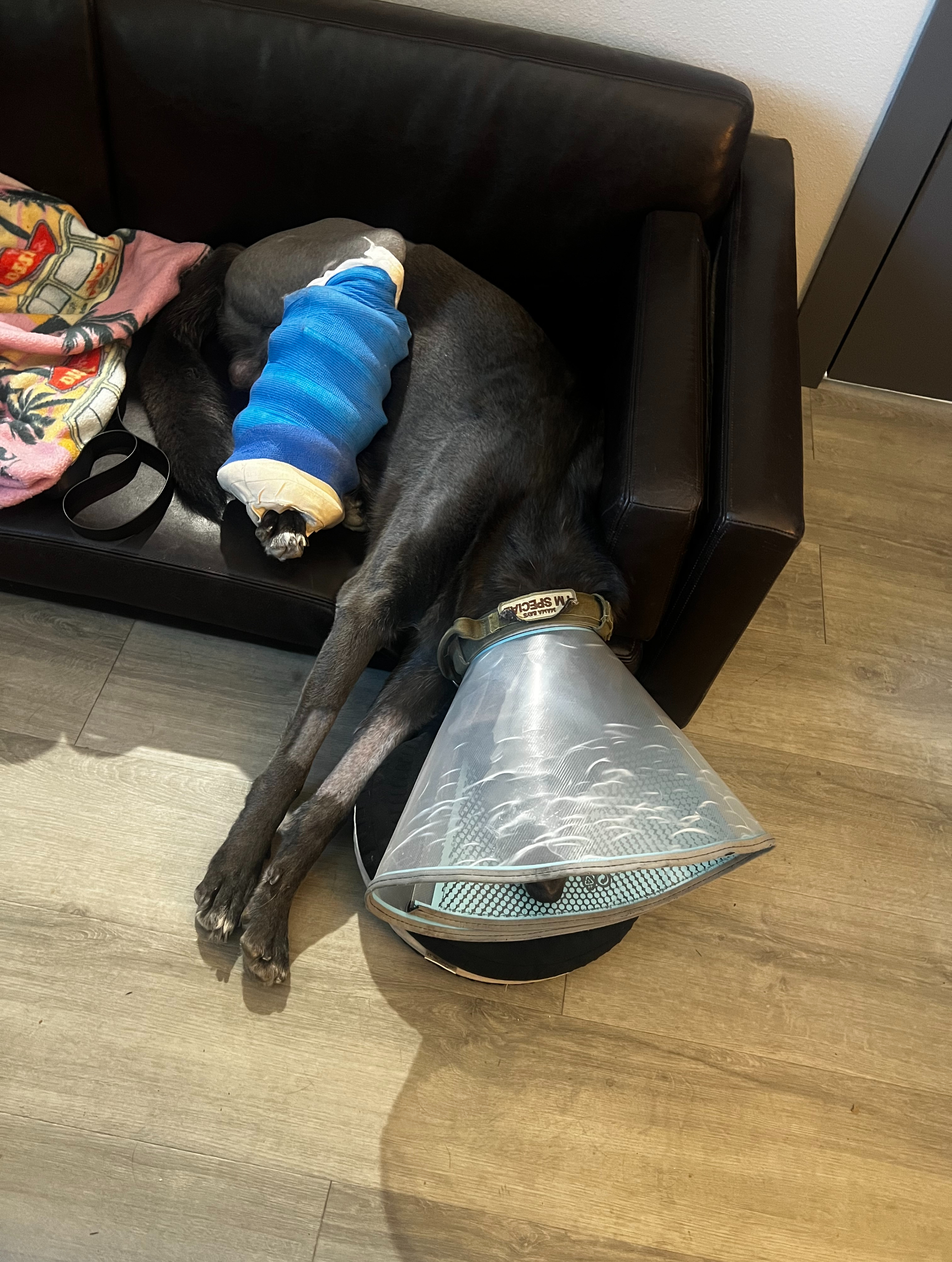
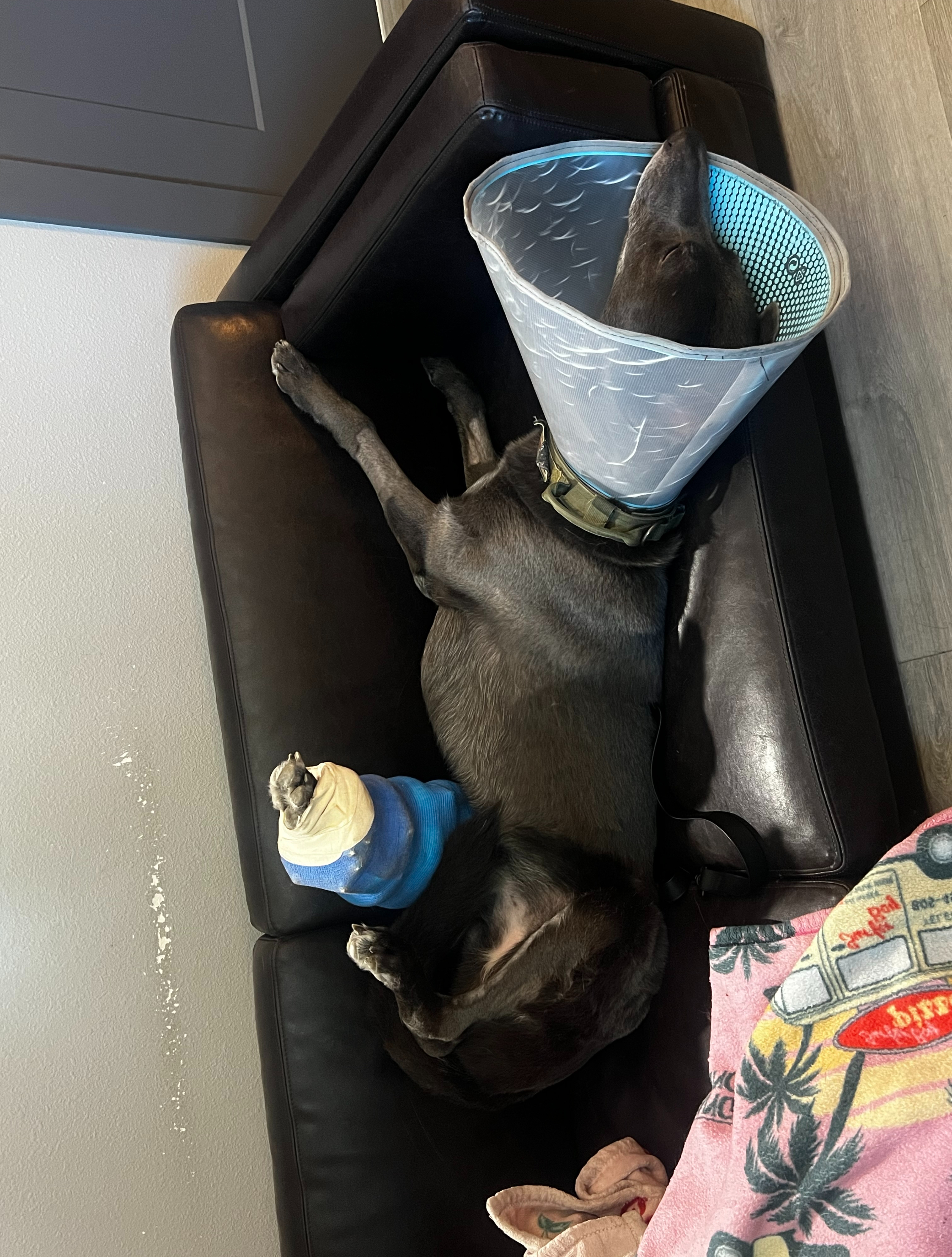
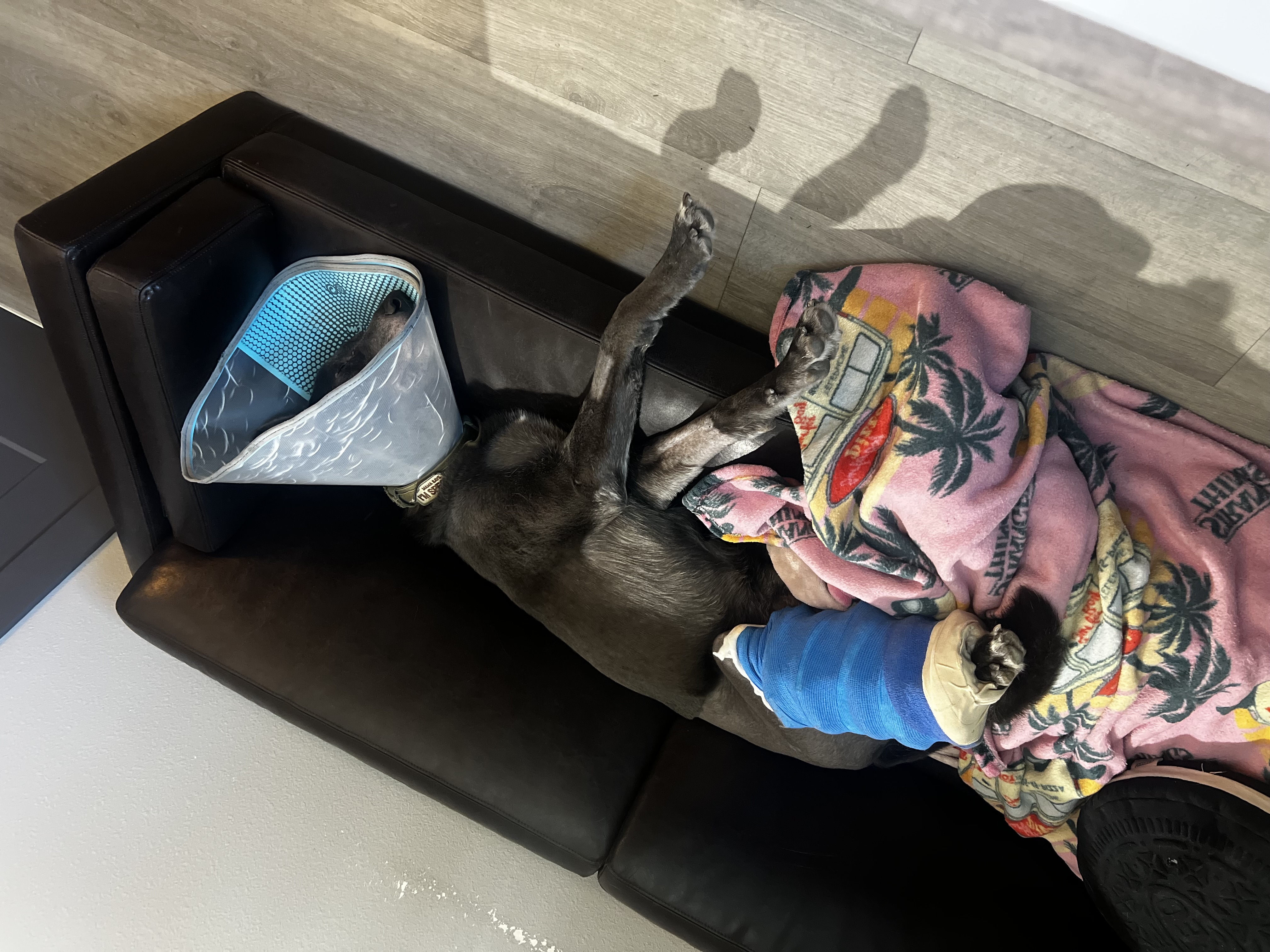
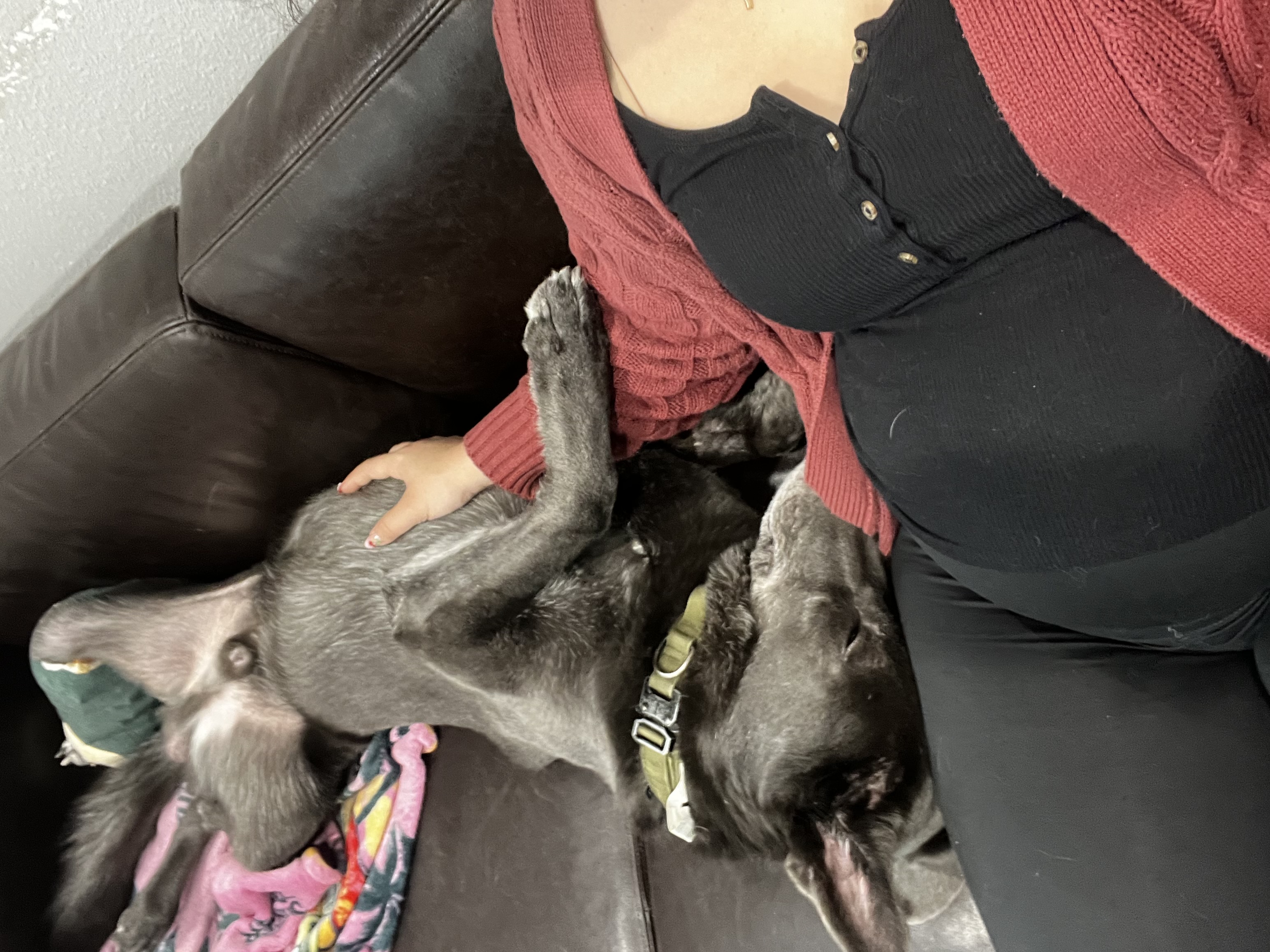
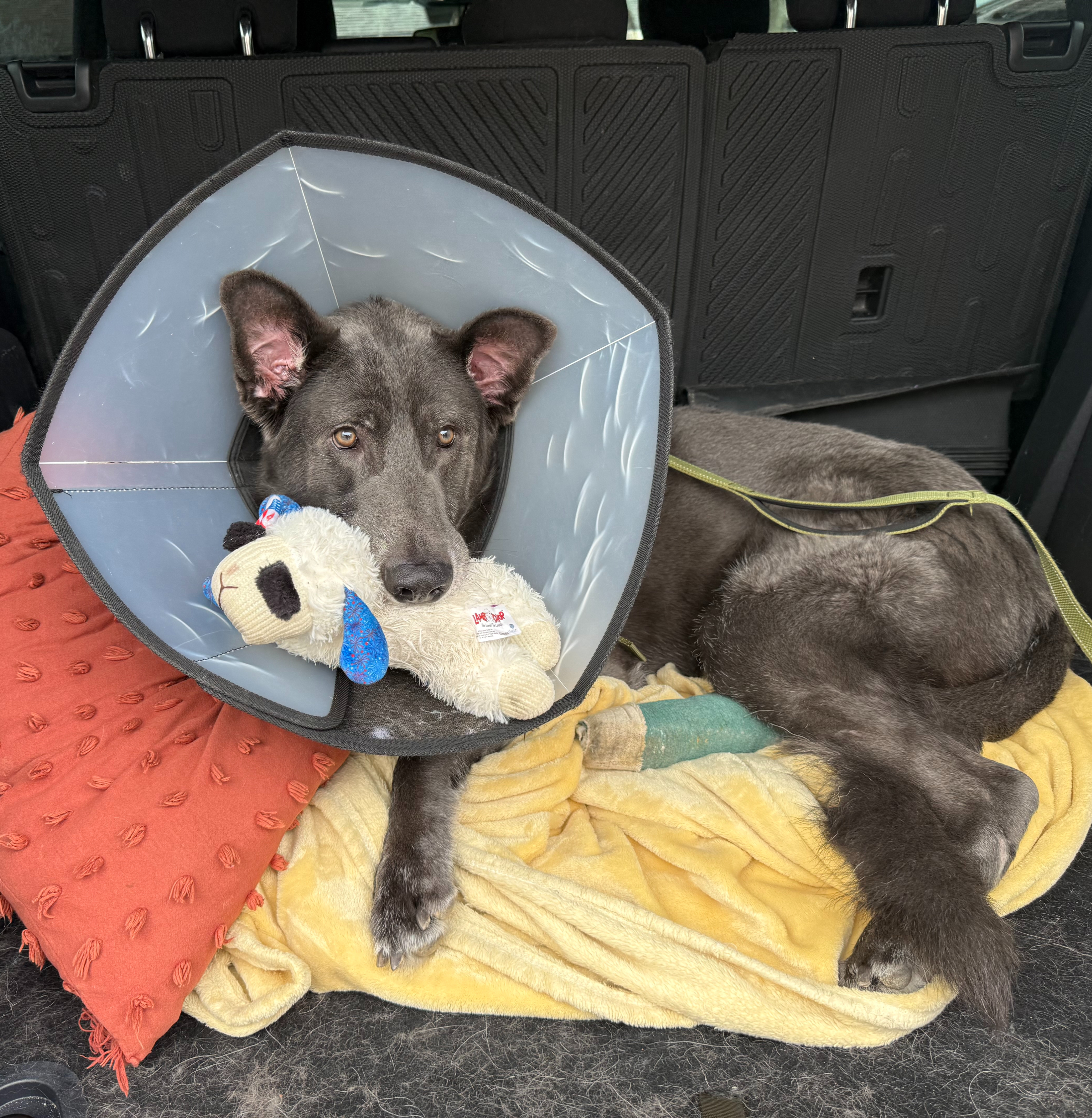
Griz's Story
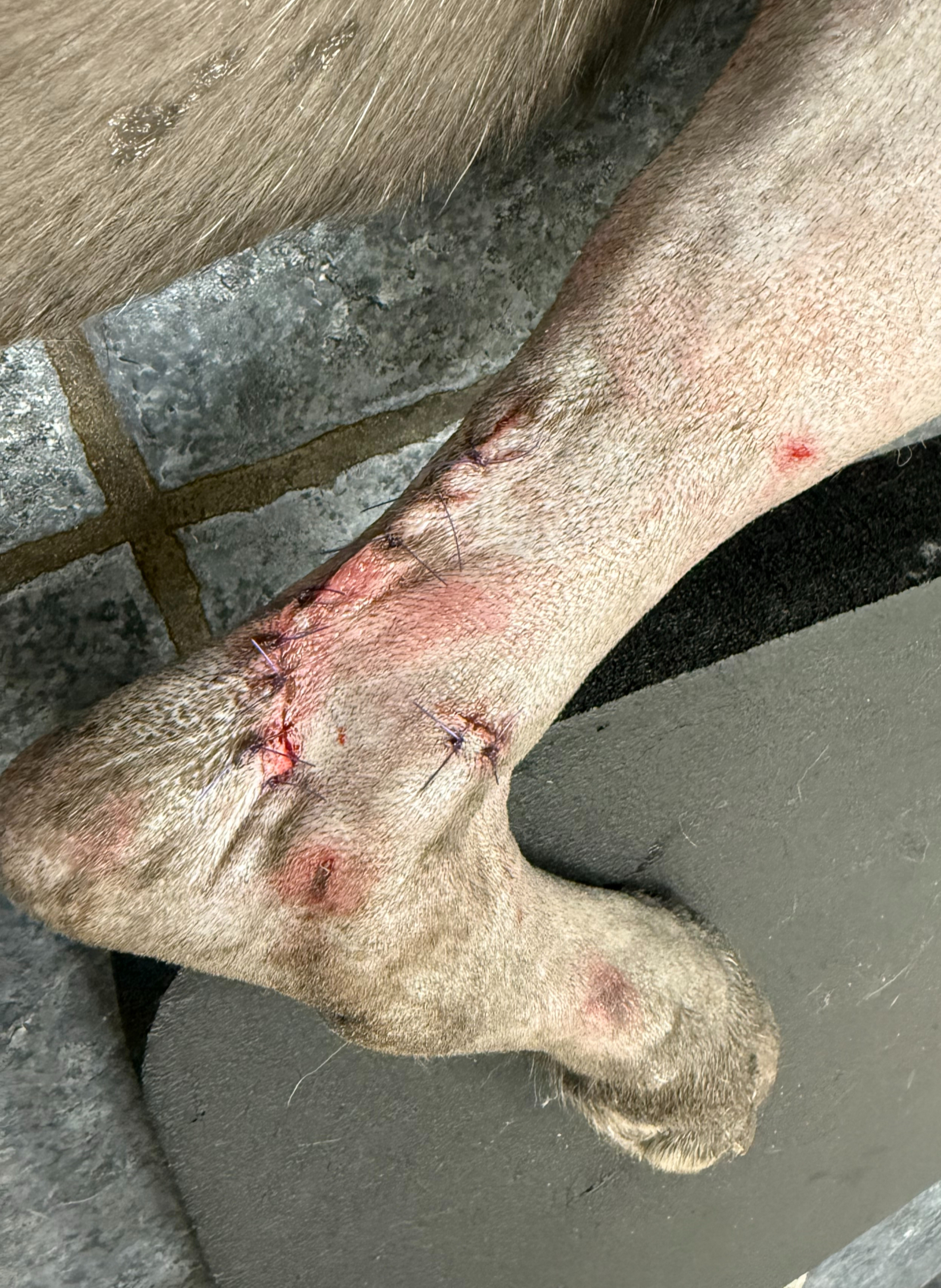
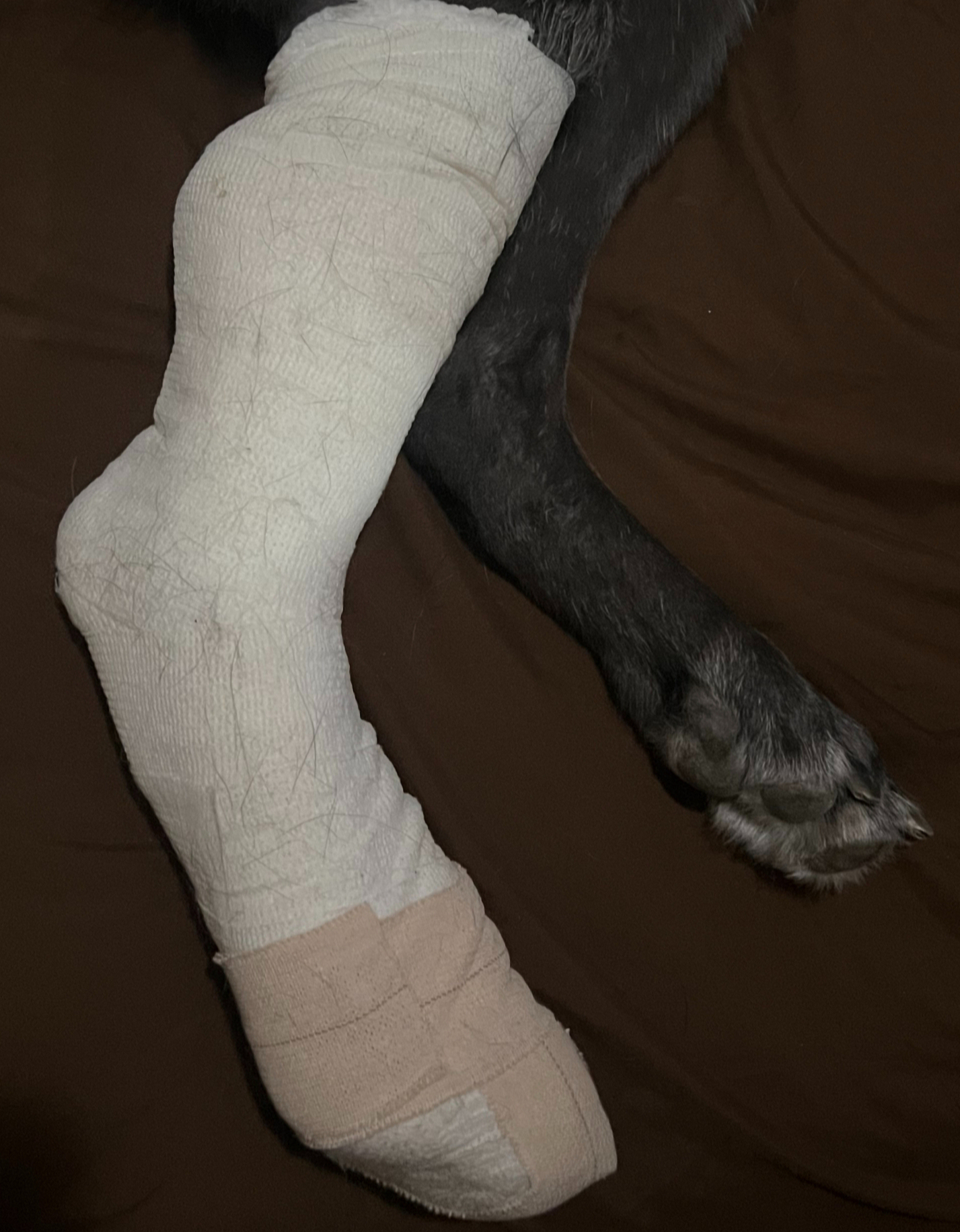
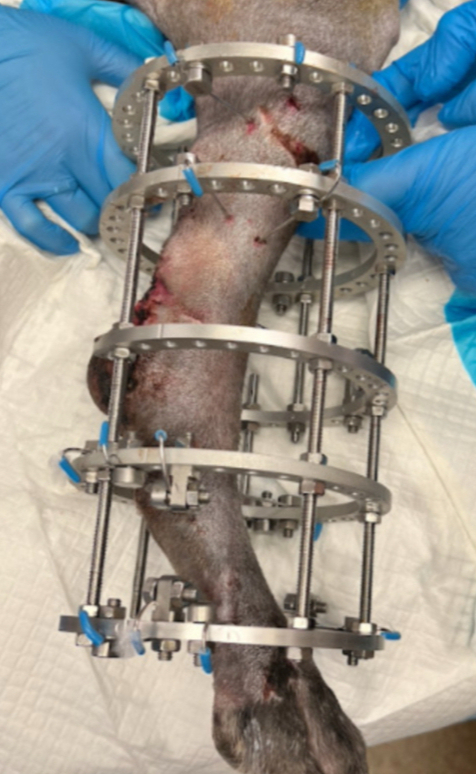
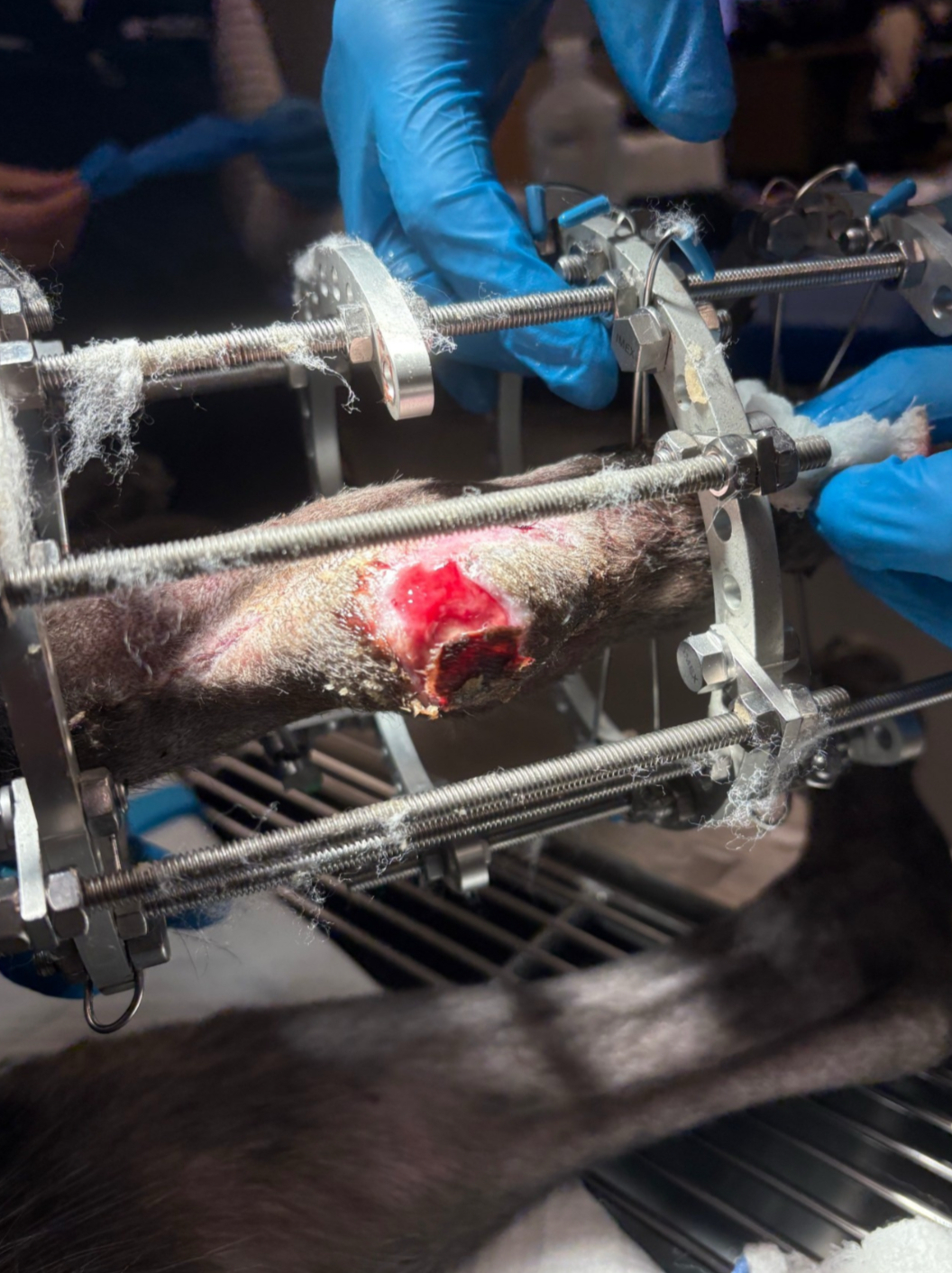
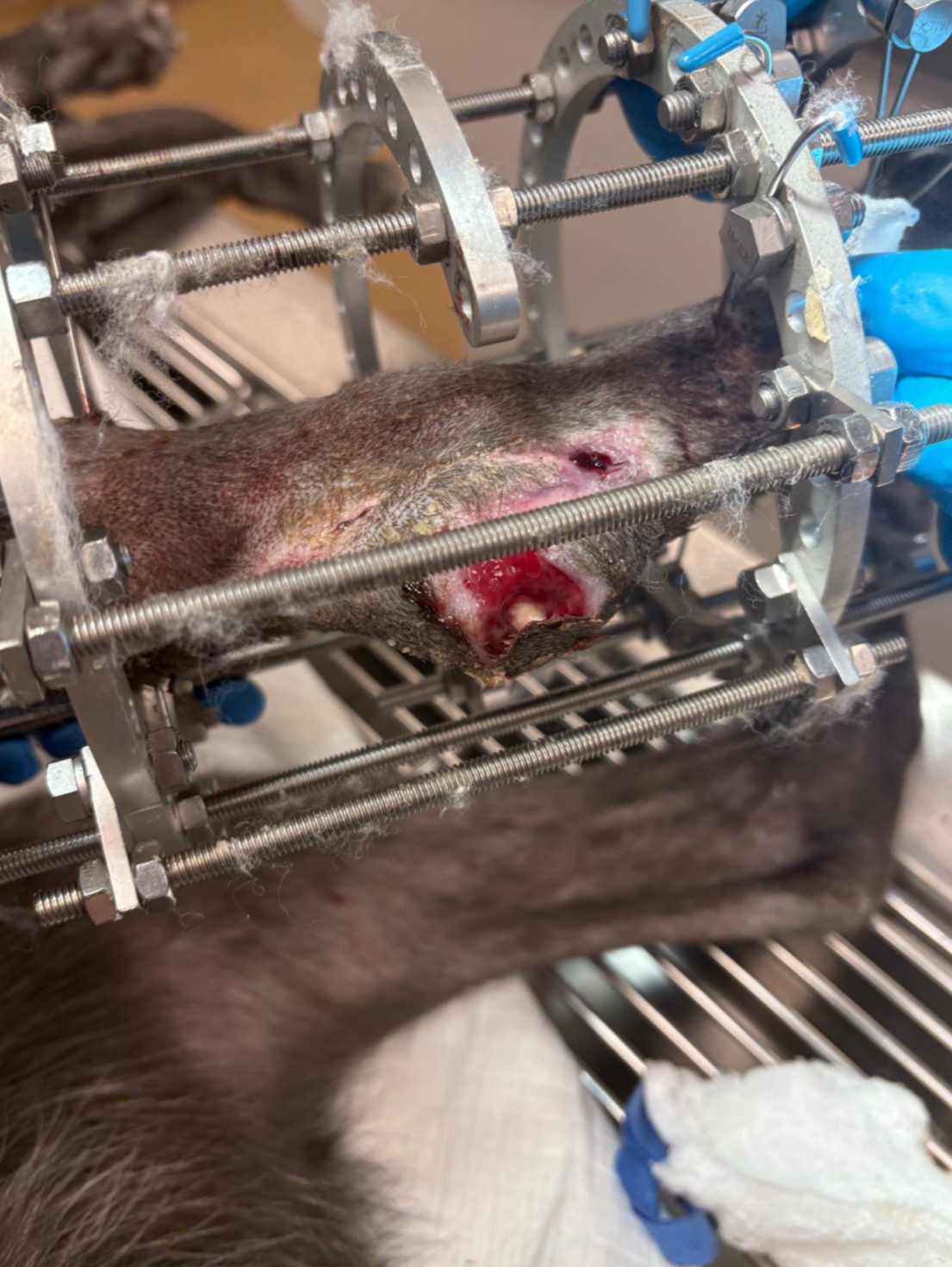
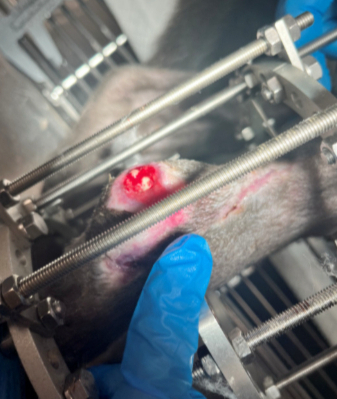
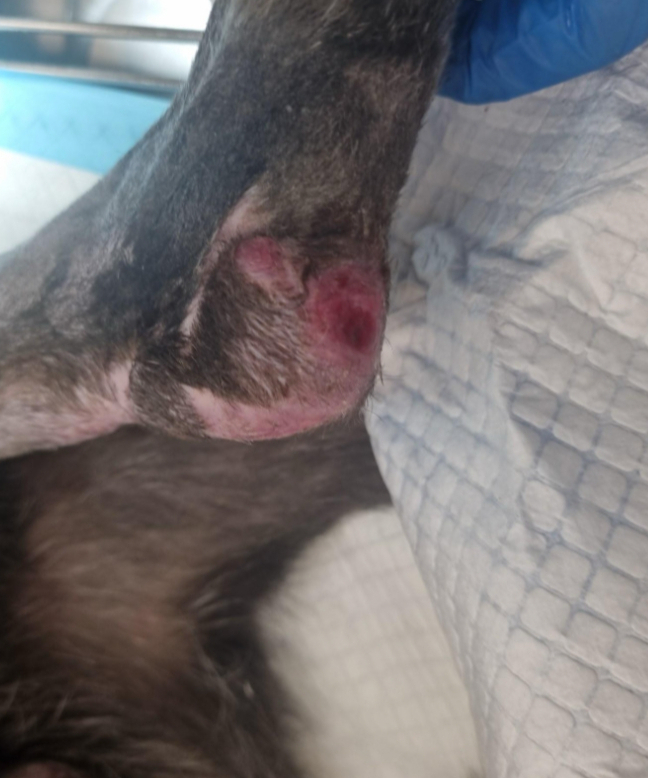
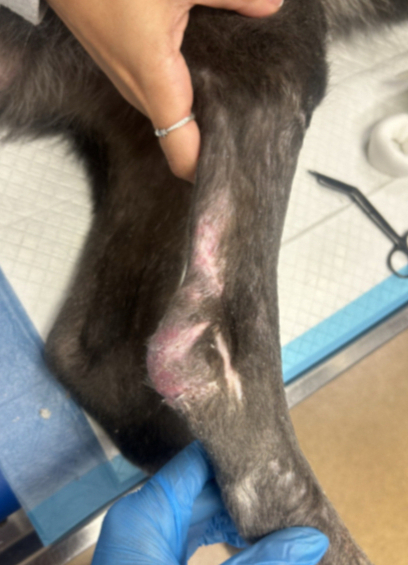
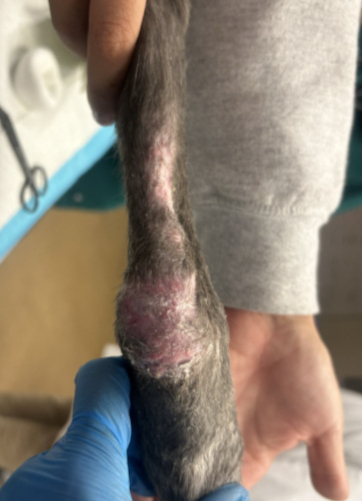
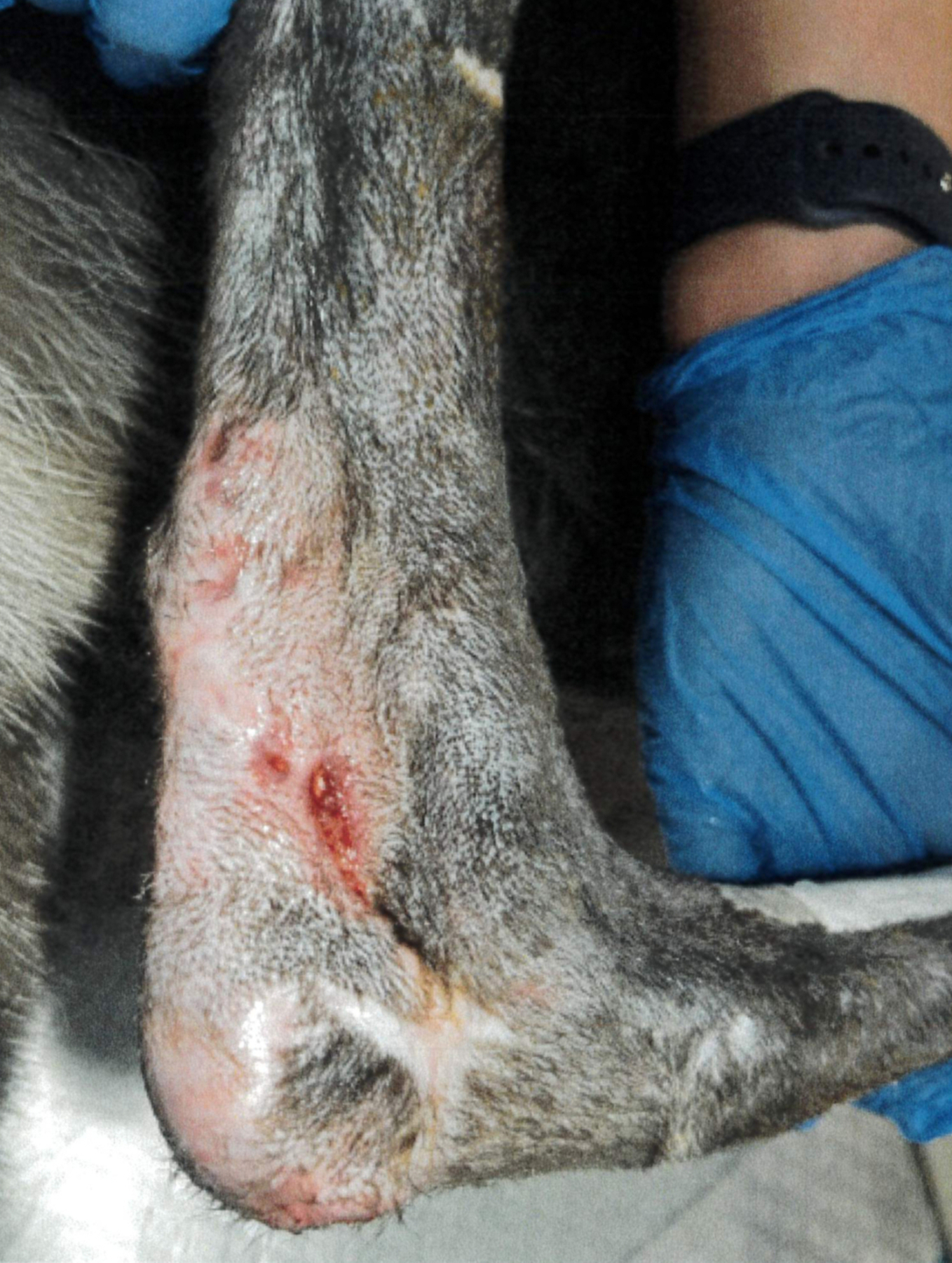
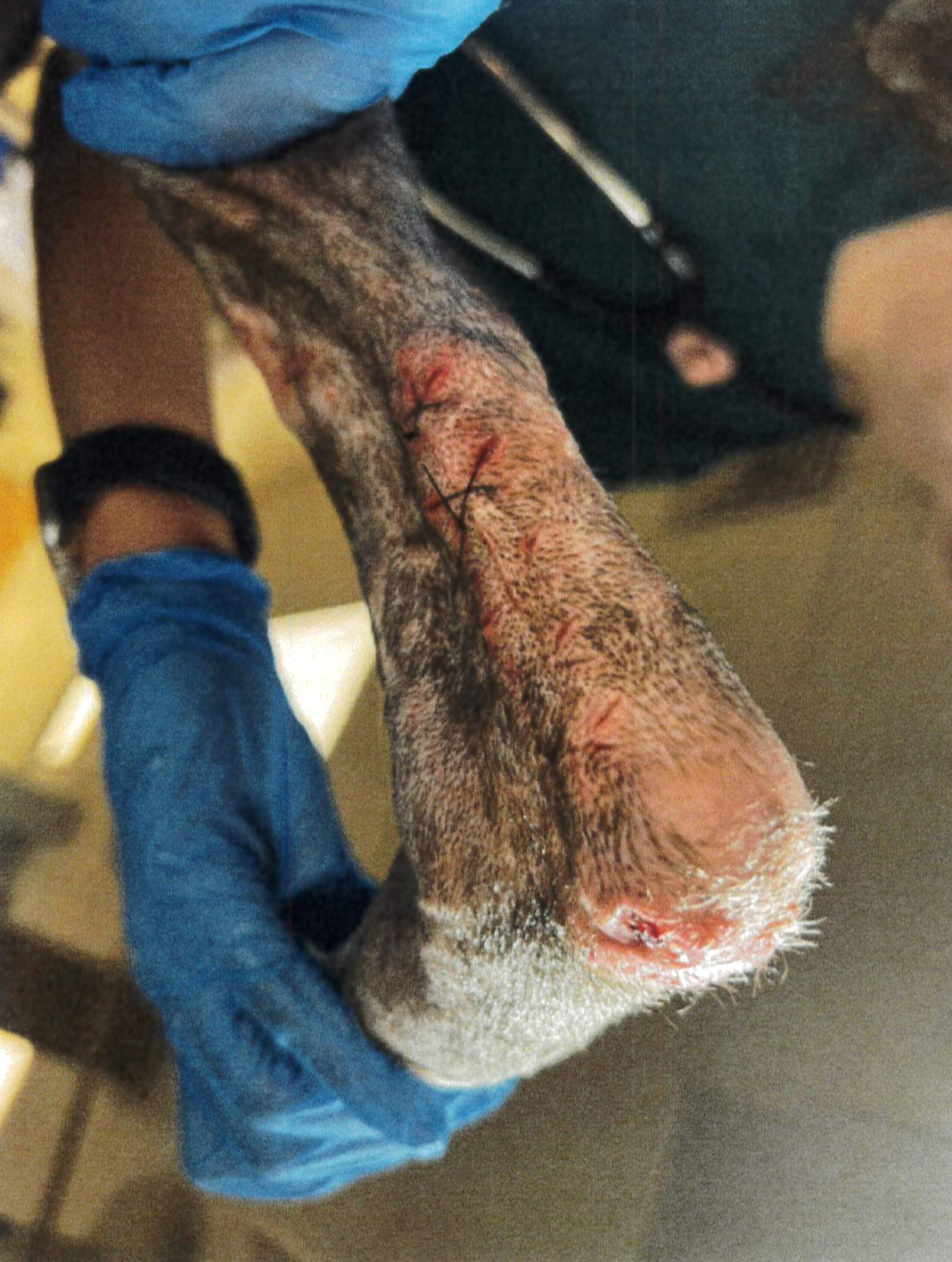
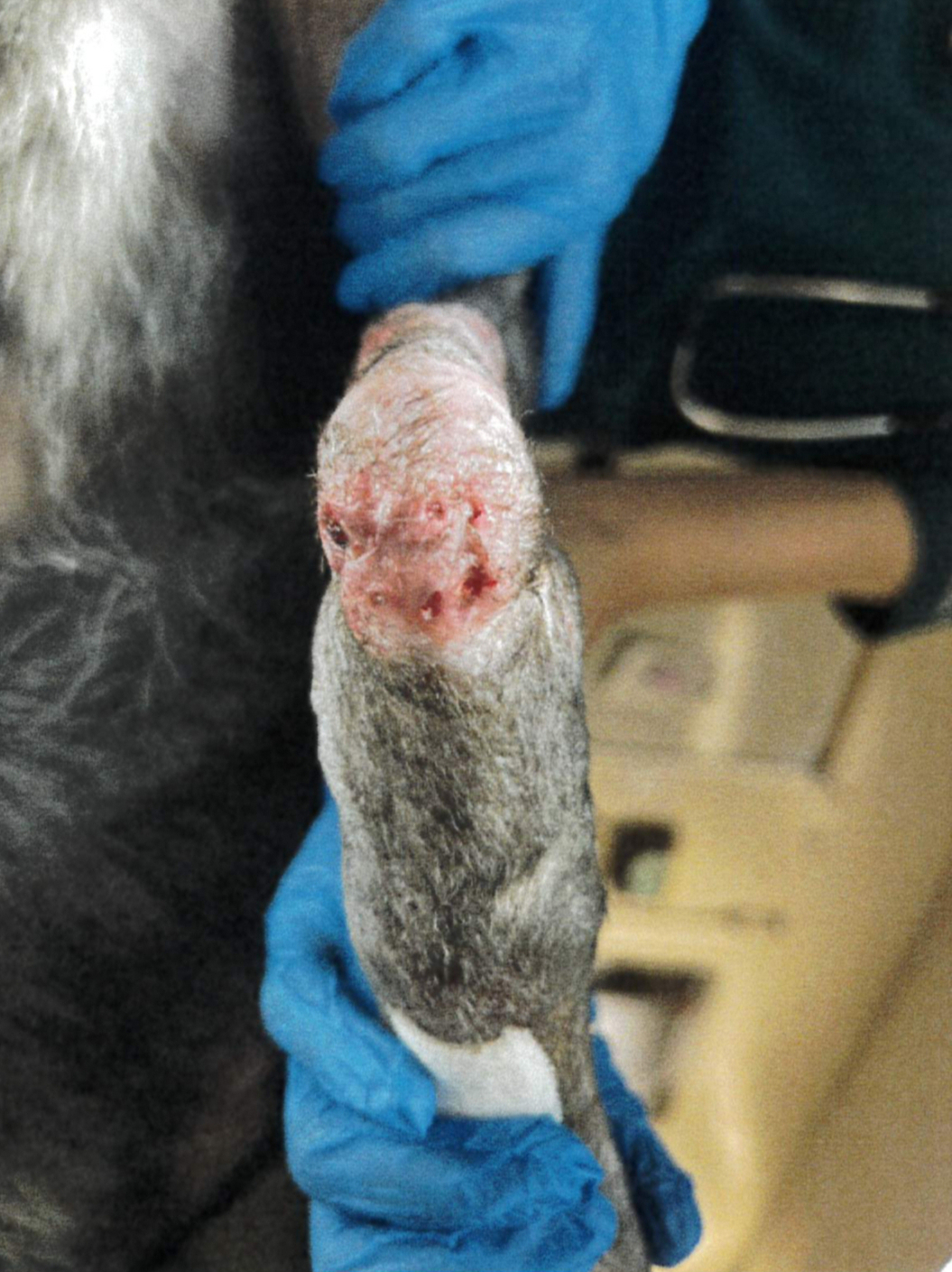
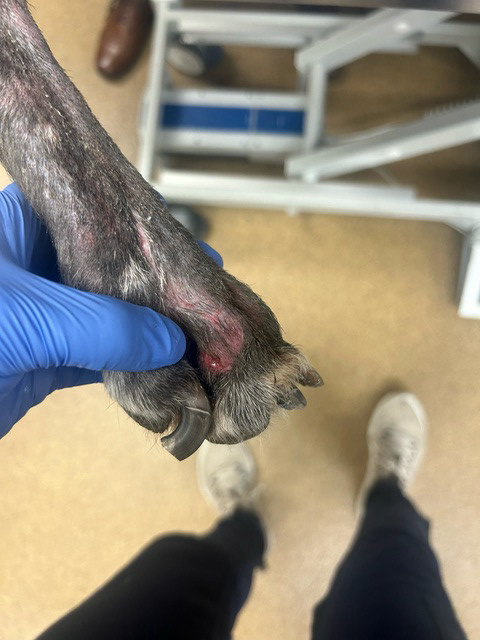
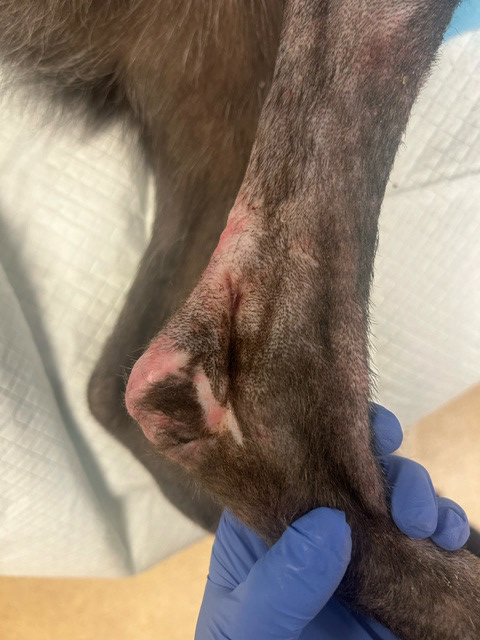
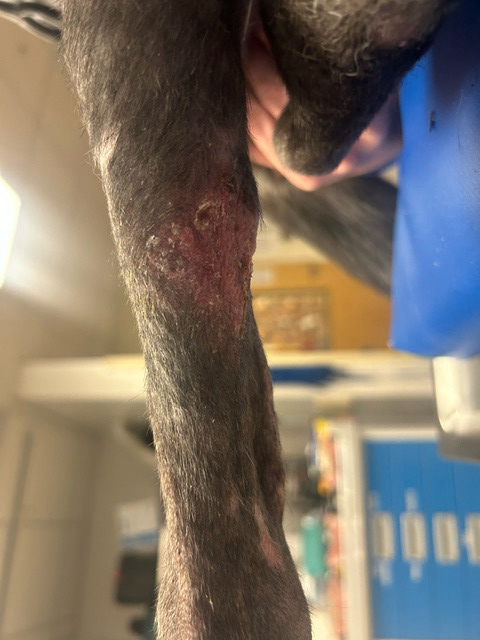
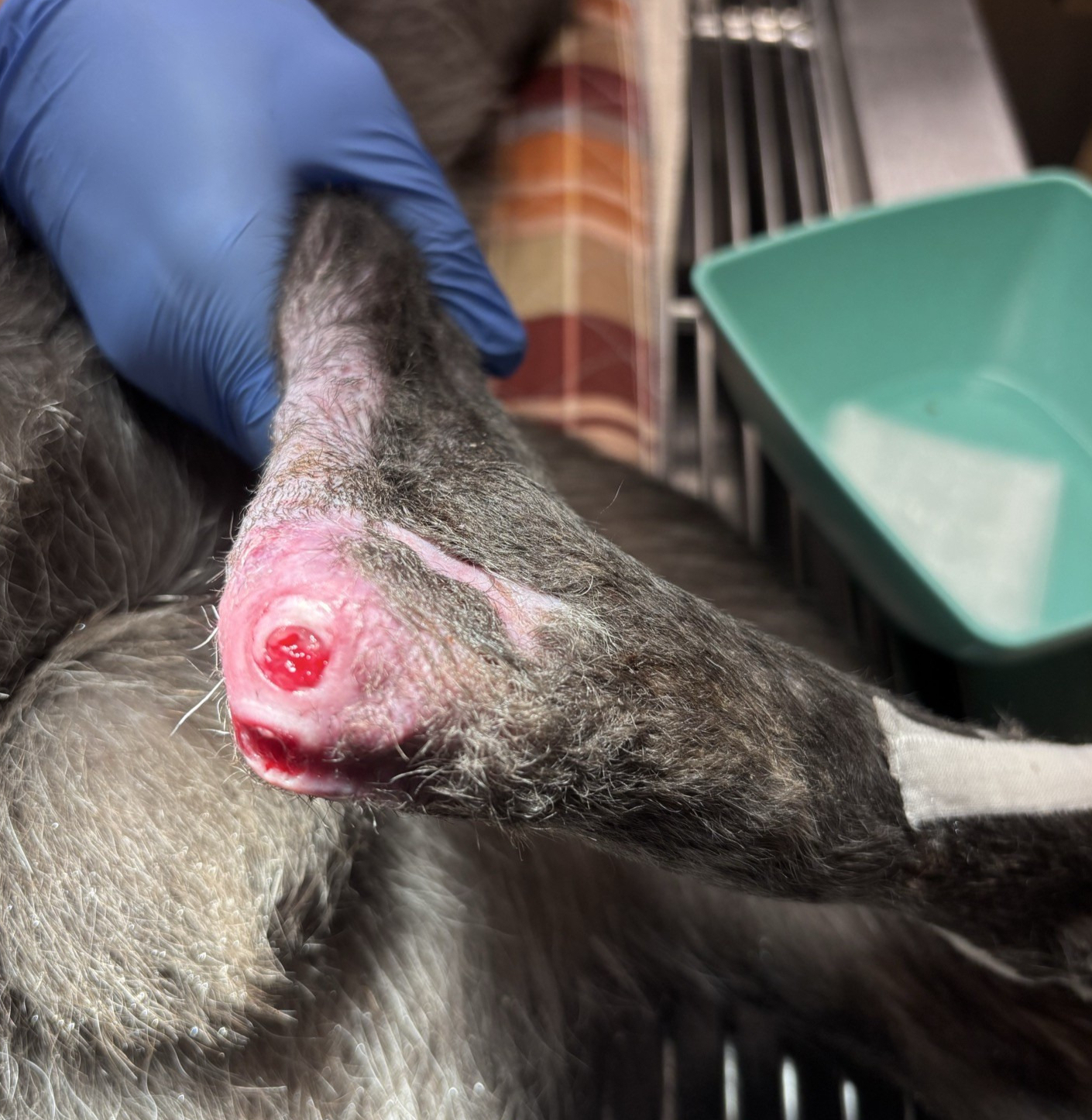
WARNING - GRAPHIC IMAGES OF INJURY BELOW
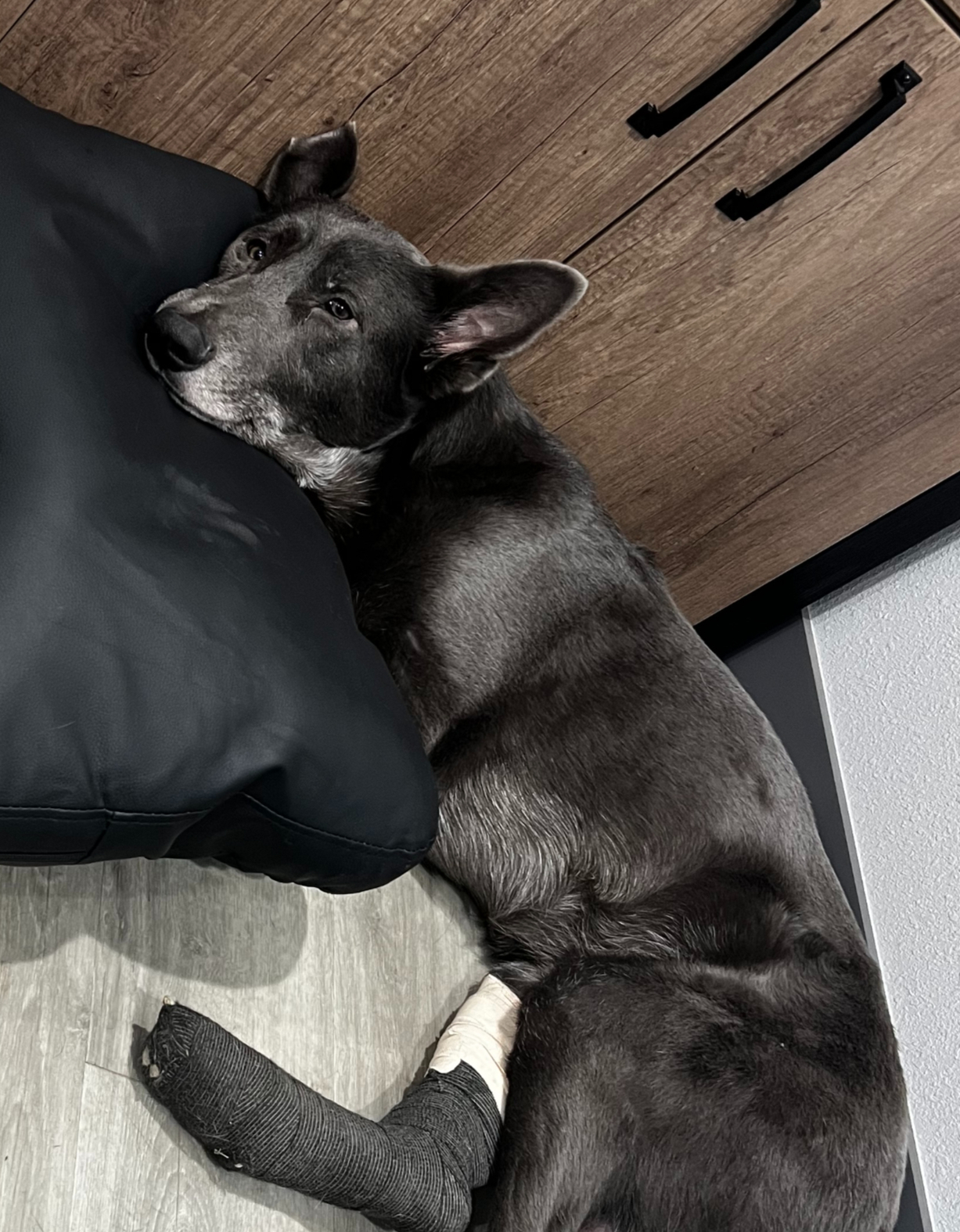
Griz was at Scenthound Mount Dora for what should have been a routine bath on January 23, 2026, when I received a phone call informing me that he had been cut. I was told they believed he had been cut on a table and that he would need stitches.
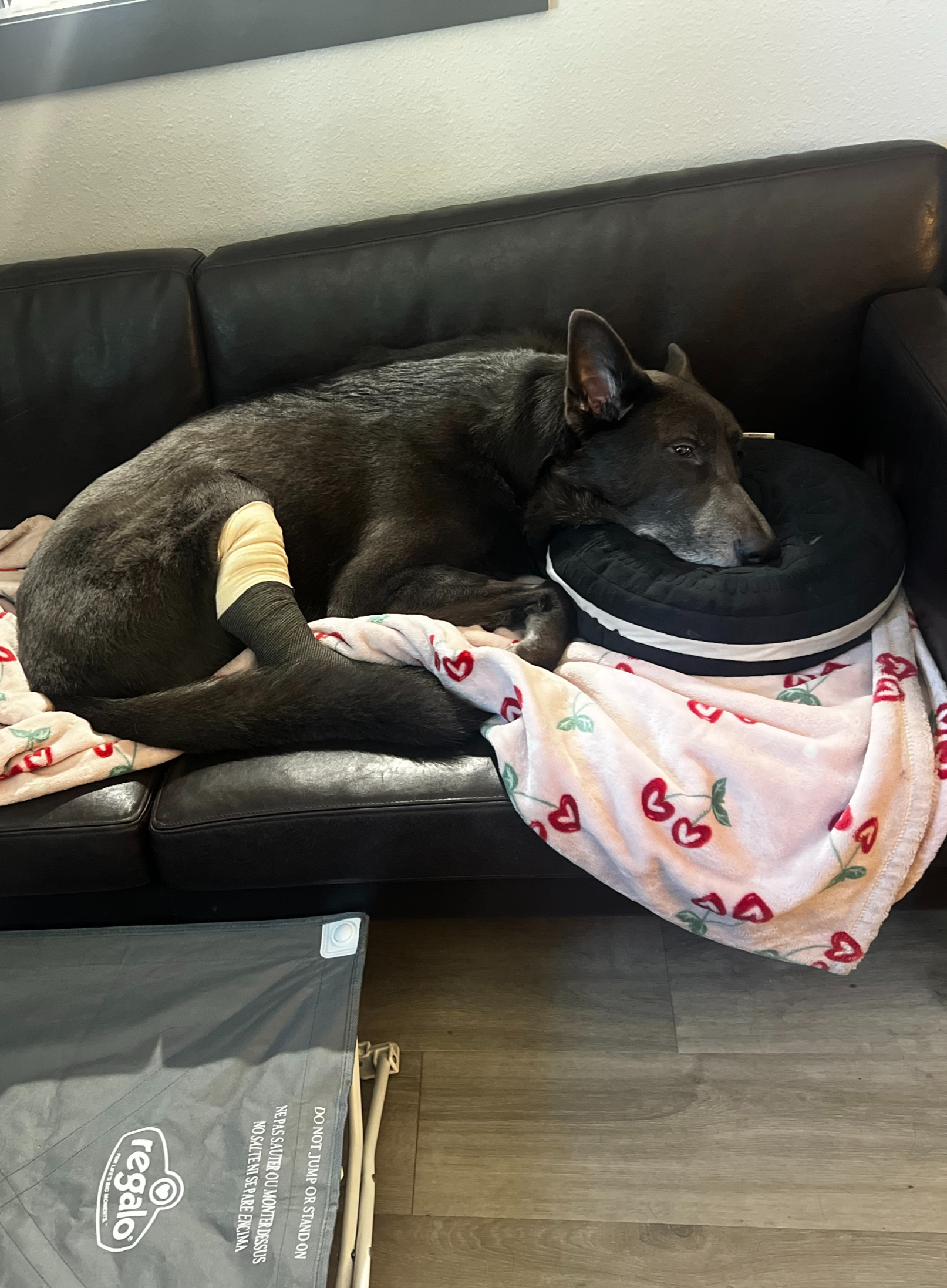
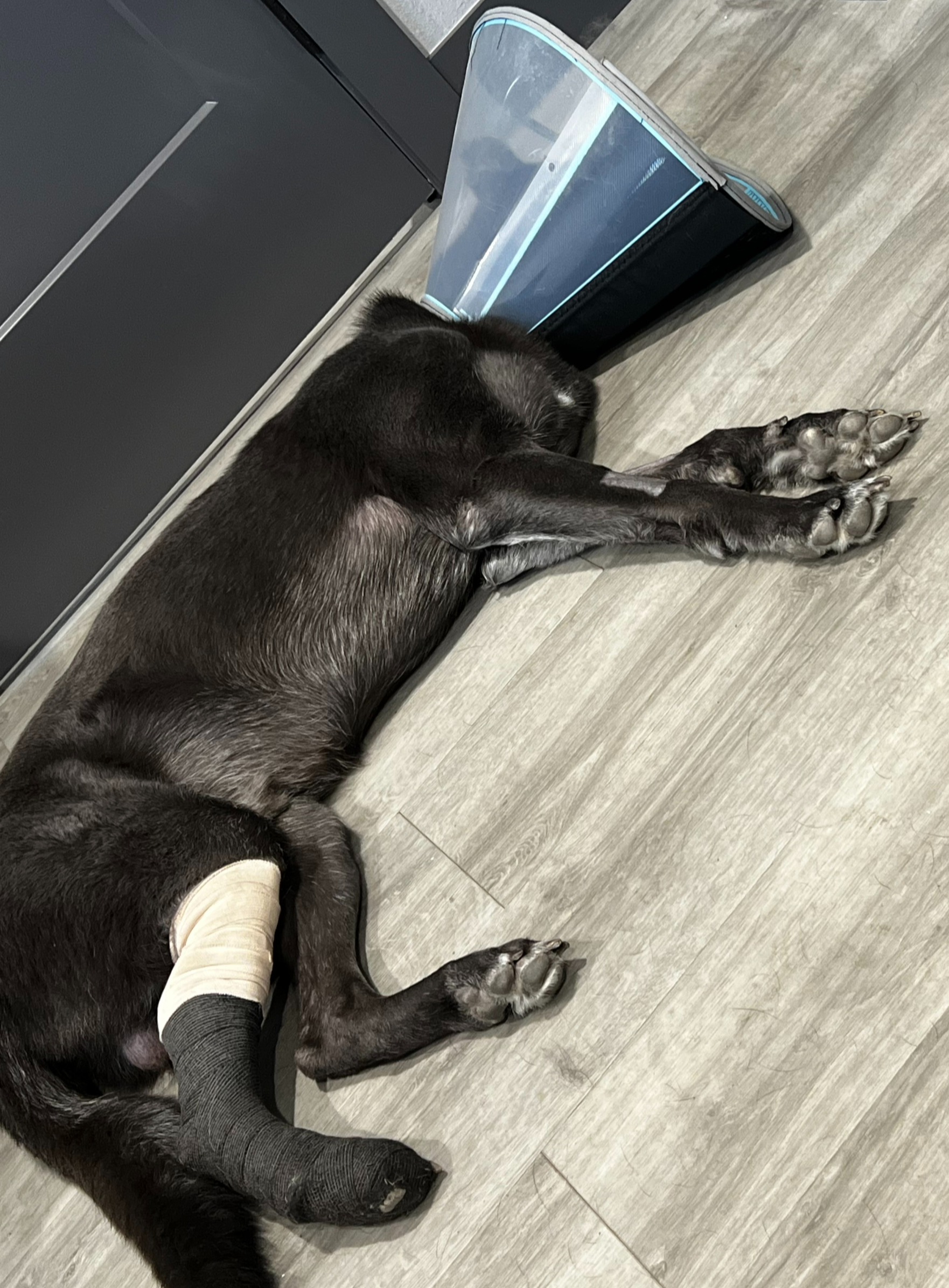
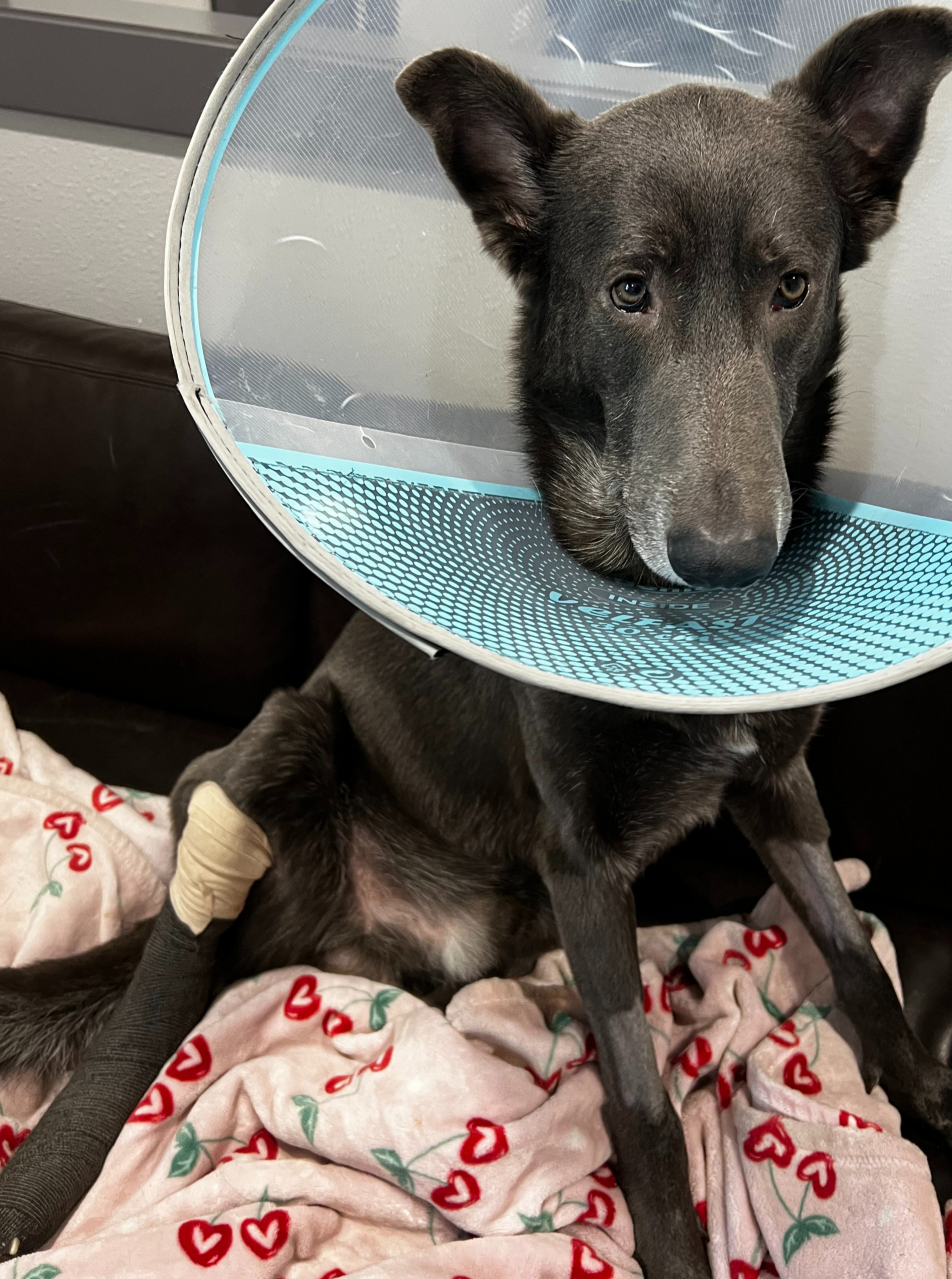
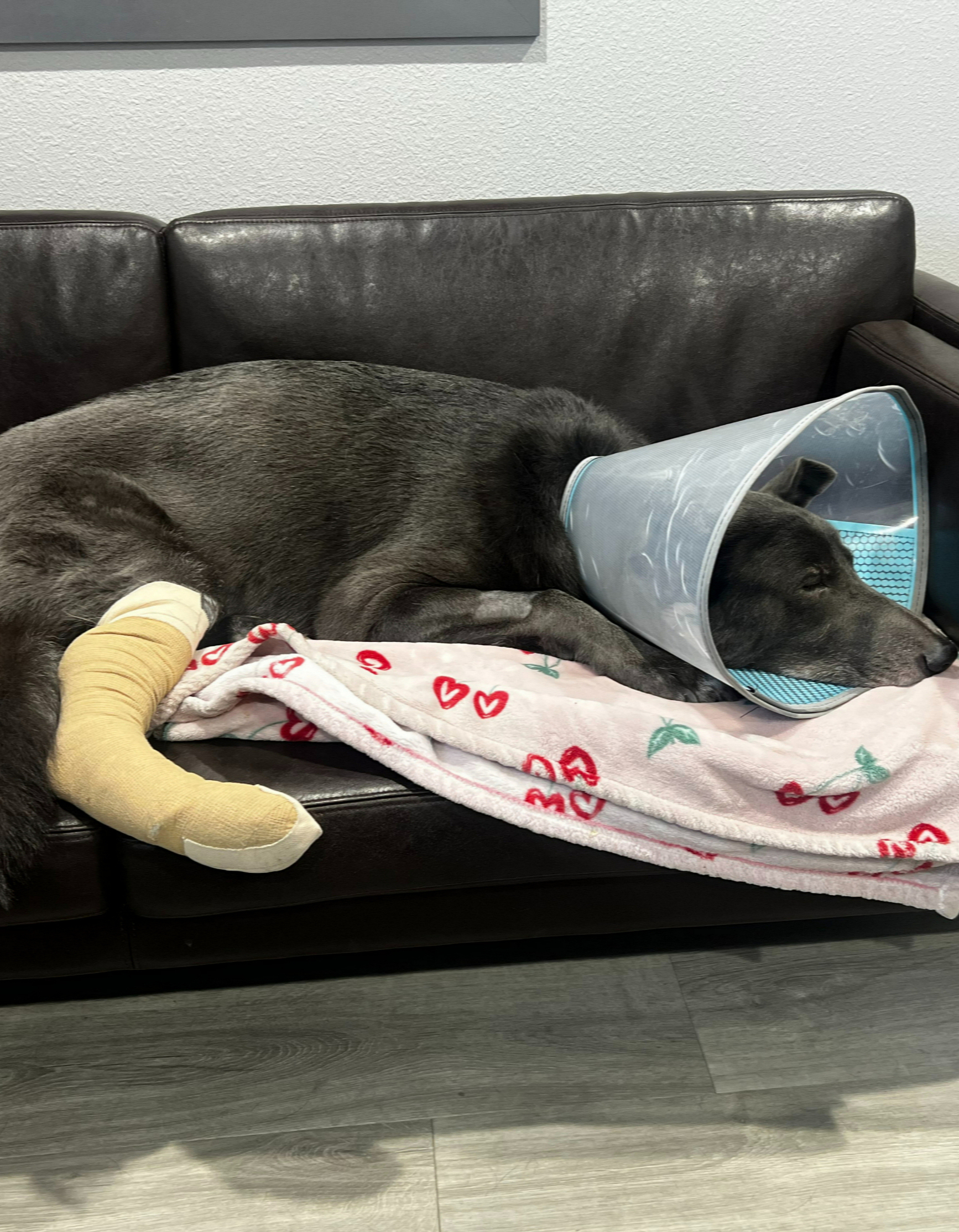
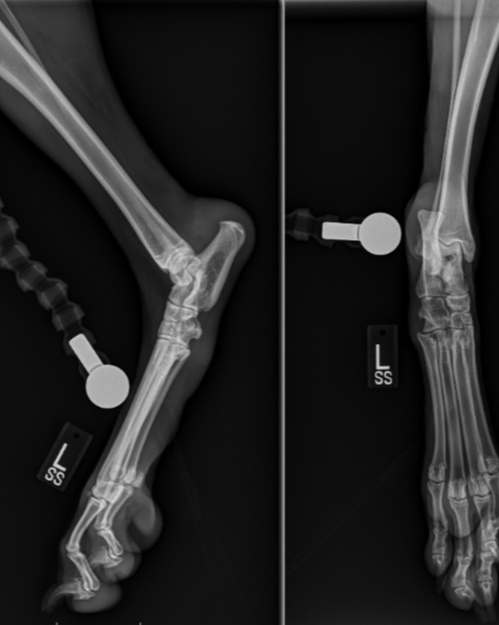
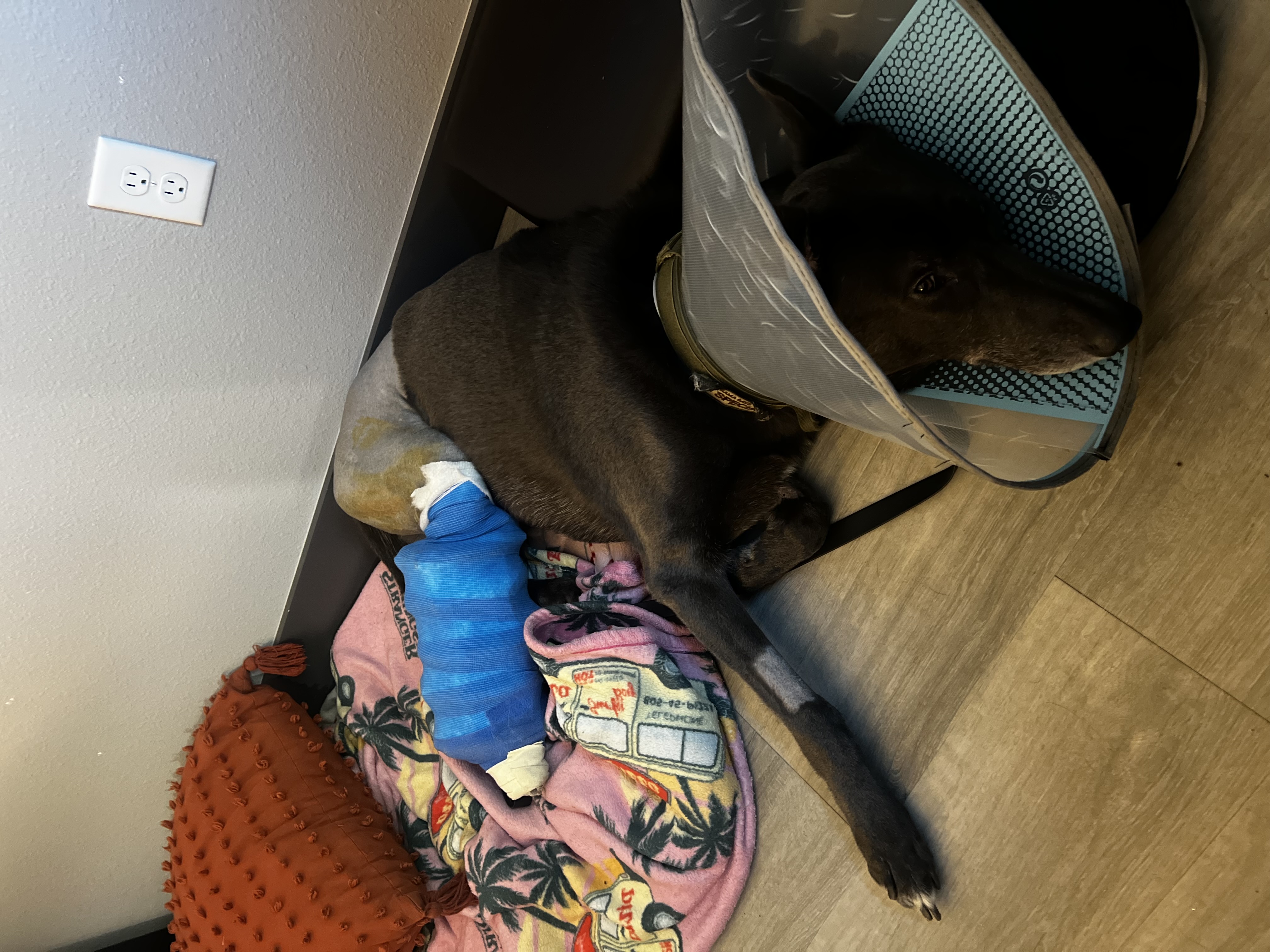
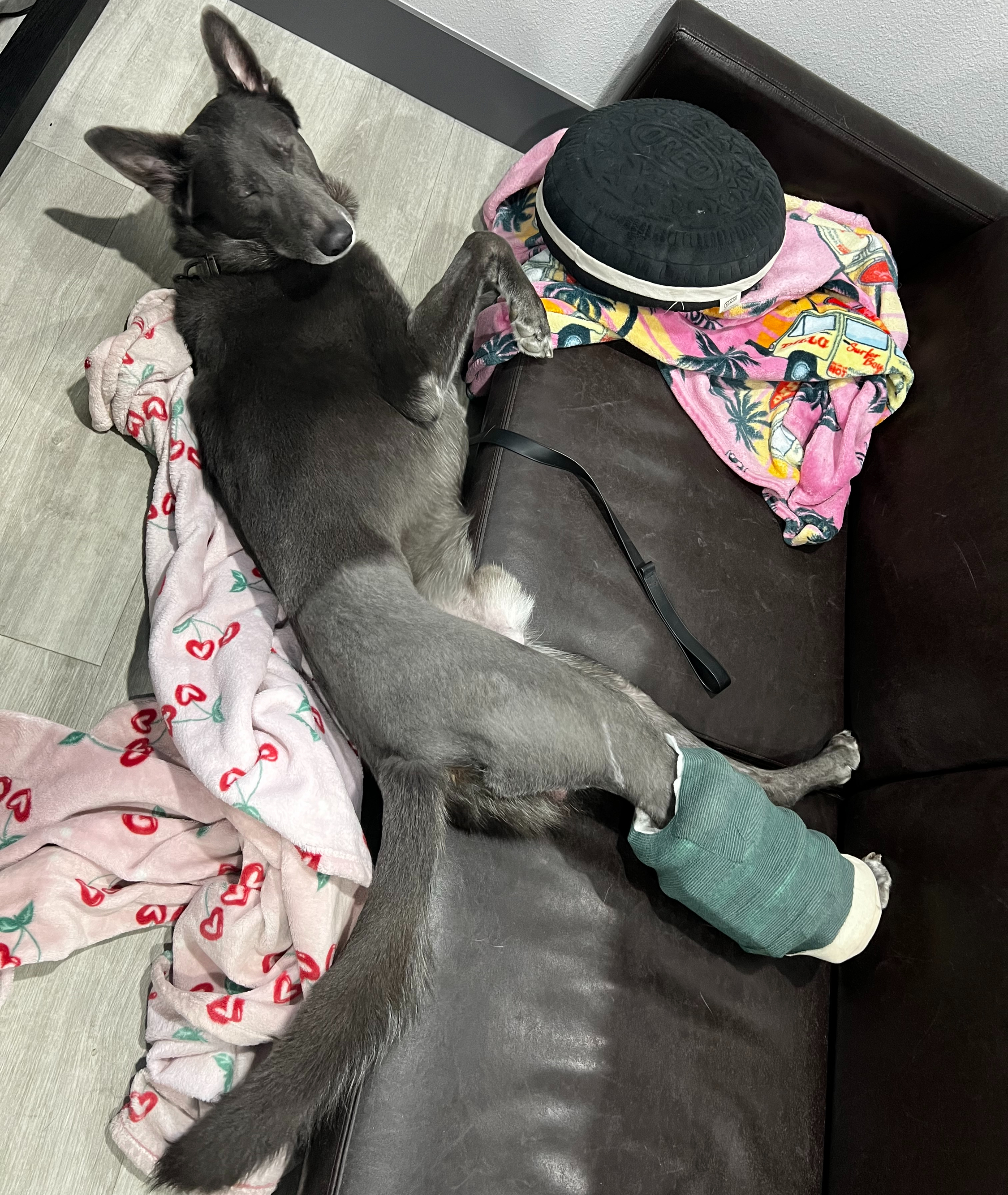
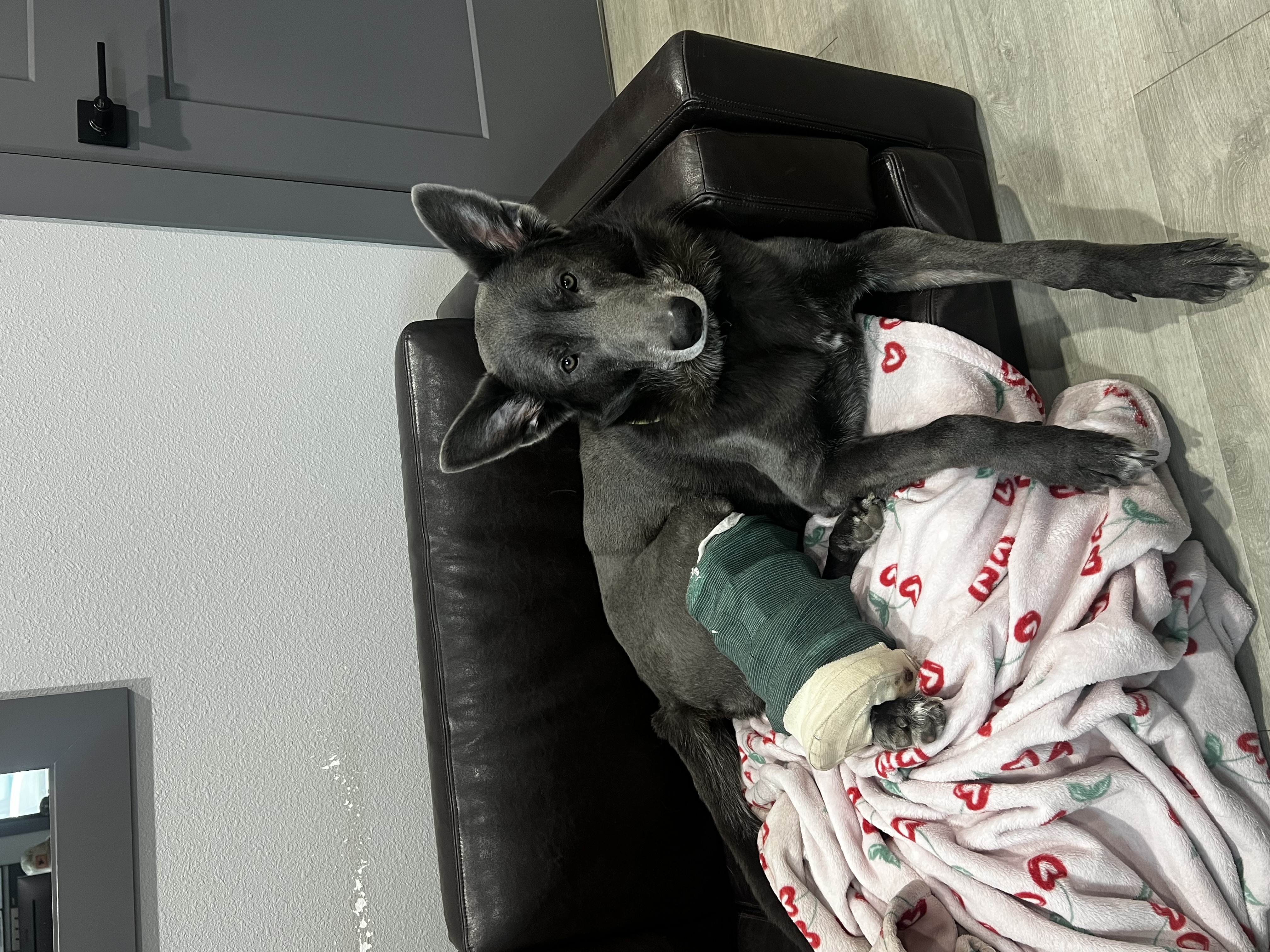
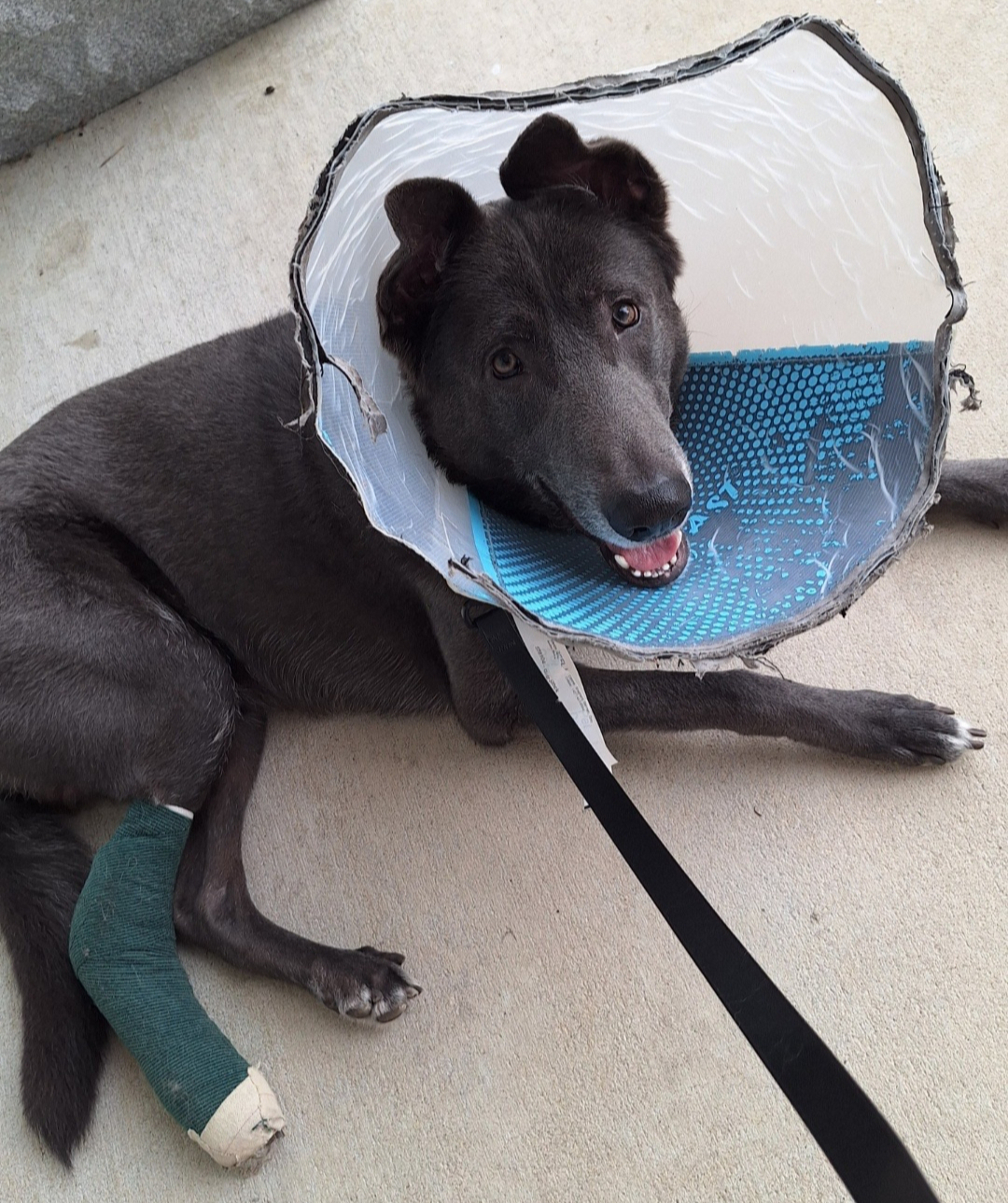
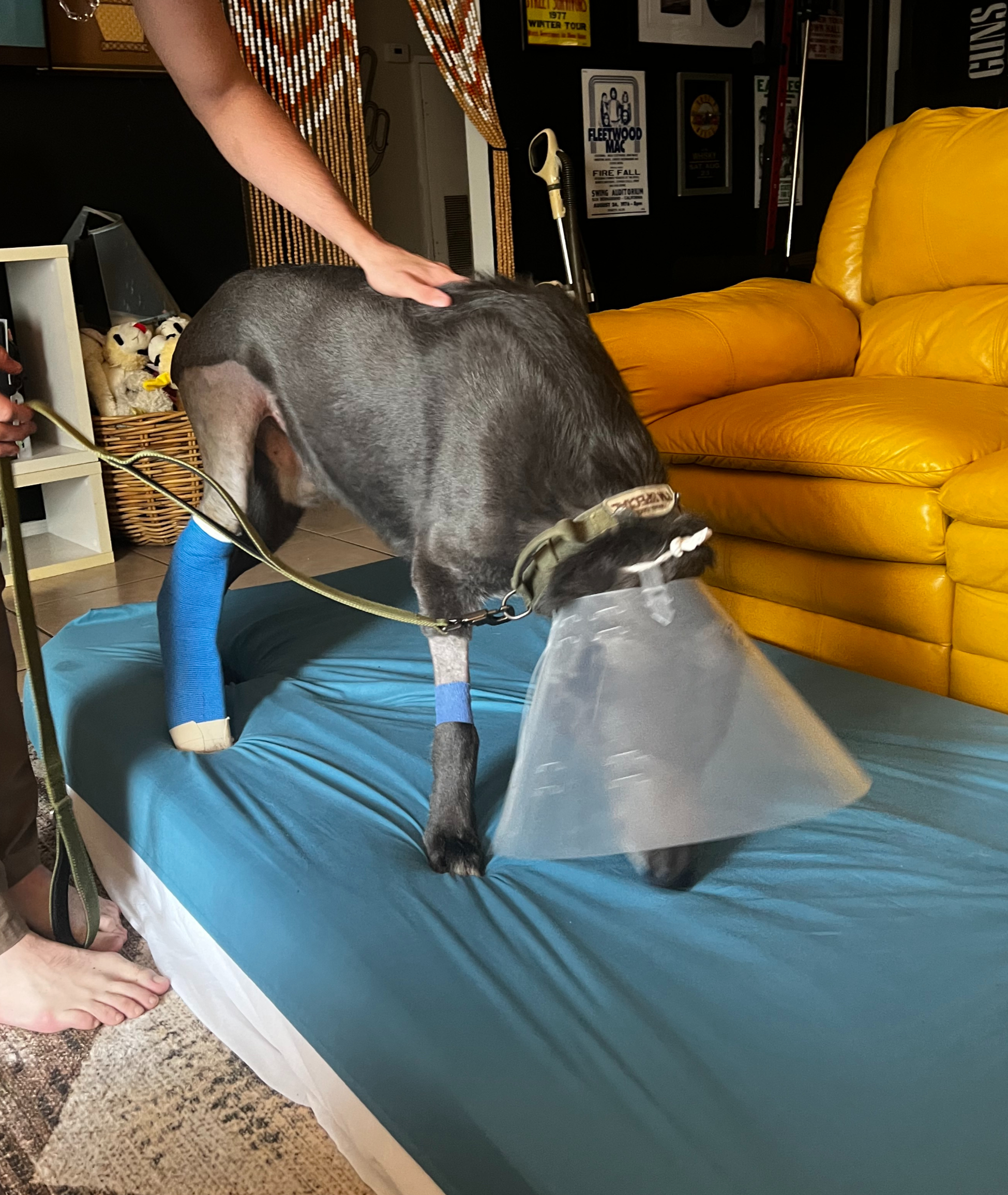
We immediately took Griz to his primary veterinarian. After examining him, the veterinarian informed us that his Achilles tendon had been completely severed and that he needed emergency surgery immediately. What we believed was a simple cut requiring stitches quickly became the beginning of months of surgeries, rehabilitation, frequent follow-up appointments, bandage changes, medications, and sedation at every single appointment. Along the way, Griz battled infections, and we faced difficult conversations about the possibility of amputation or surgically fusing his ankle if his tendon could not be repaired. Throughout it all, Griz had to adapt to a completely different way of life while fighting to recover.
That evening and into the following day, we received a voicemail, email, and text message from Scenthound stating that the General Manager wanted our veterinarian's information so they could "take care of the billing directly and ensure everything related to his care is handled promptly." We provided the requested information during a phone call, and our next communication came from their insurance adjuster on January 28.
Wanting to understand how this devastating injury had occurred, we requested the surveillance footage from Griz's appointment on January 29 but received no response.
After hearing nothing, we submitted a second request on February 4. The following day, Scenthound responded:
"Due to Scenthound corporate policy and the terms of our franchise agreement, we are unfortunately unable to release or share camera footage with clients."
The same response also stated:
"I also hope you have been able to connect with our insurance adjuster."
On February 6, we replied, requesting that the surveillance footage be preserved and not deleted. We made it clear that we would continue requesting access because we simply wanted to understand what happened to our dog while he was in their care.
January 23, 2026
_JPG.jpg)
Image Sent To Me From Scenthound
While Griz was in emergency surgery, I received a notification that his ScentCheck had been completed. A report that is supposed to reflect how your dog is doing somehow gave him a 5 for his skin and stated, "Griz did great today and is looking good."
The reality? Griz never even finished his appointment. His skin had been cut open, and his Achilles tendon had been completely severed.
How does a dog with a catastrophic injury get marked as "looking good"?


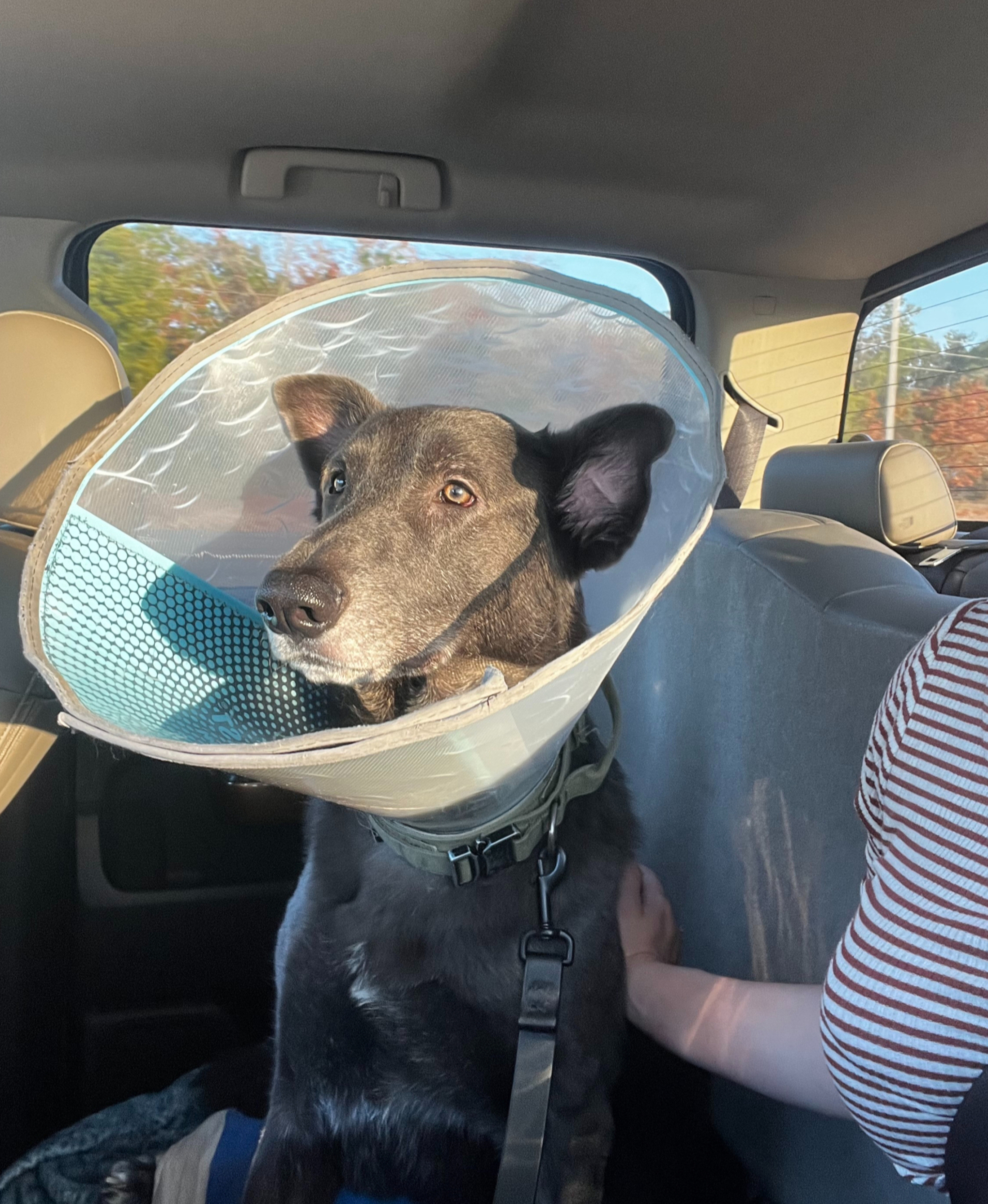
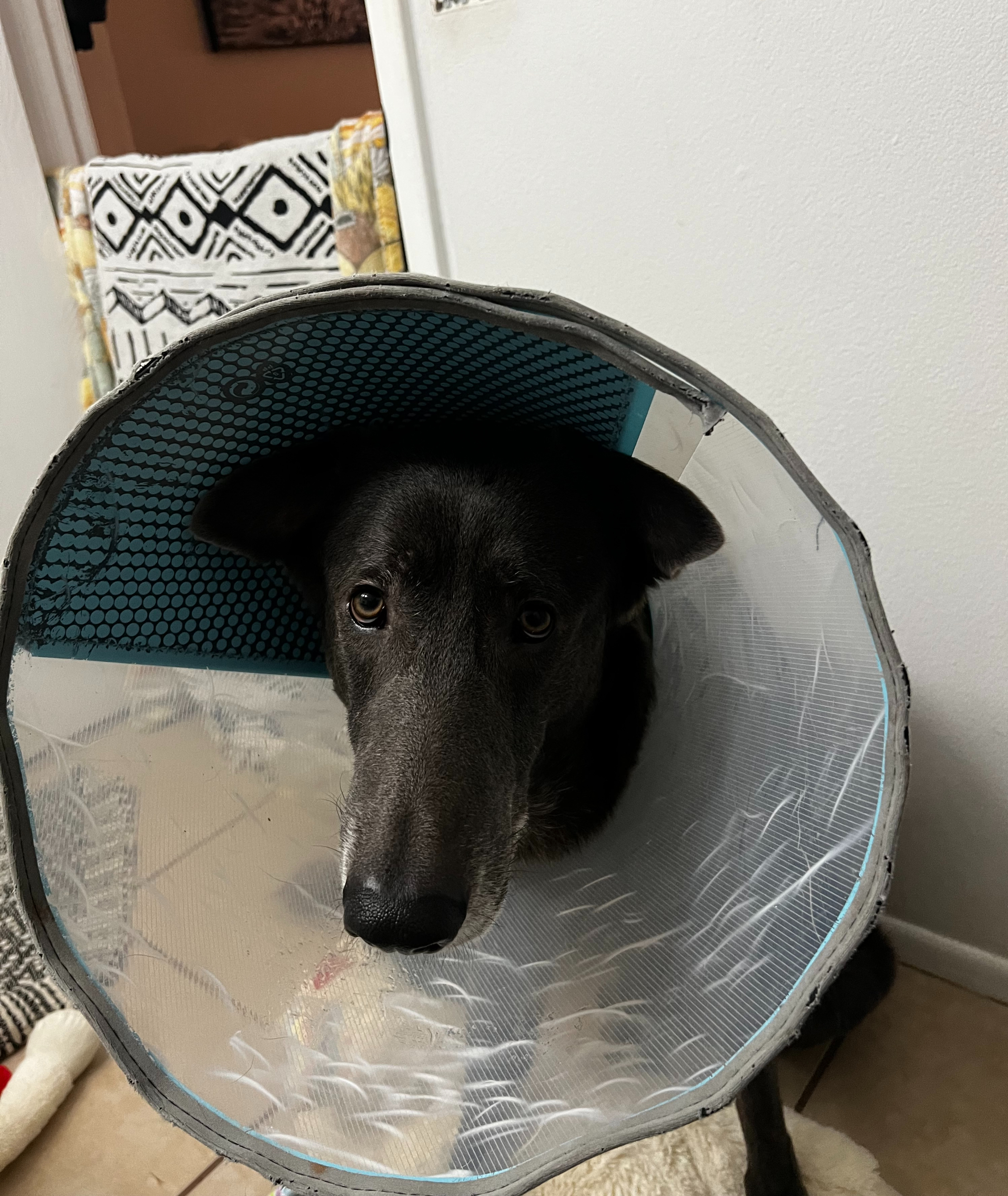
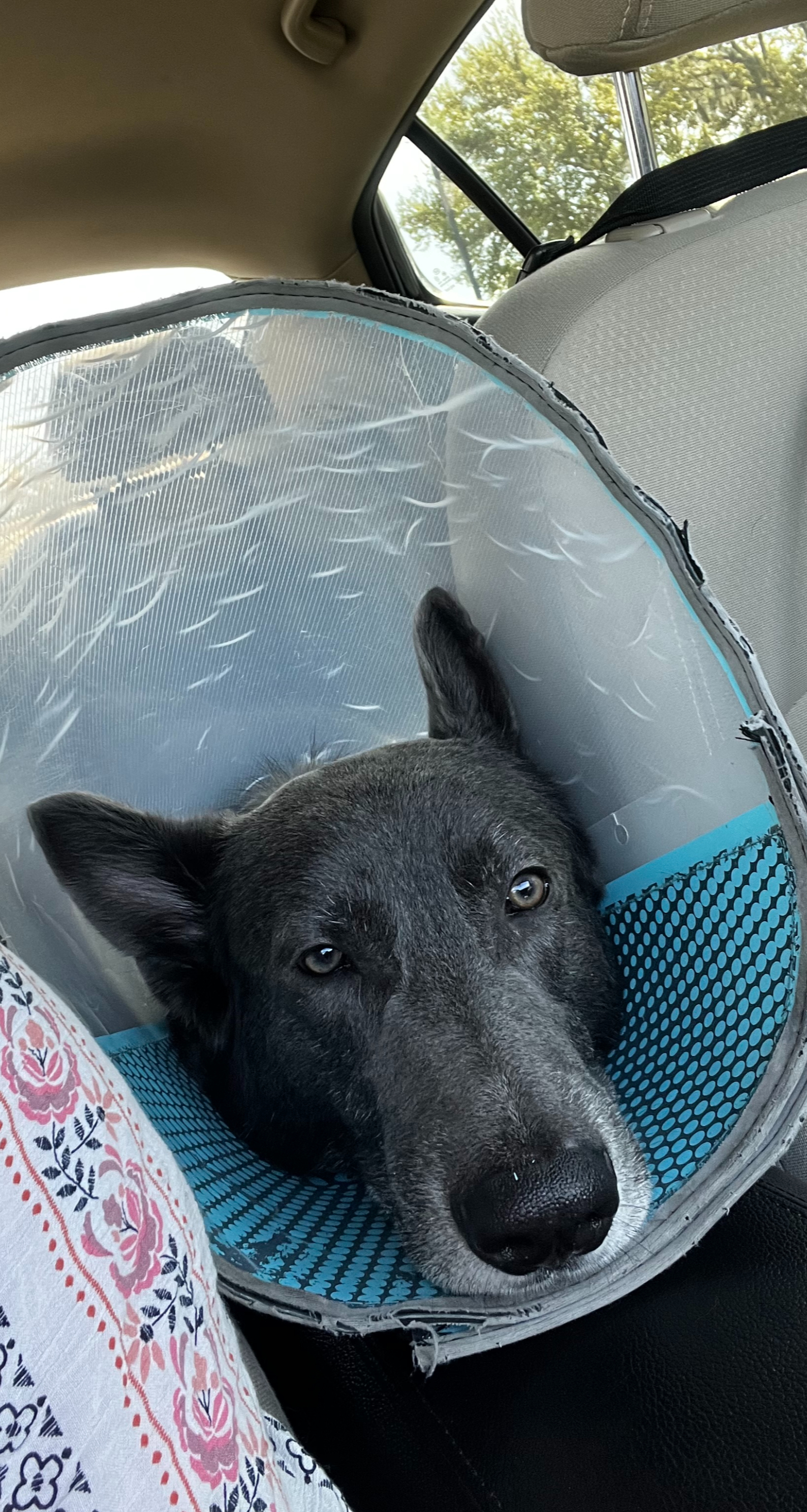
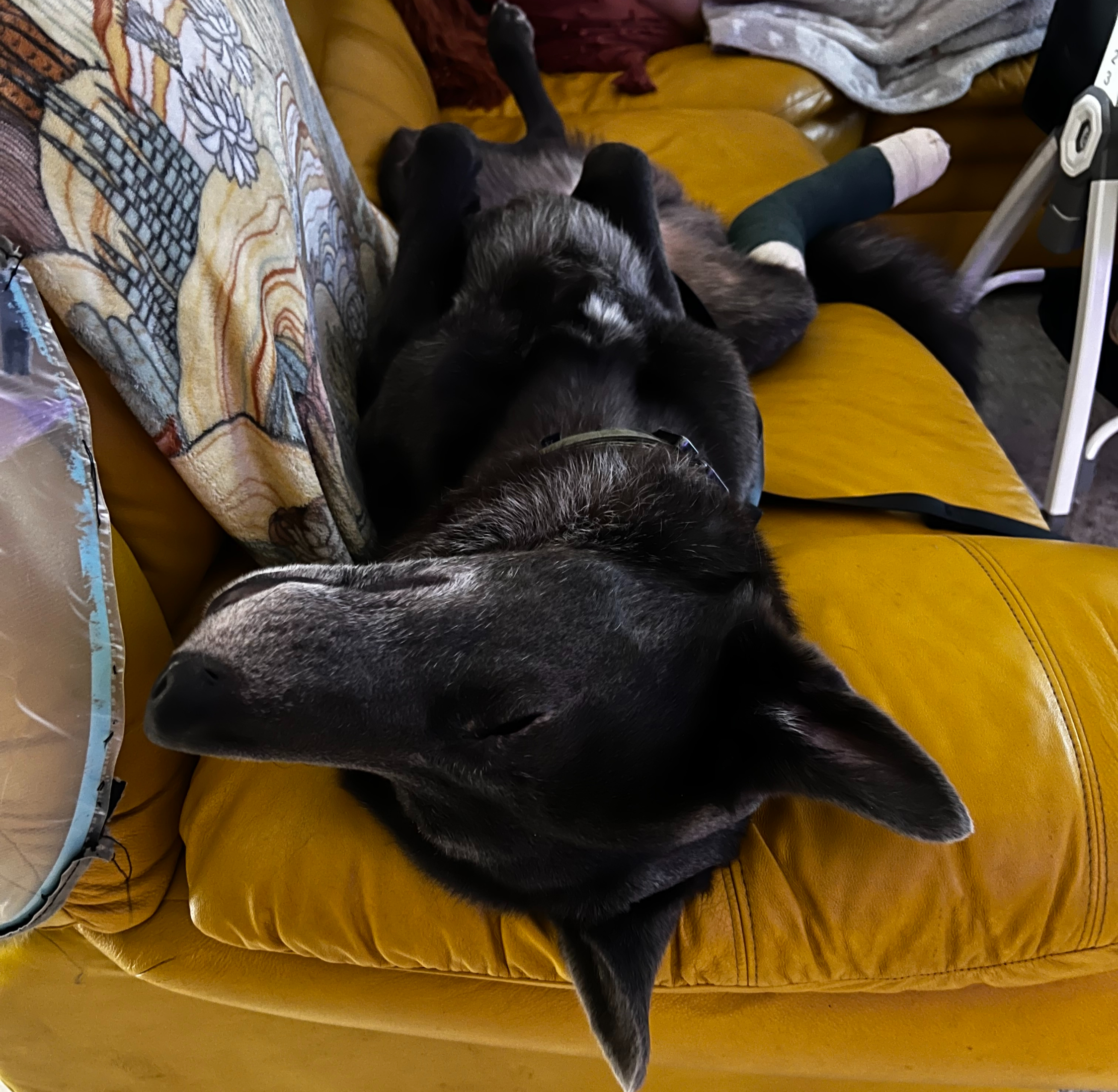
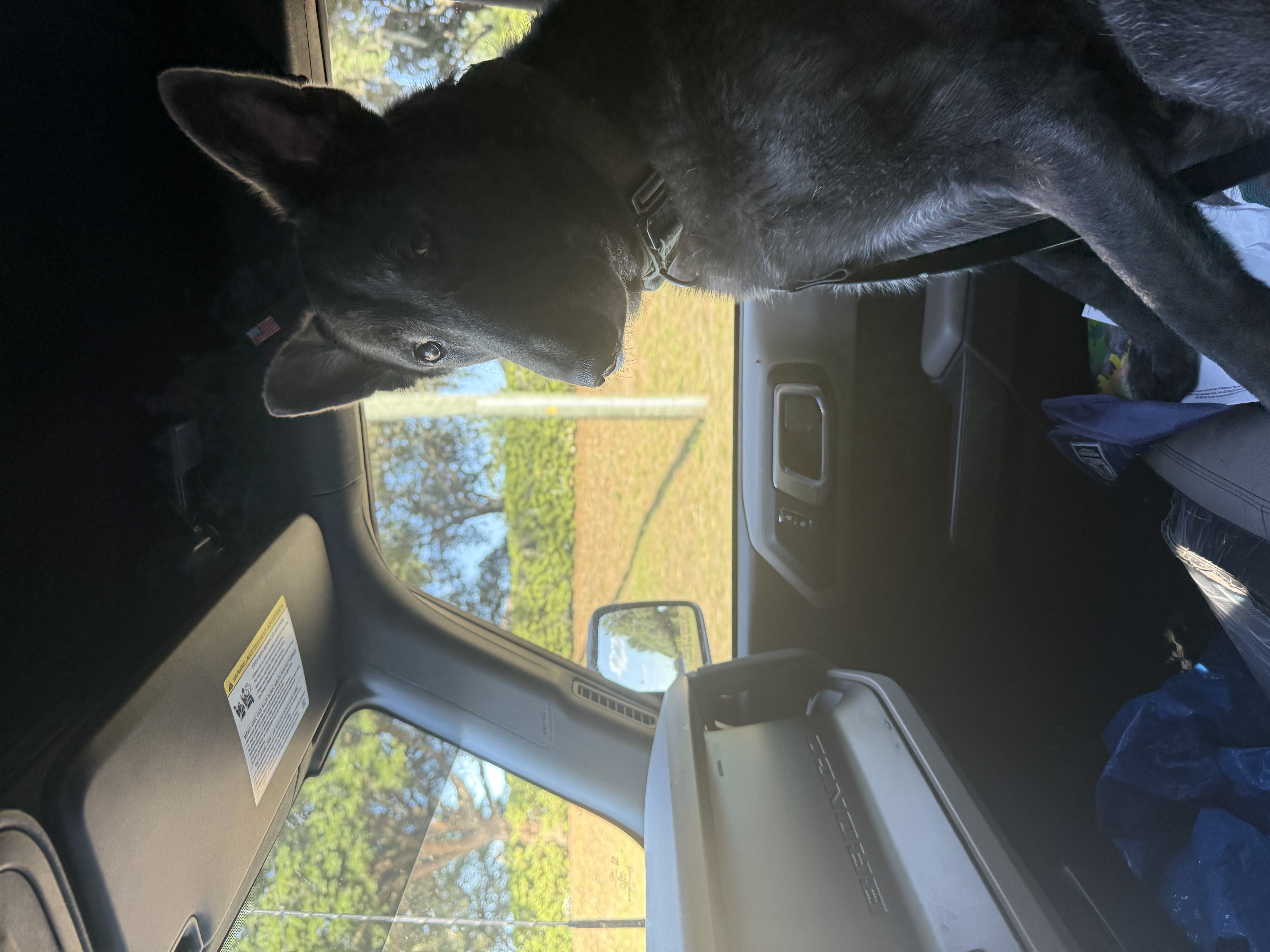
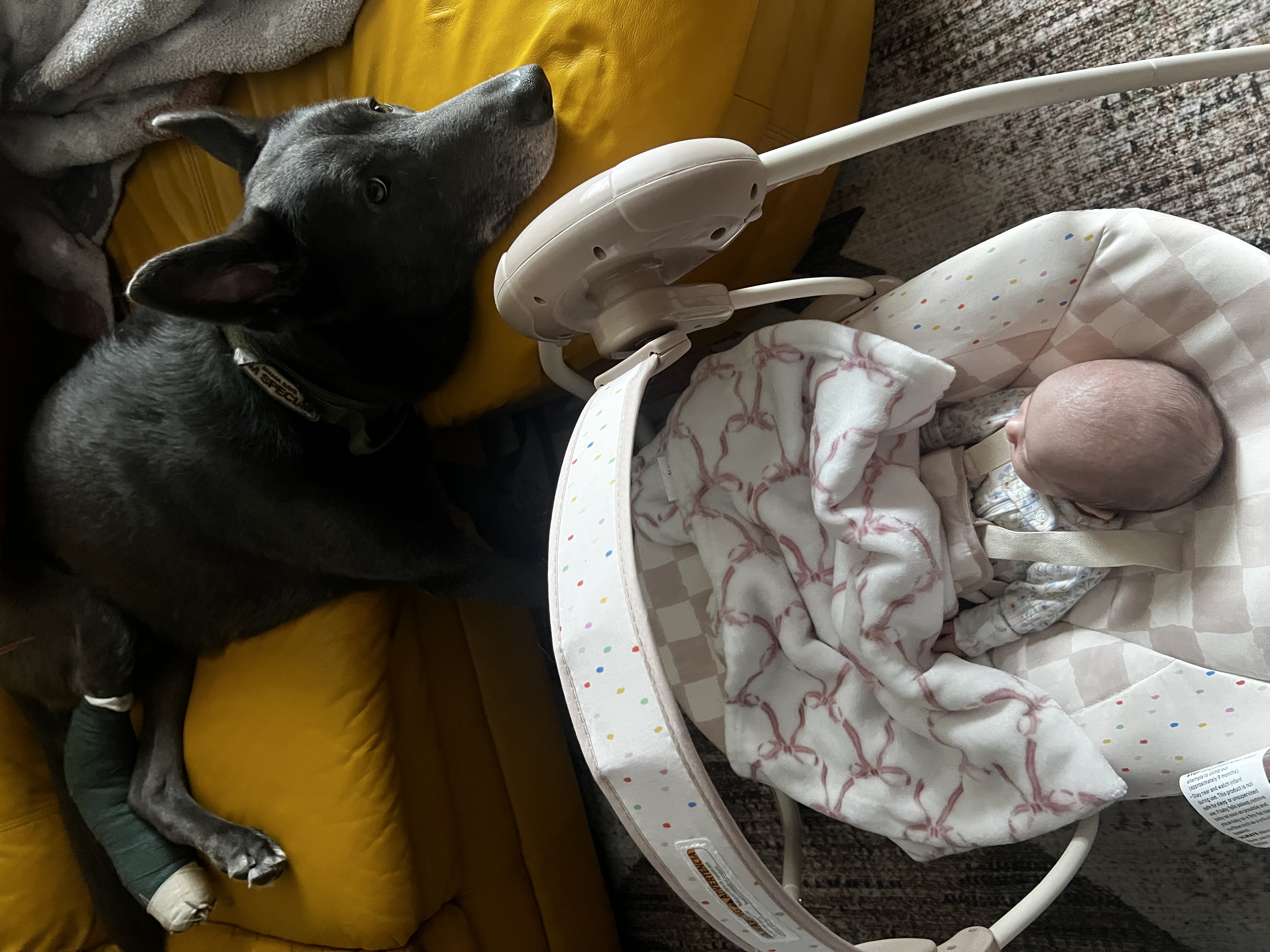
At Work Before His Appointment
Griz's Recovery by the Numbers (As of August 2026)
🐾 16 Doctors Seen
🏥 13 Resident Doctors
📅 43 Veterinary Appointments
💉 41 Sedations
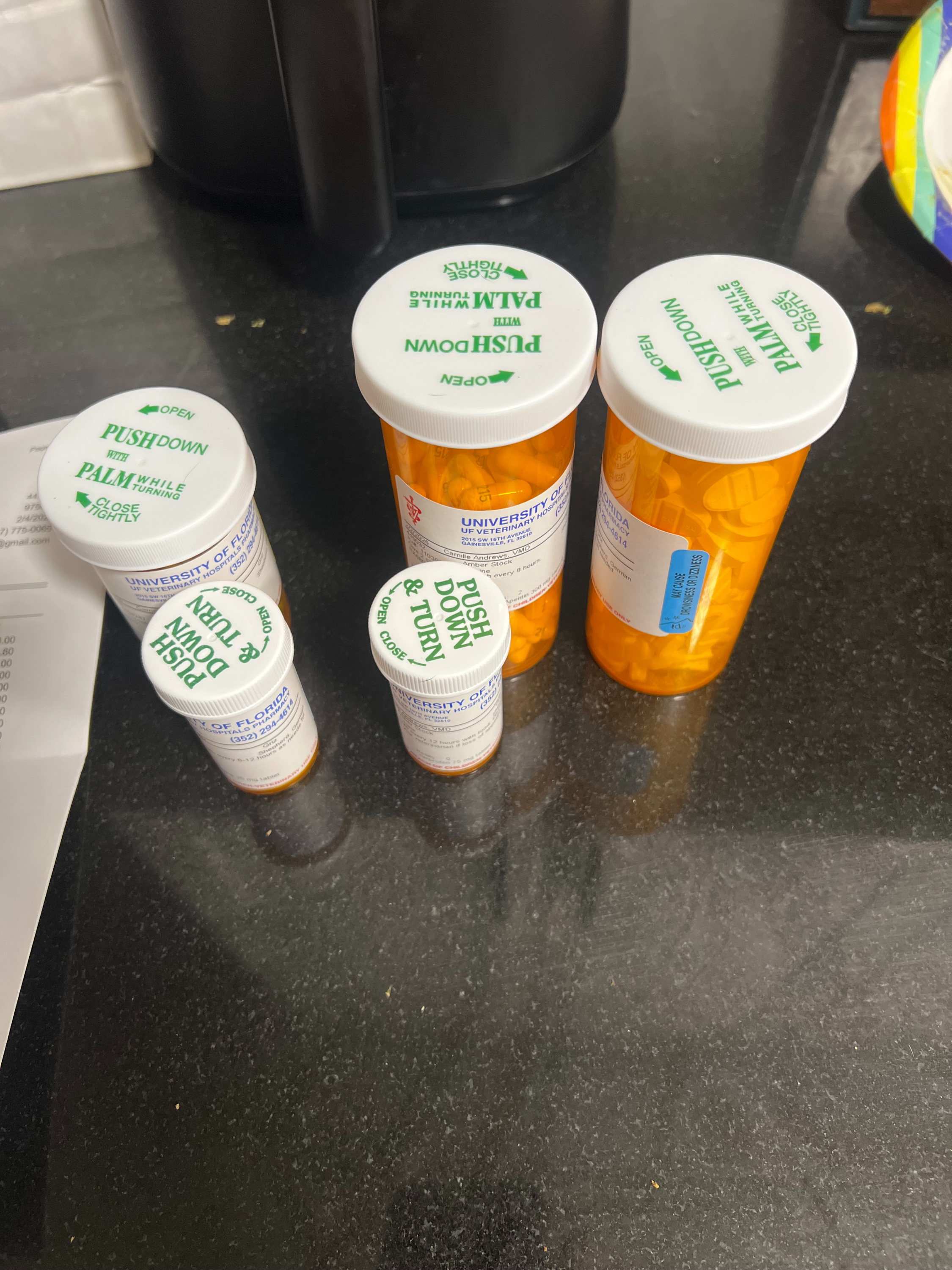
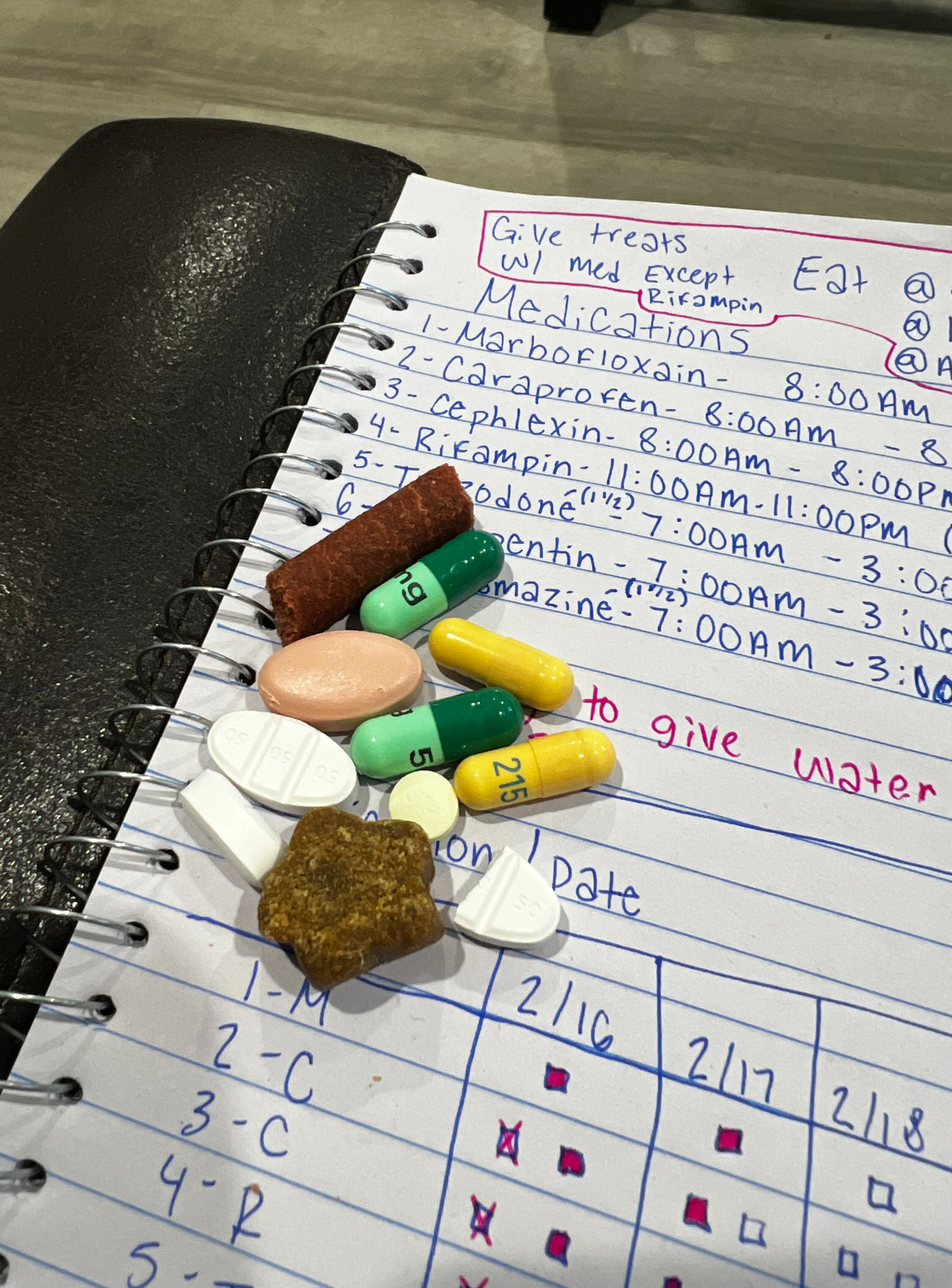
💊 2,811 Pills Administered
🚗 7,022.5 Miles Traveled for Veterinary Care
.jpg)
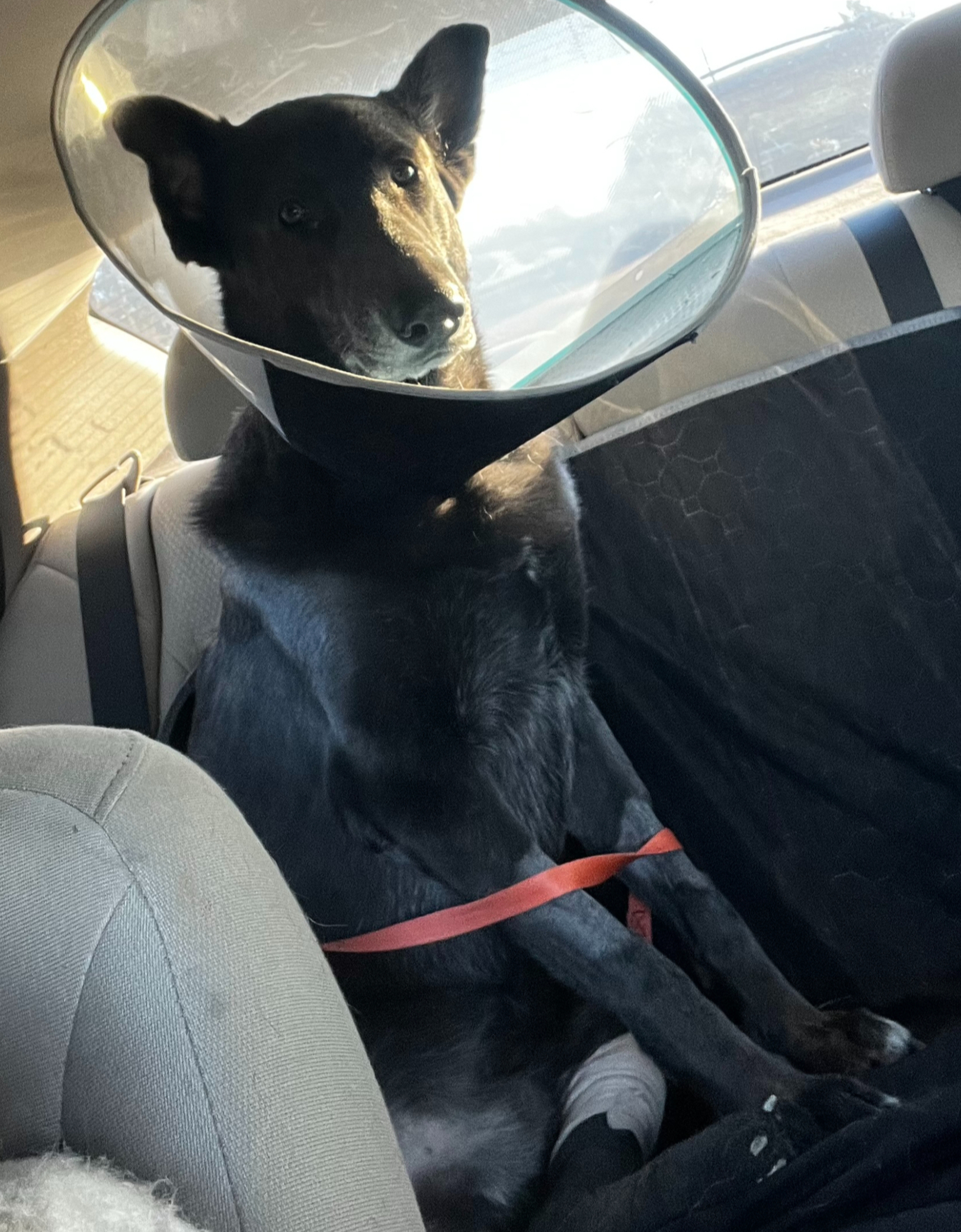
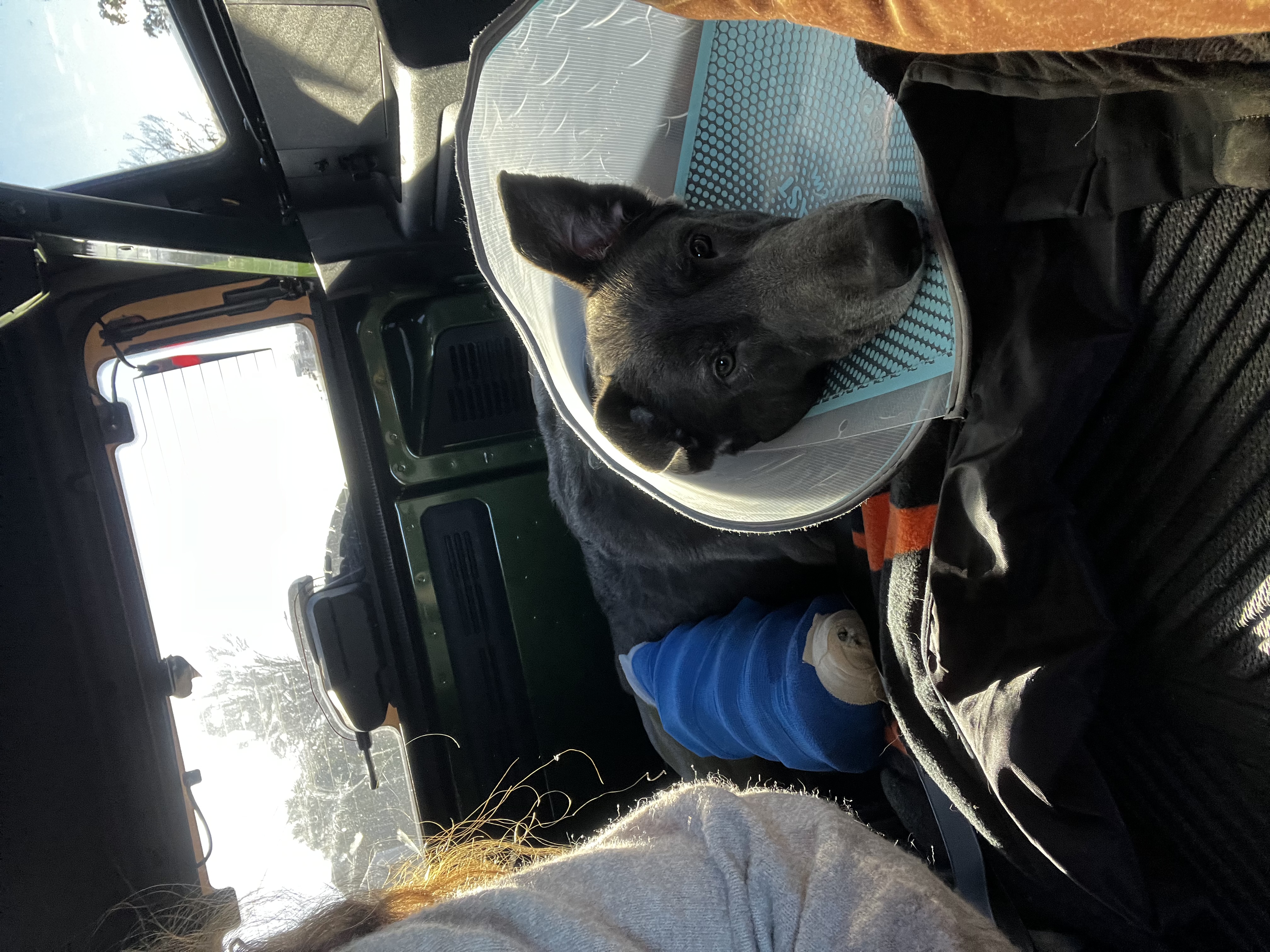
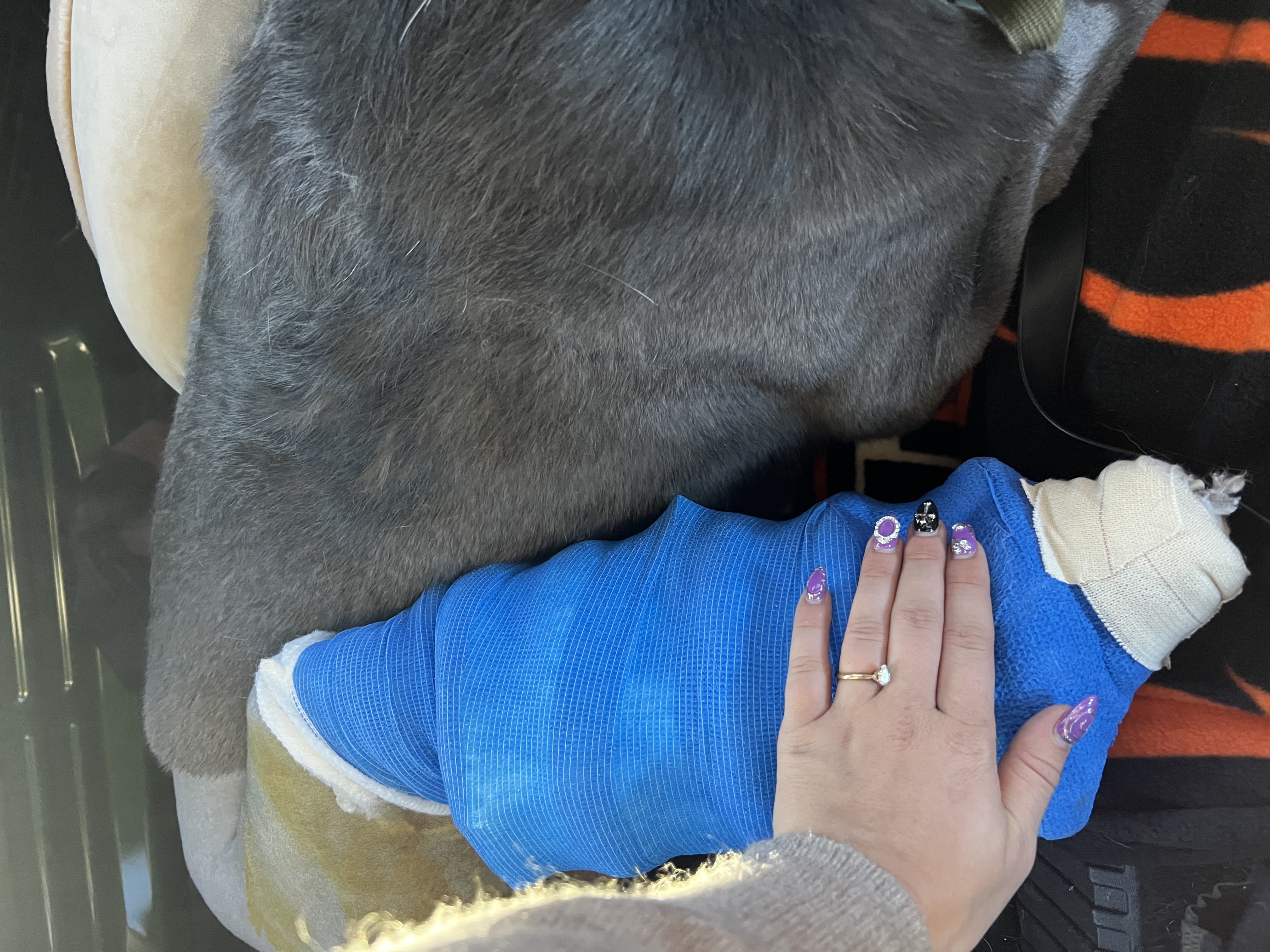
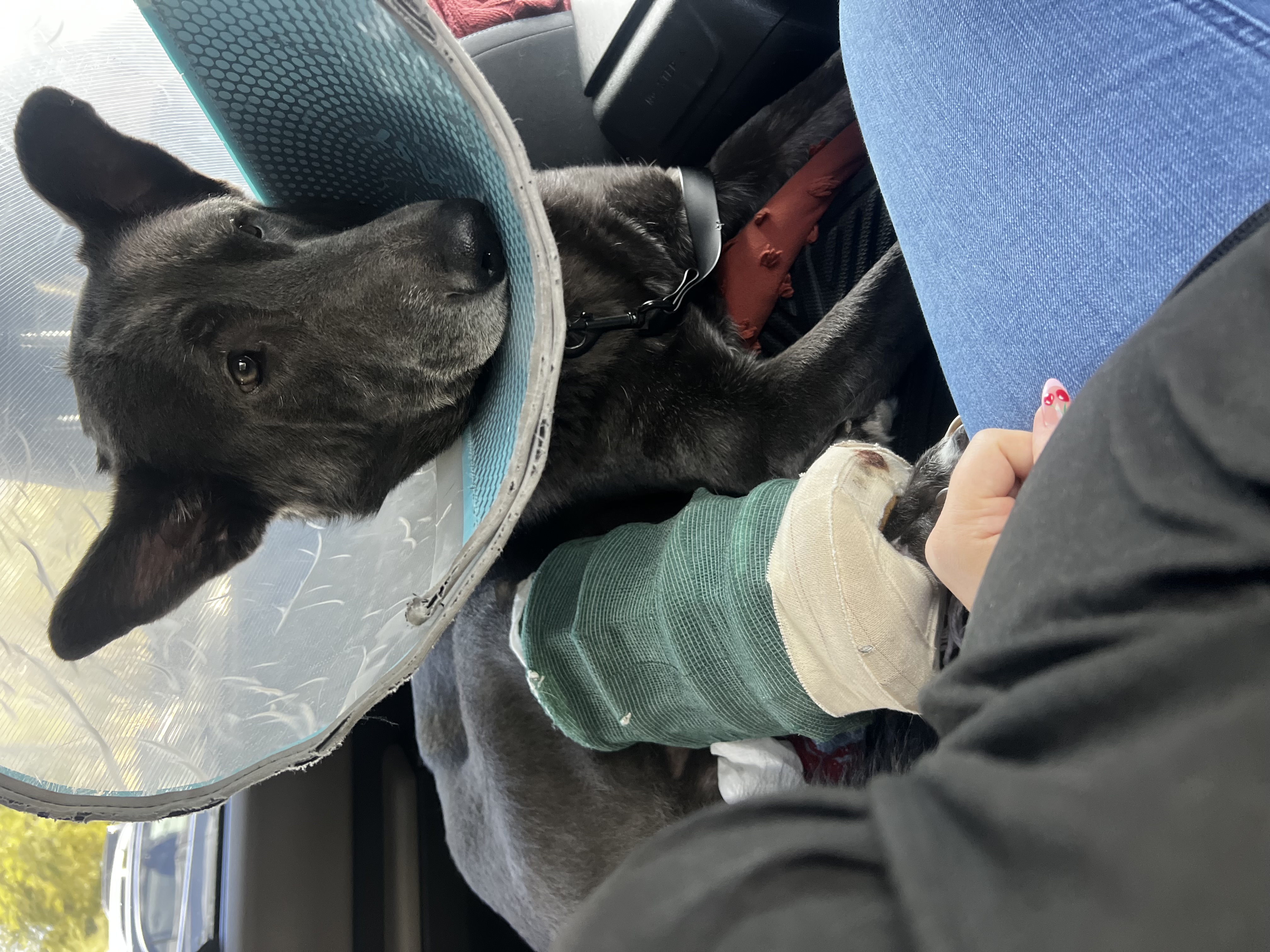
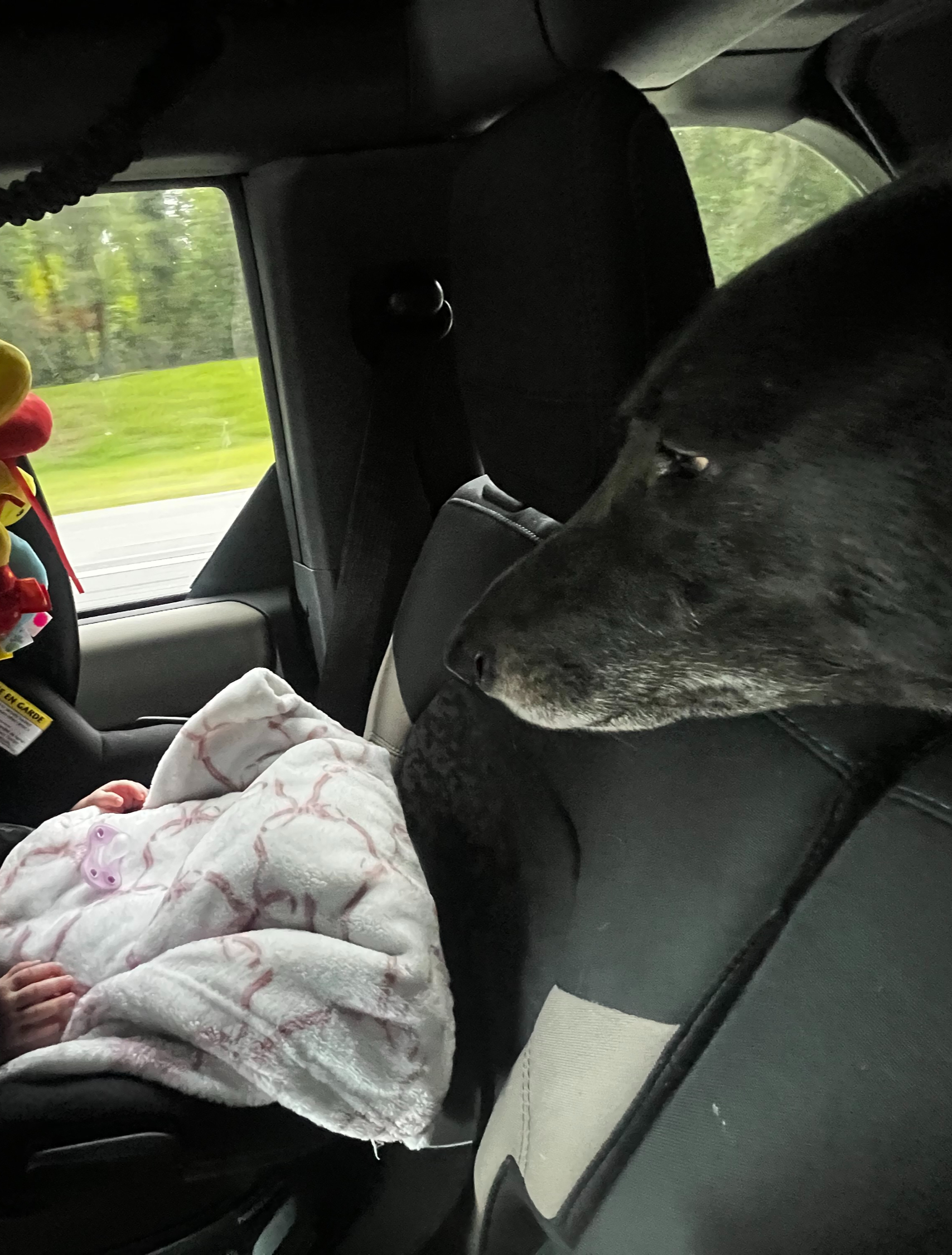
He bled through towels that Scenthound gave me and a seat cover if that shows how much he was bleeding.
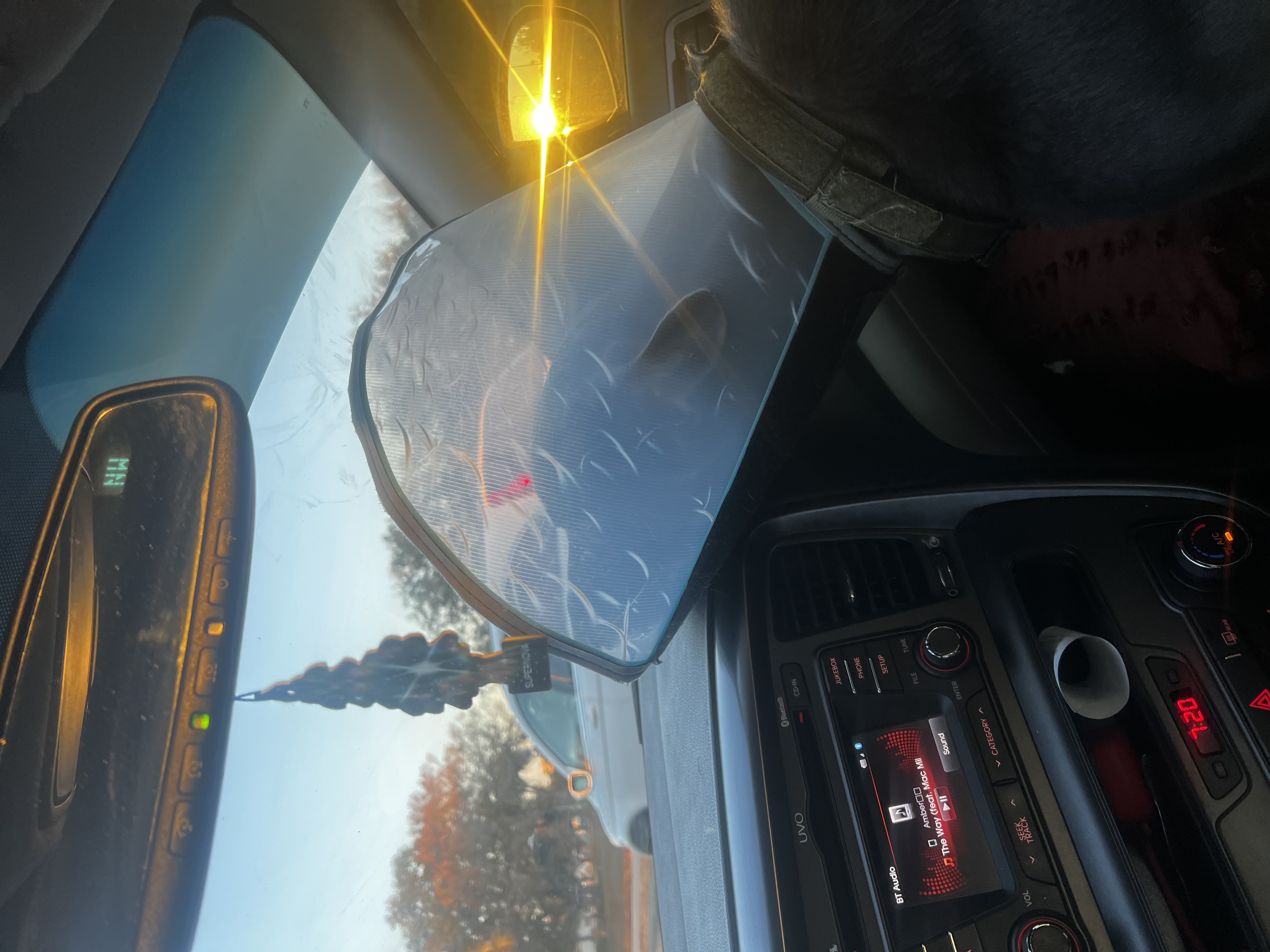
Car After Picking Him Up and Rushing Him To Emergency Surgery
.jpg)
.jpg)
.jpg)
january 2026
A Routine Bath, A Life Changed Forever
January 23, 2026
Griz was at Scenthound Mount Dora for what should have been a routine bath when I received a phone call informing me that he had been cut and that they believed he needed stitches.
I rushed Griz to his primary veterinarian, where we learned his Achilles tendon had been completely severed and that he needed emergency surgery immediately. What we thought was a simple cut quickly became the beginning of months of surgeries, rehabilitation, bandage changes, multiple medications, infections, follow-up appointments, and sedation at every single appointment.
January 26, 2026
At Griz's follow-up appointment, we were told moisture had been found inside his splint. We were instructed to return in three days for another bandage change and close monitoring to help prevent infection and reduce the risk of amputation.




february 2026
Second Surgery, External Fixator, & Infection
February 1, 2026
Knowing Griz, we could immediately tell something was wrong. Around 2:00 a.m., he was clearly in pain and whimpering, so we rushed him to the emergency veterinarian to find out what was causing the pain inside his soft cast. After examining him, the emergency team discovered that the splint inside the soft cast had cracked.
The emergency doctors explained that another soft cast would not provide the support Griz needed. They also found signs that his initial Achilles tendon repair may have failed. Because of this, they highly recommended transferring Griz to the University of Florida Small Animal Hospital, where an orthopedic surgeon could evaluate his tendon repair and determine the best course of treatment.
Griz remained hospitalized at UF until the orthopedic surgeon could review all of his imaging on Monday. After evaluating the scans, the orthopedic team confirmed that his initial repair had failed and that he would need a second surgery.
February 2, 2026
We spoke with Griz's orthopedic surgeon about the options moving forward. The plan was to attempt a second Achilles tendon repair using either another splint or an external fixator.
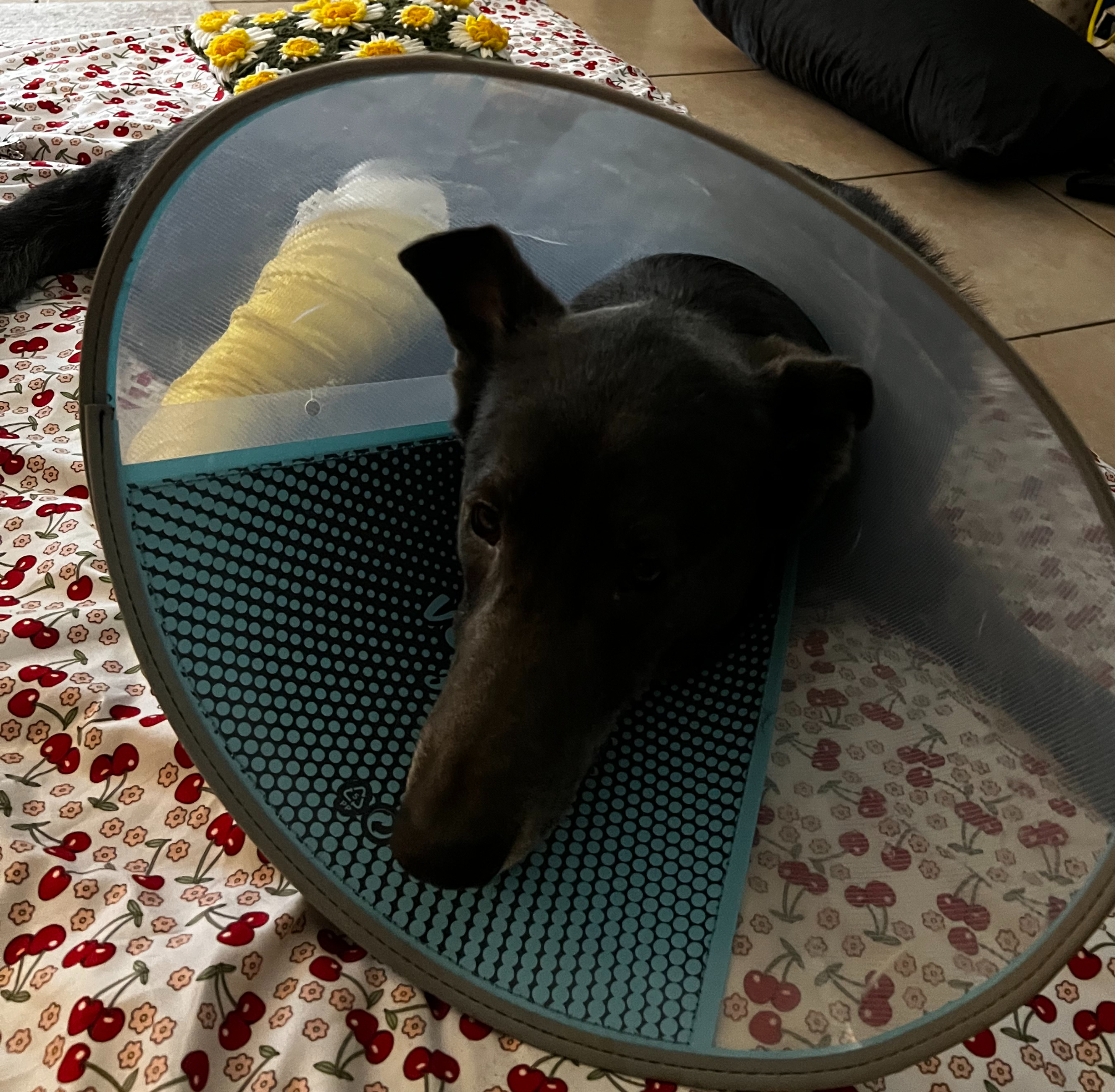
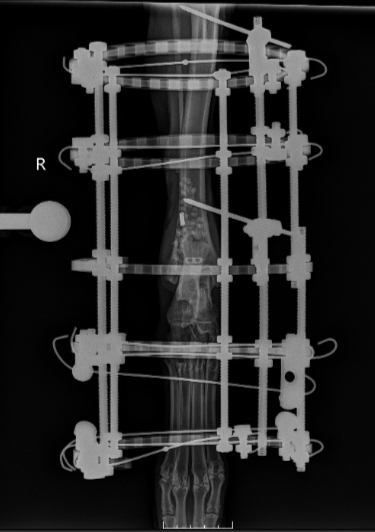
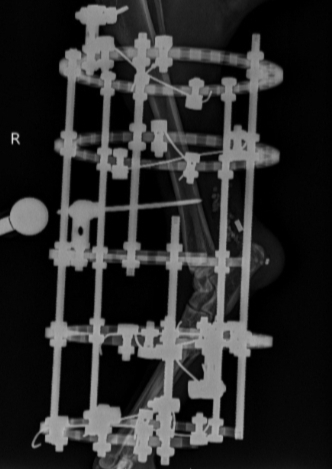
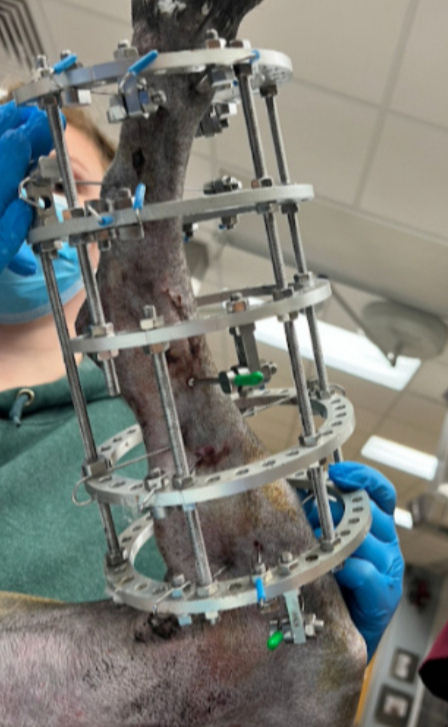
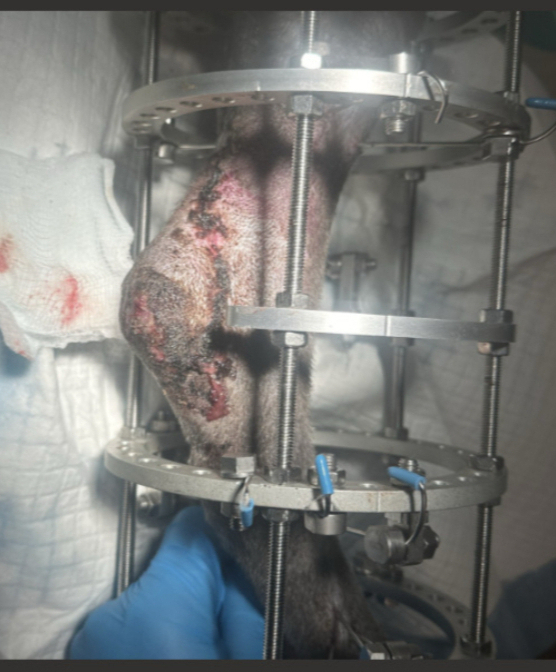
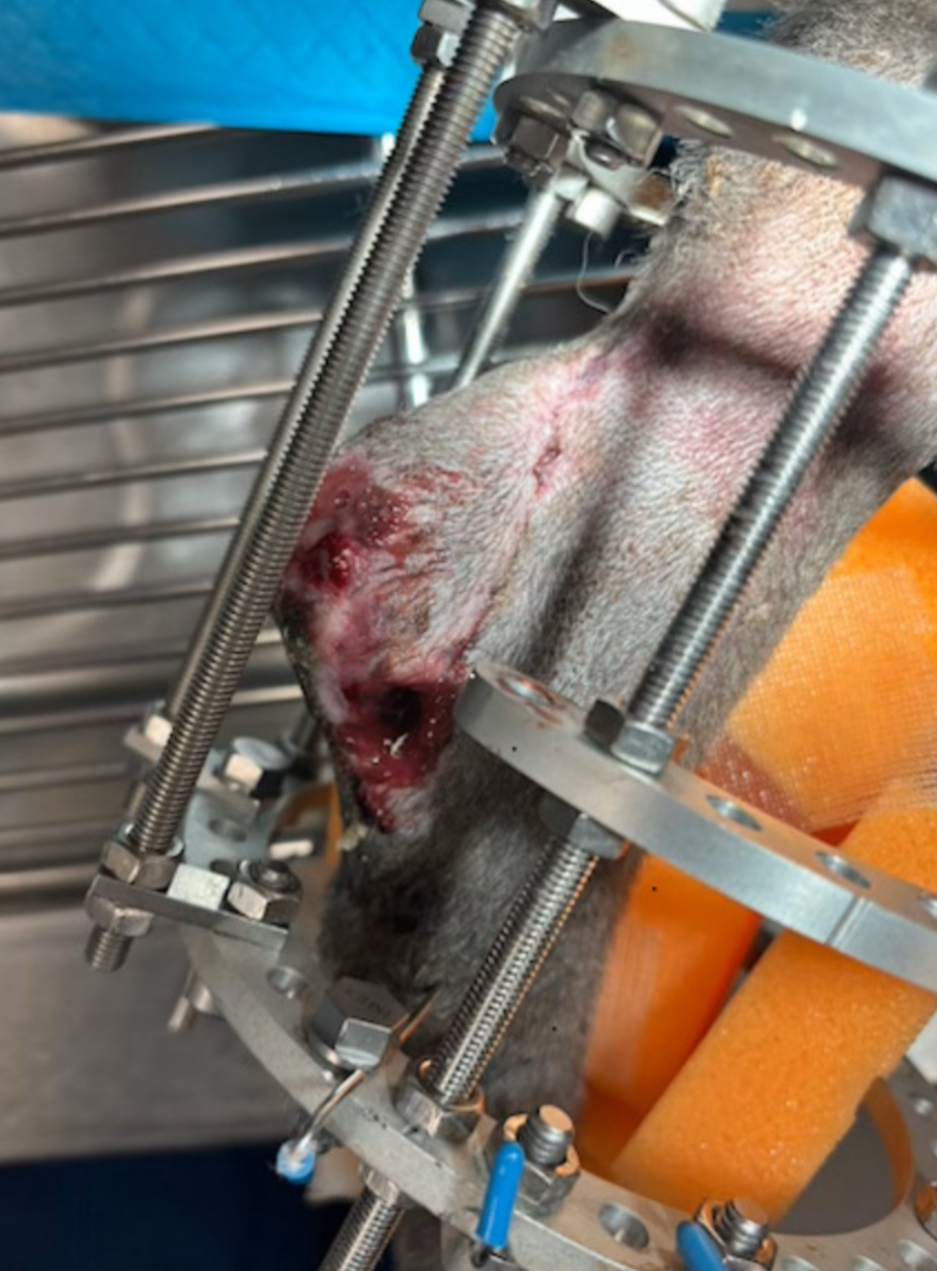
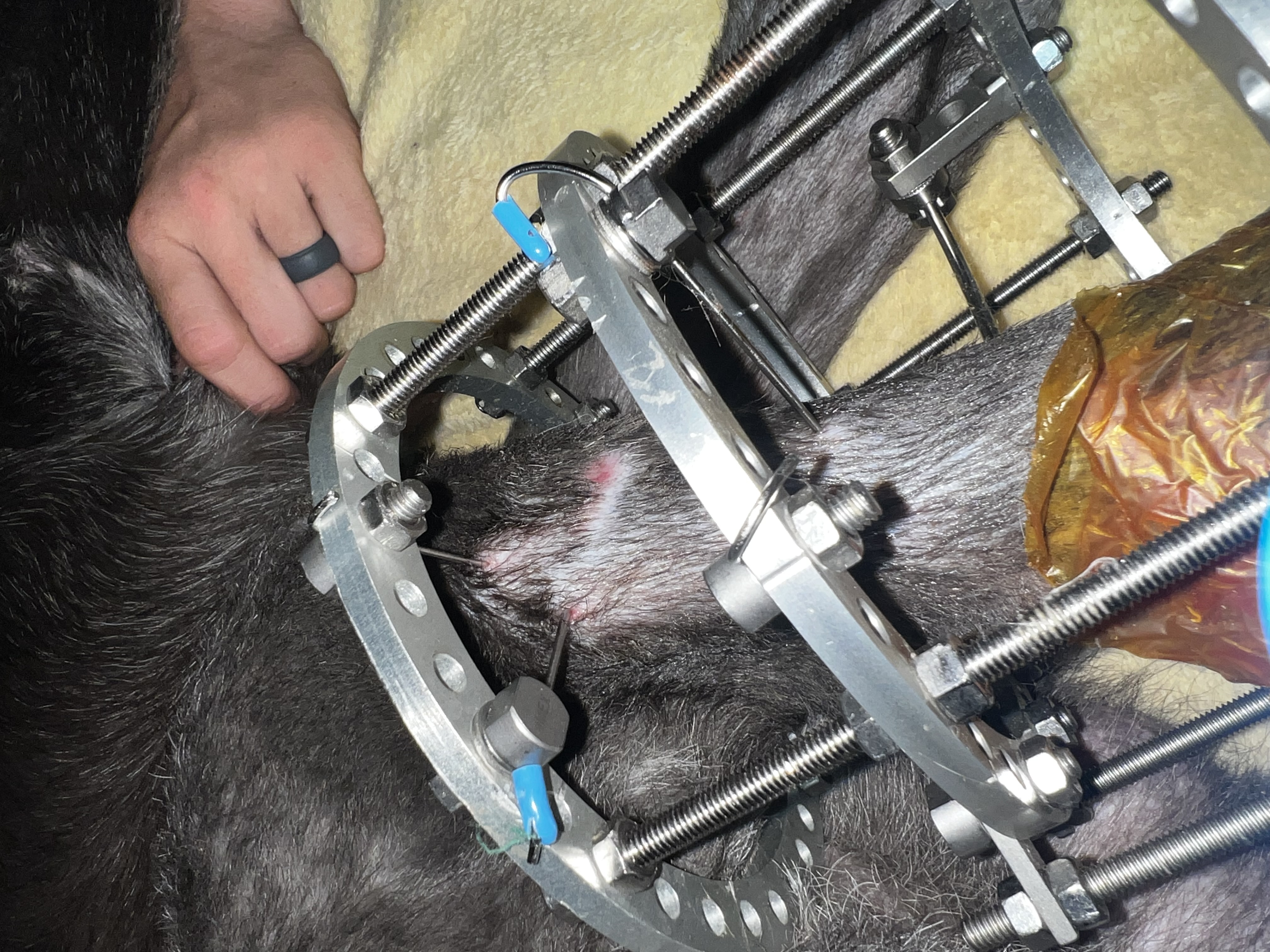
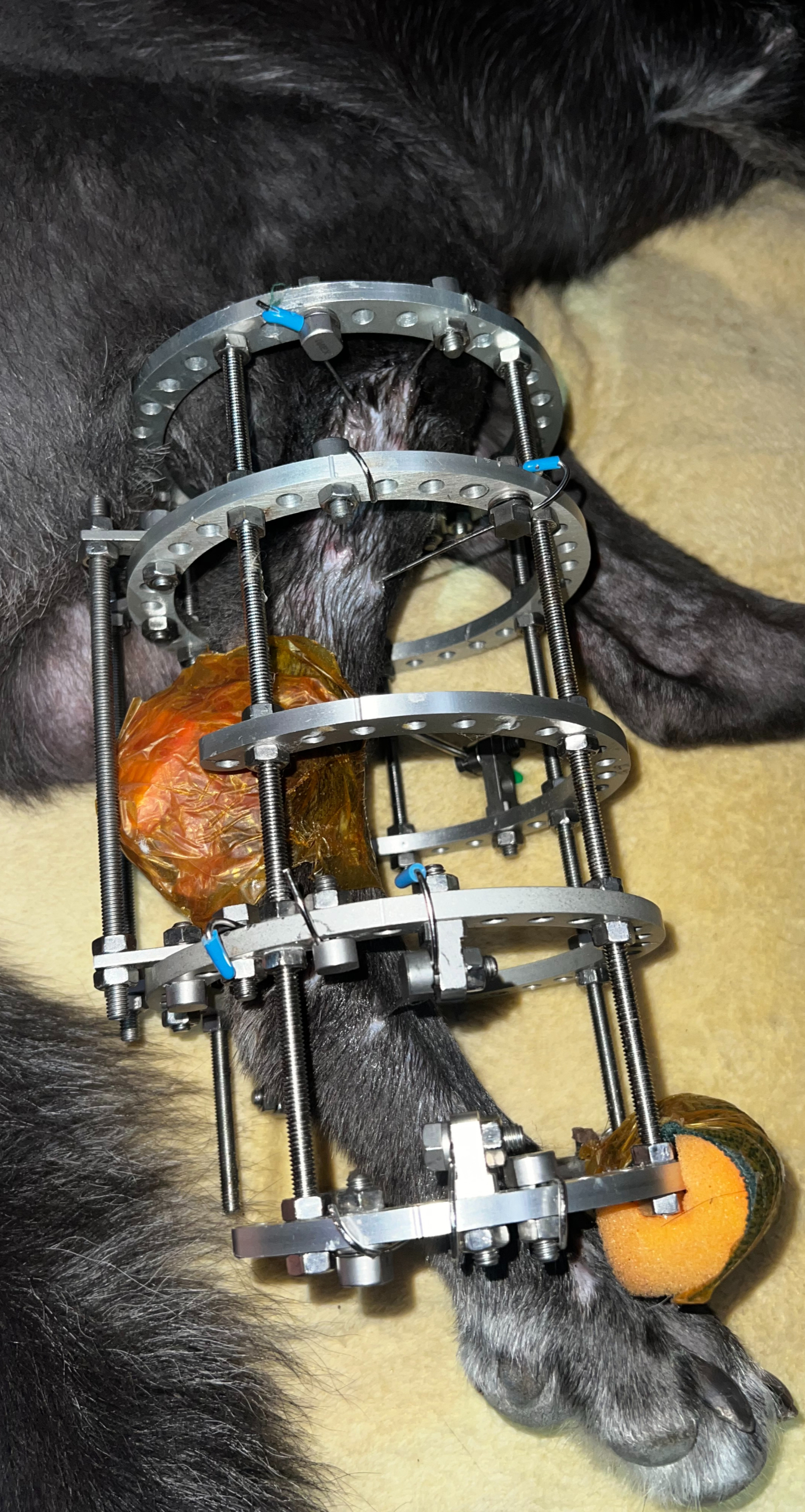
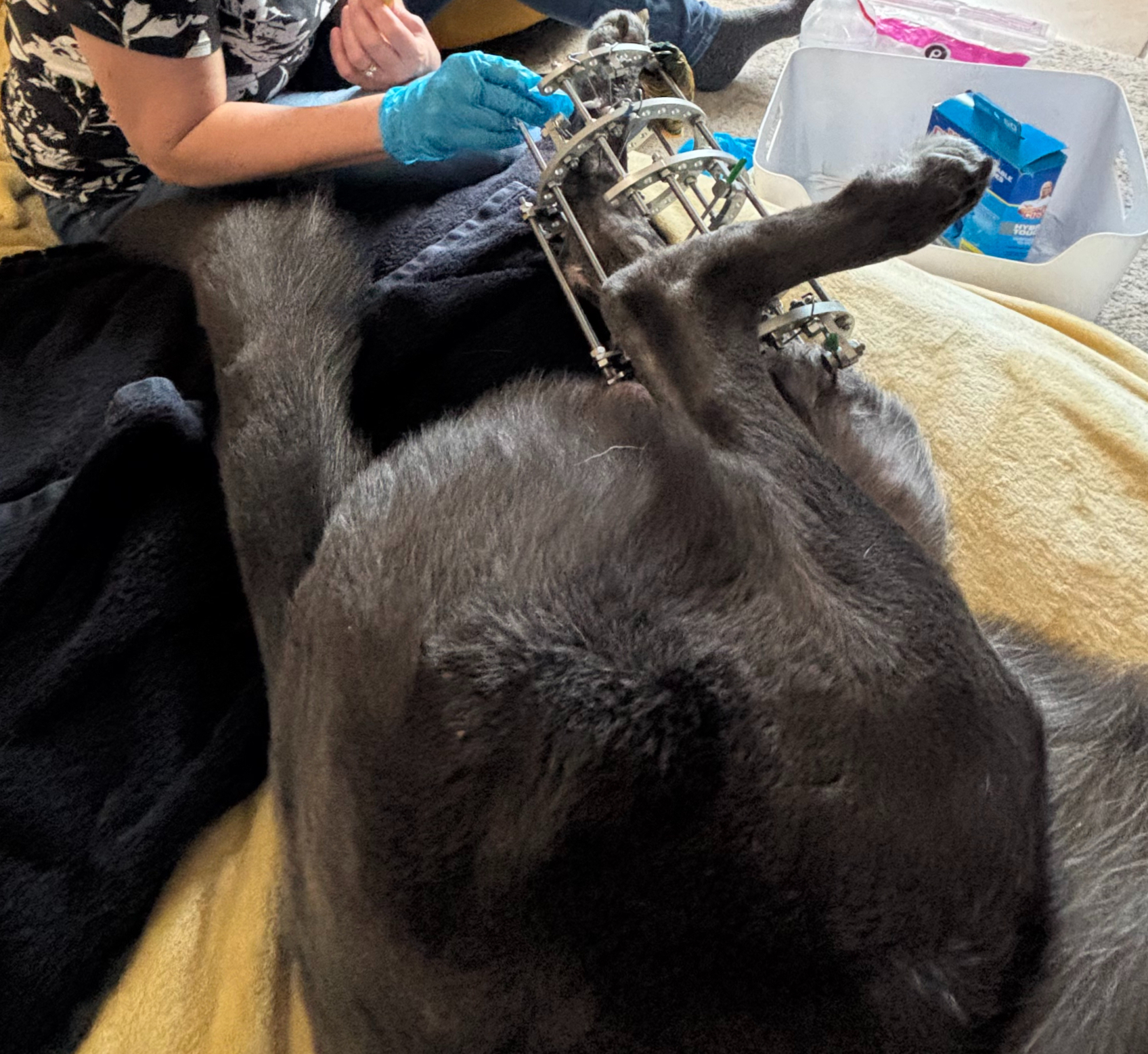
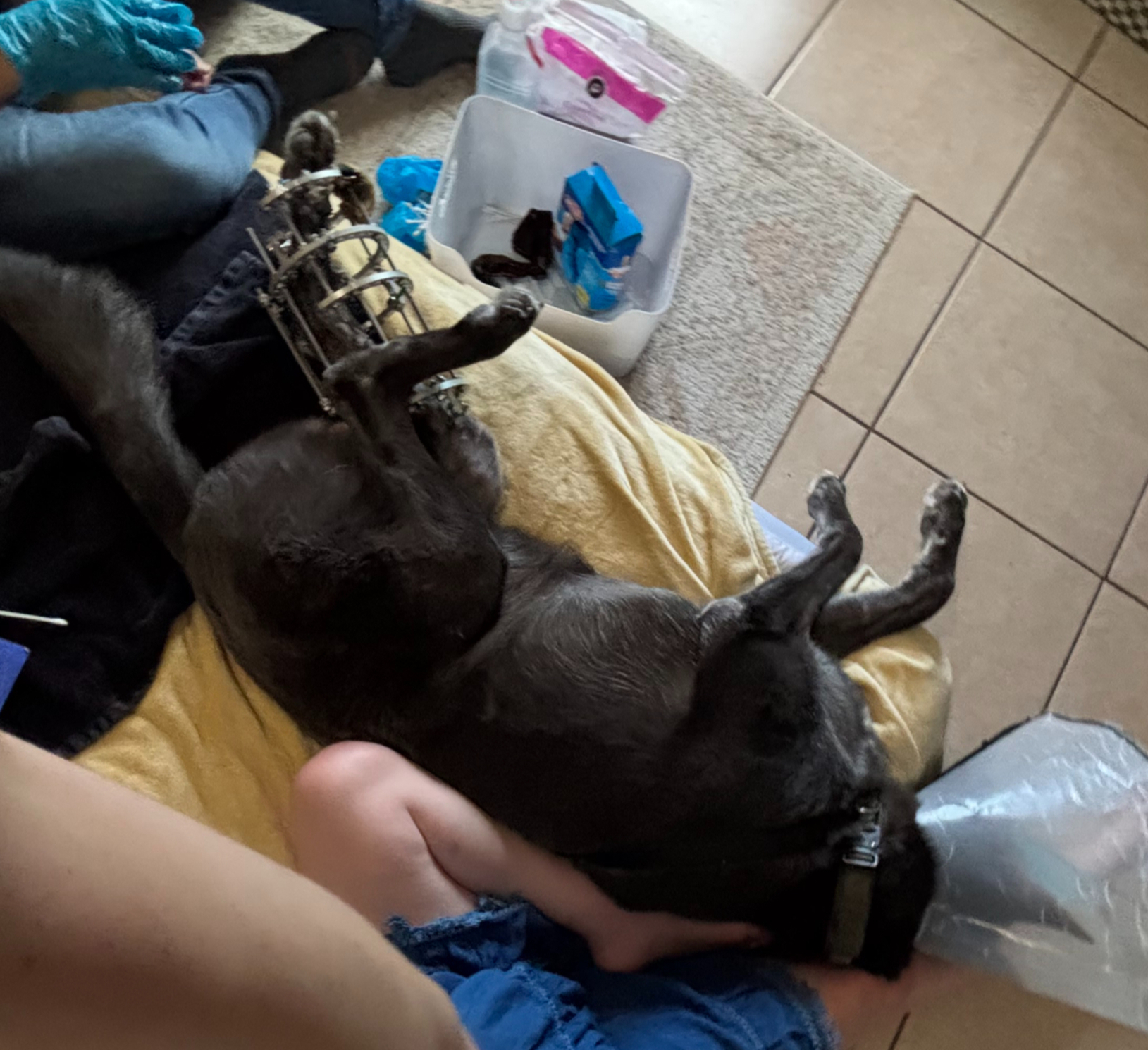
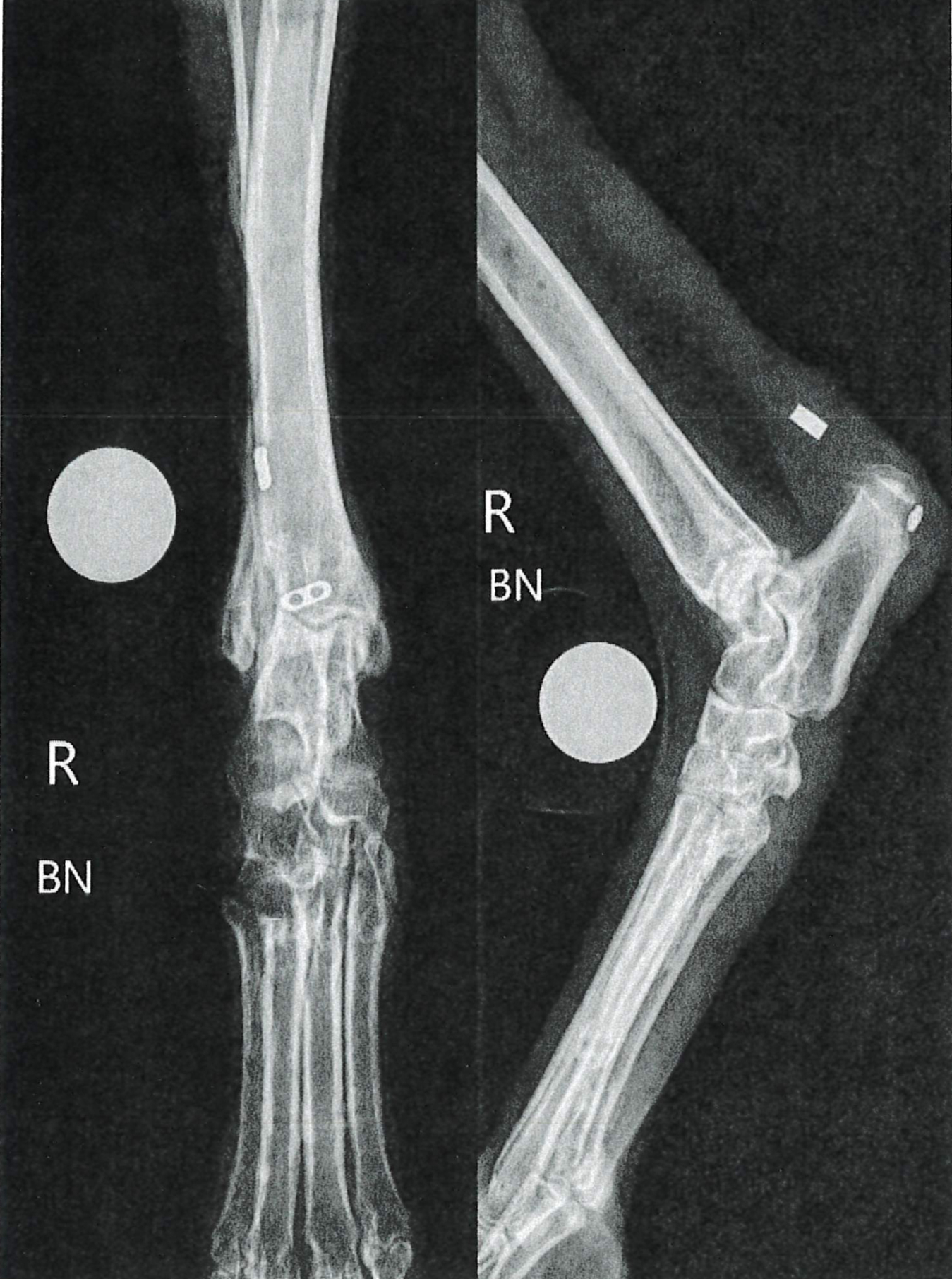
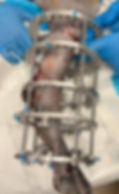
The surgeon was concerned that another splint could break during the critical healing period and recommended an external fixator because of Griz's size. An external fixator is a metal frame attached to the bone with pins and wires to stabilize the leg while the tendon heals.
We also had to make an incredibly difficult decision before surgery. If the tendon could not be repaired, or if the repair failed again, our remaining options would be surgically fusing the joint or possible amputation.
February 4, 2026
Griz underwent his second surgery. Thankfully, the procedure went as well as it could have, and the orthopedic surgeon was able to repair his tendon and place the external fixator.
During surgery, a culture was taken from the suture material to test for infection. We picked Griz up while waiting for those results.
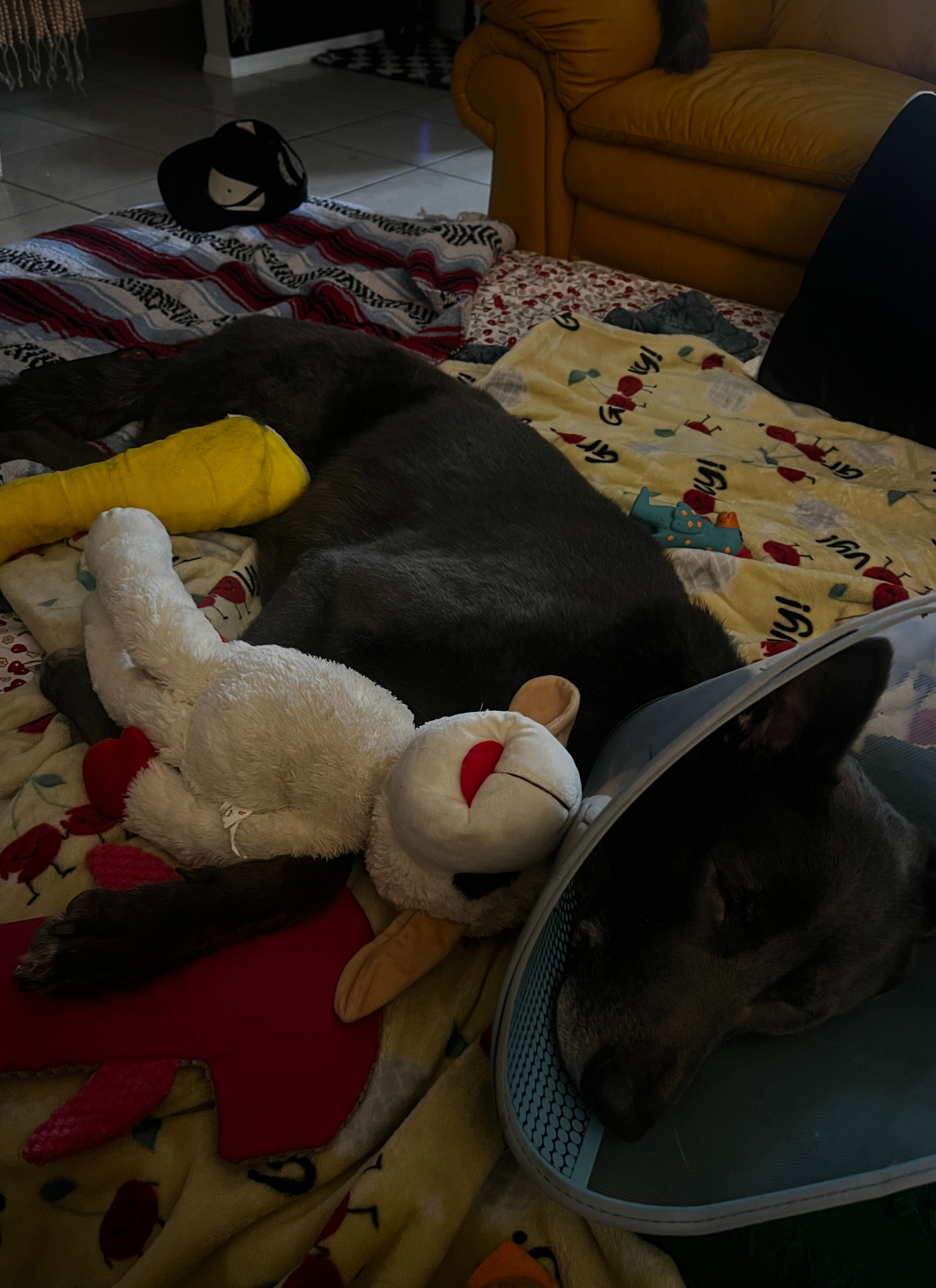
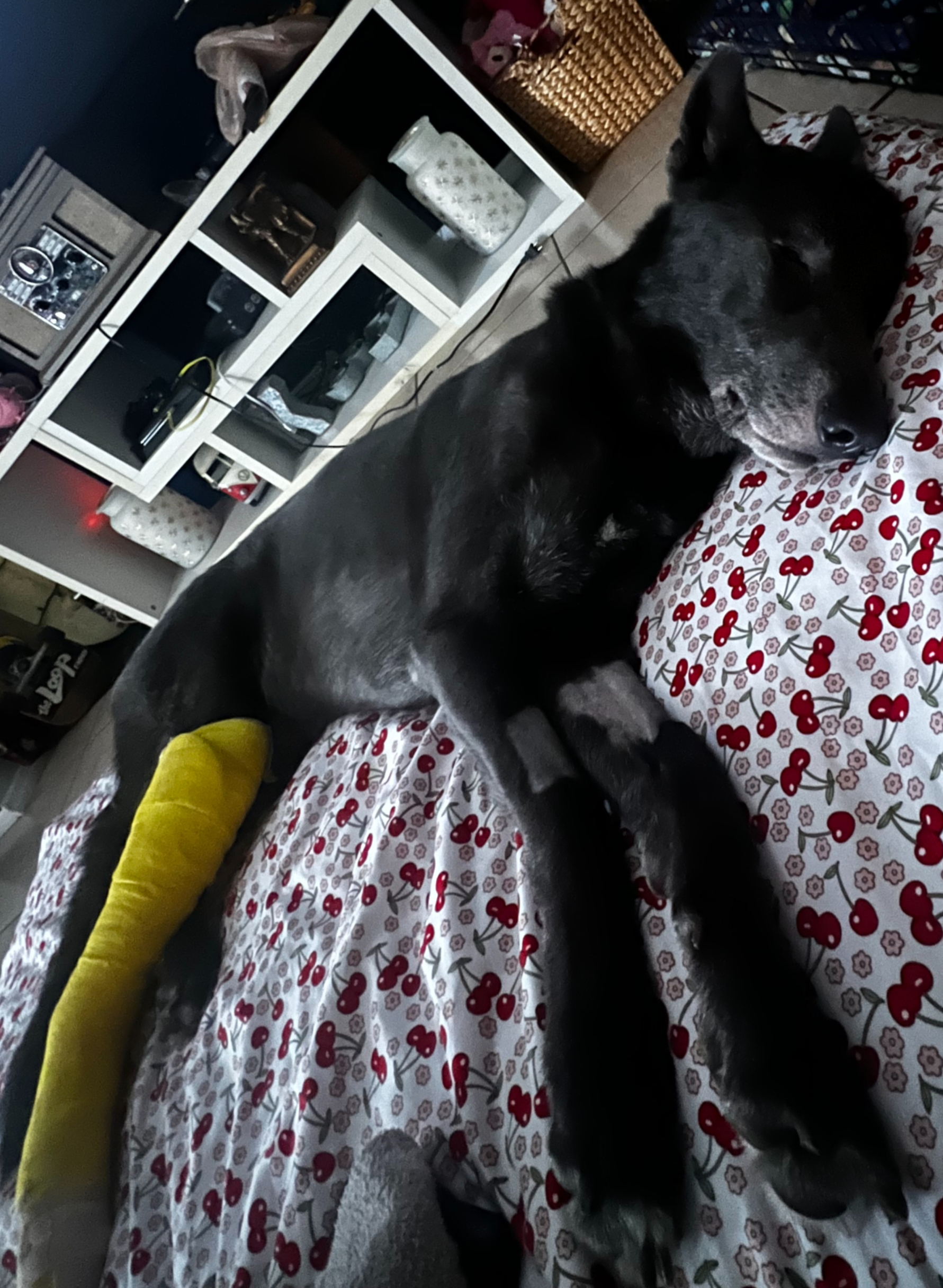
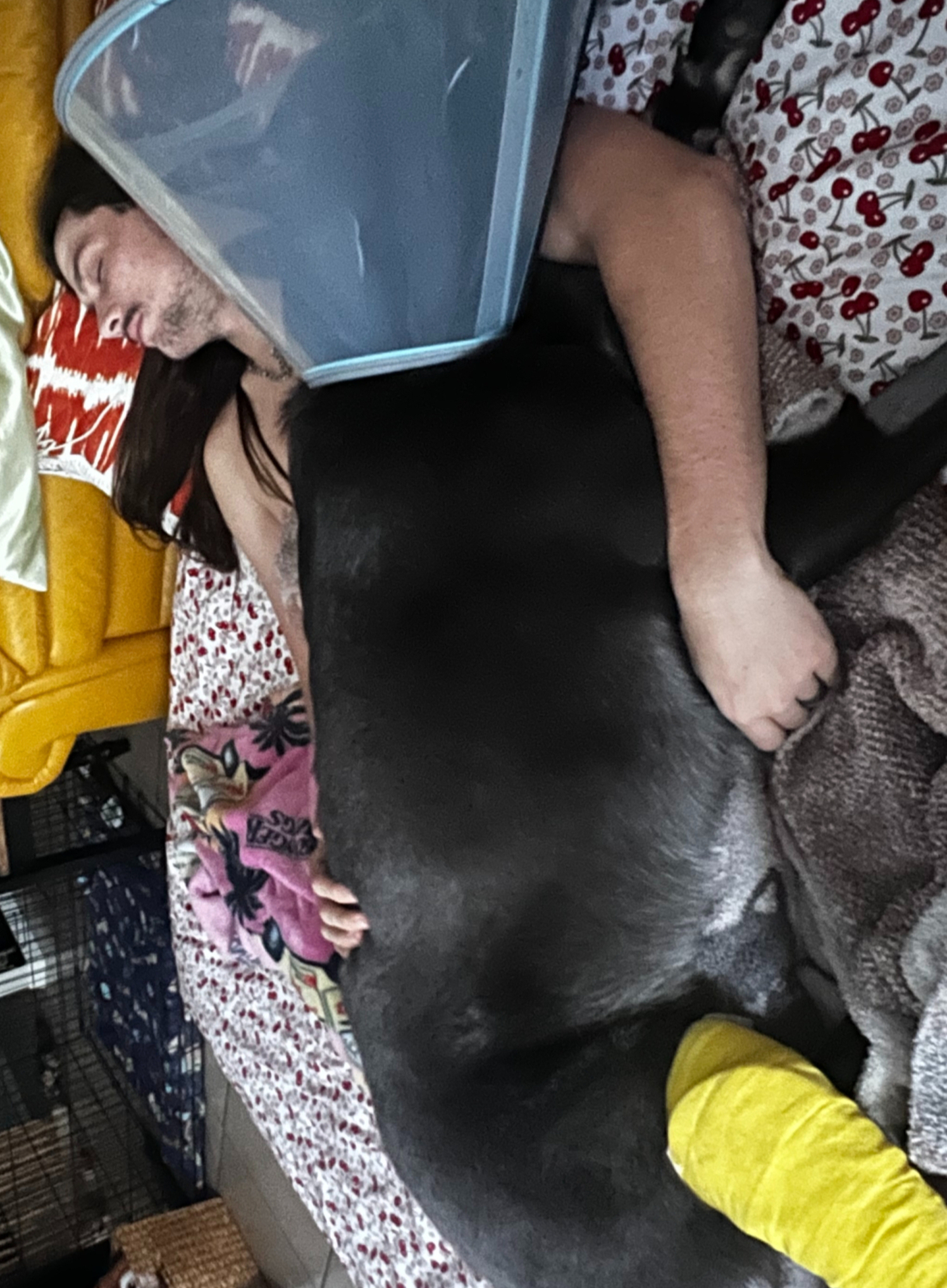
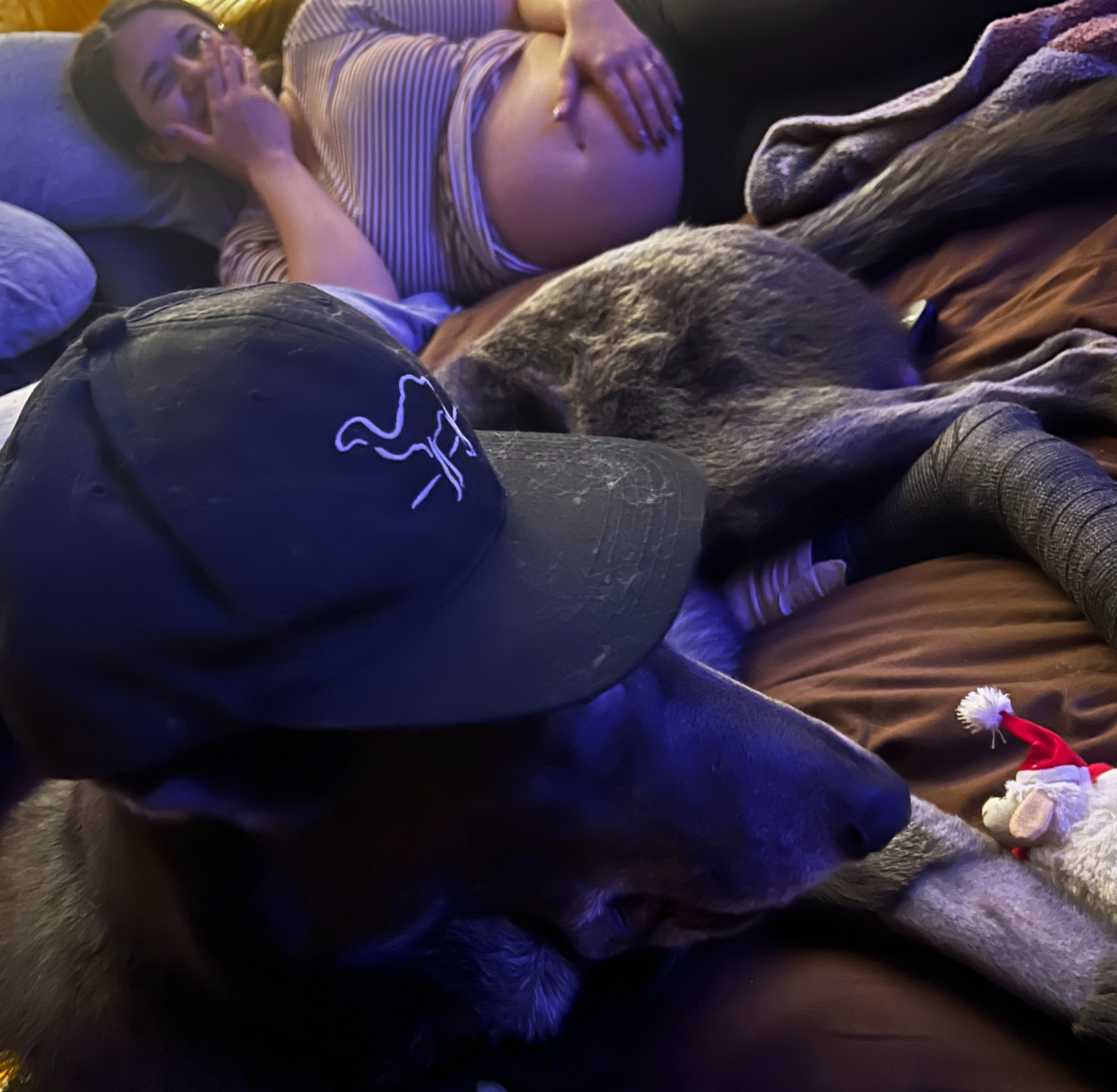
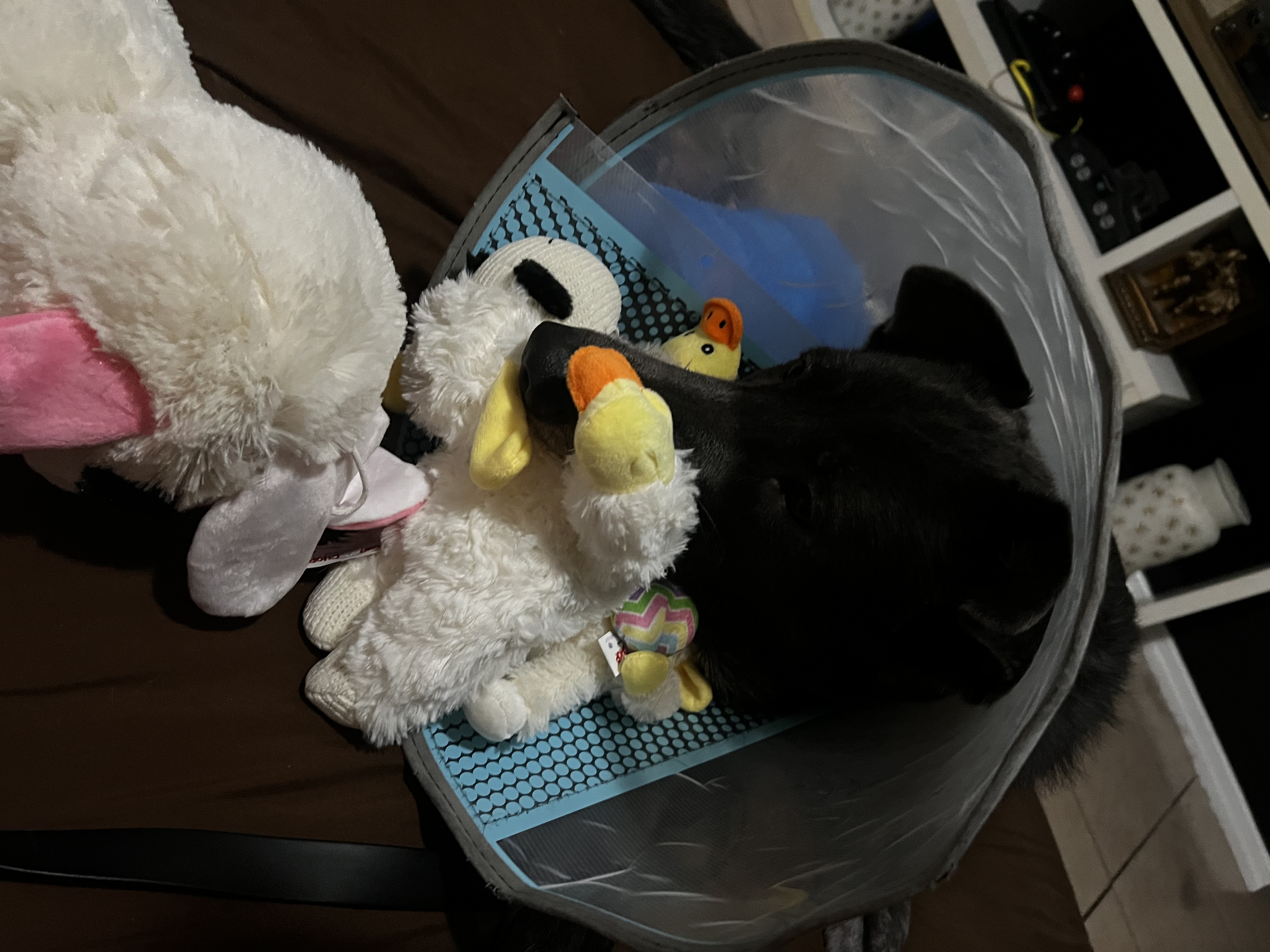
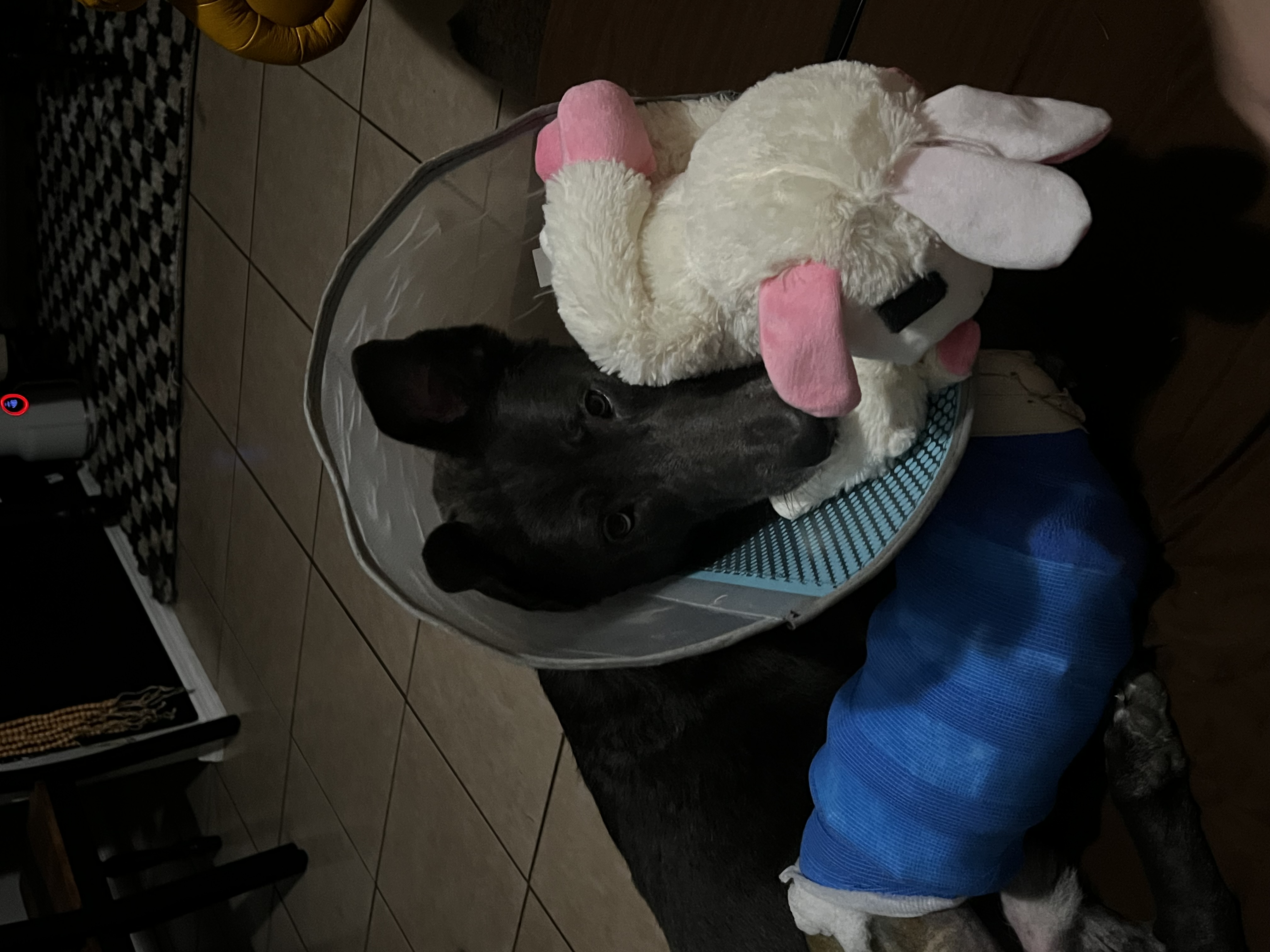
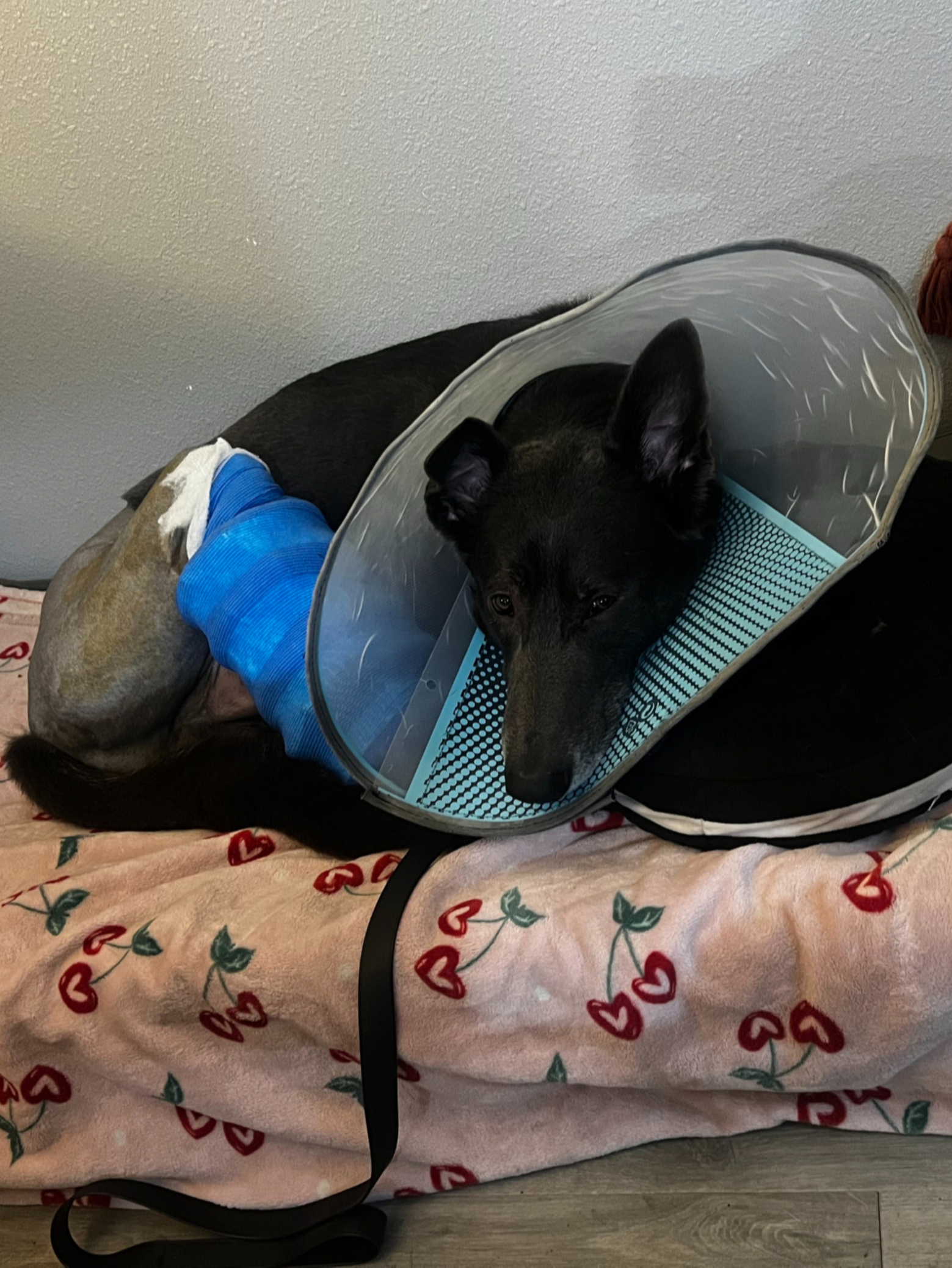
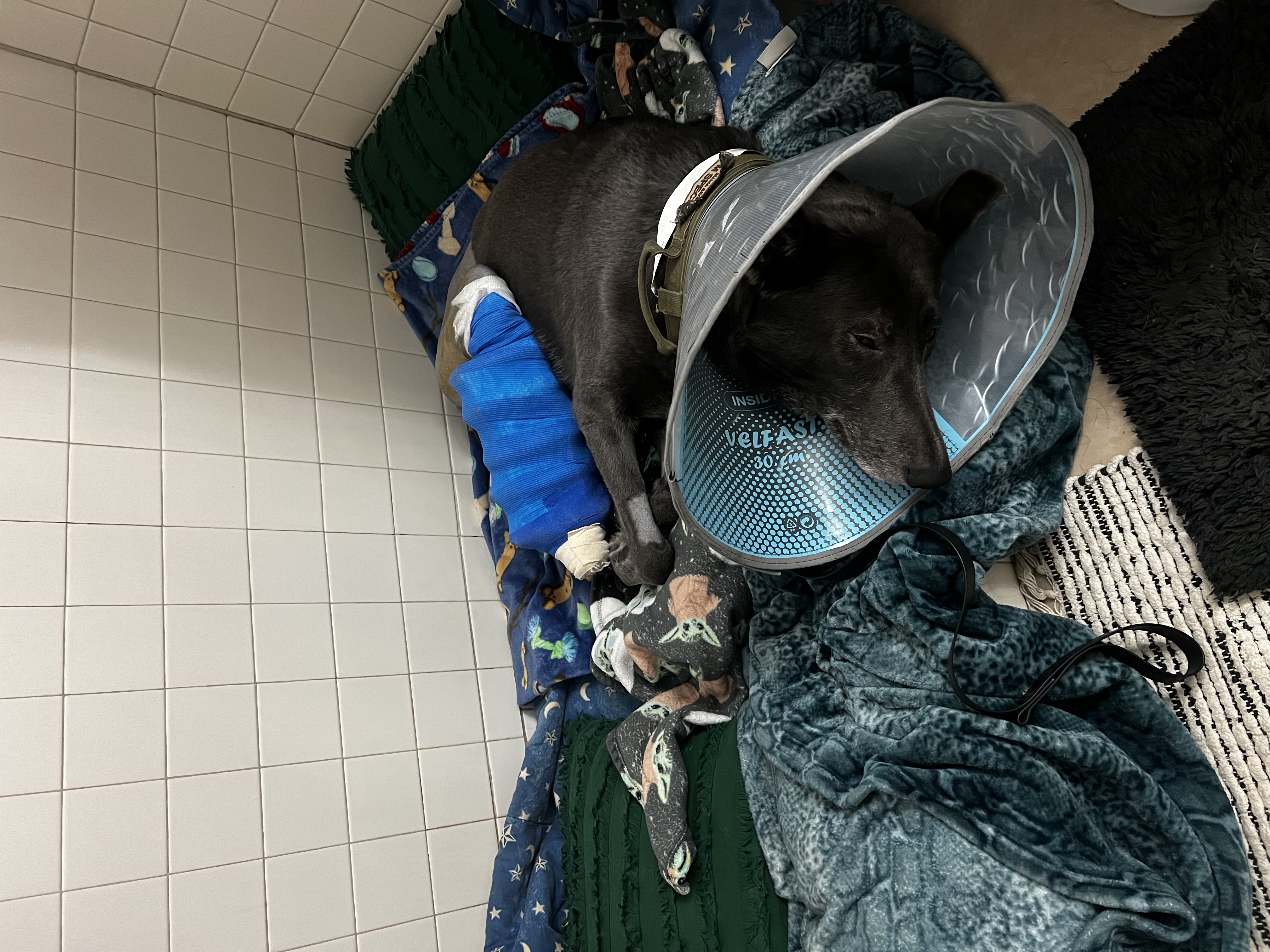
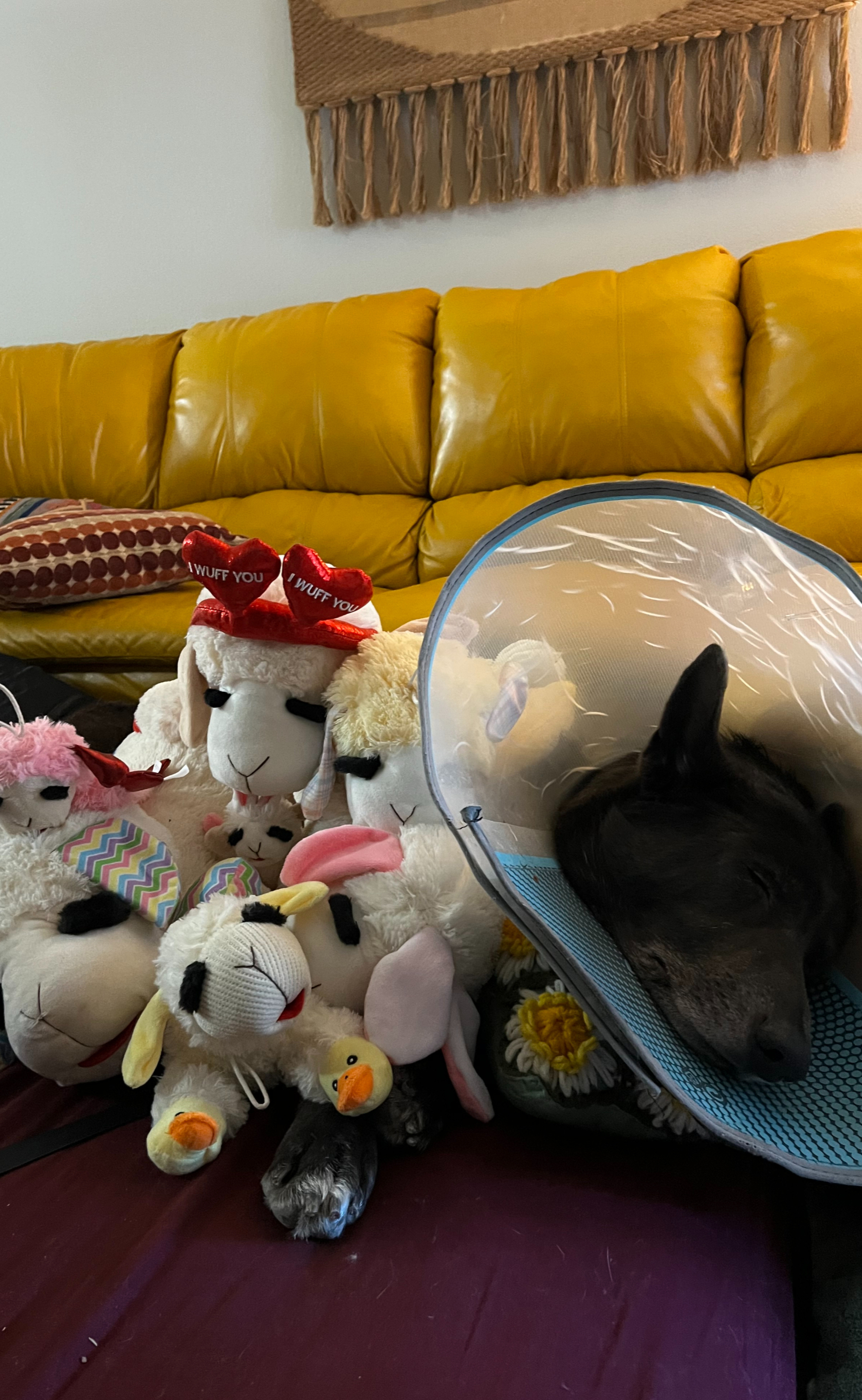
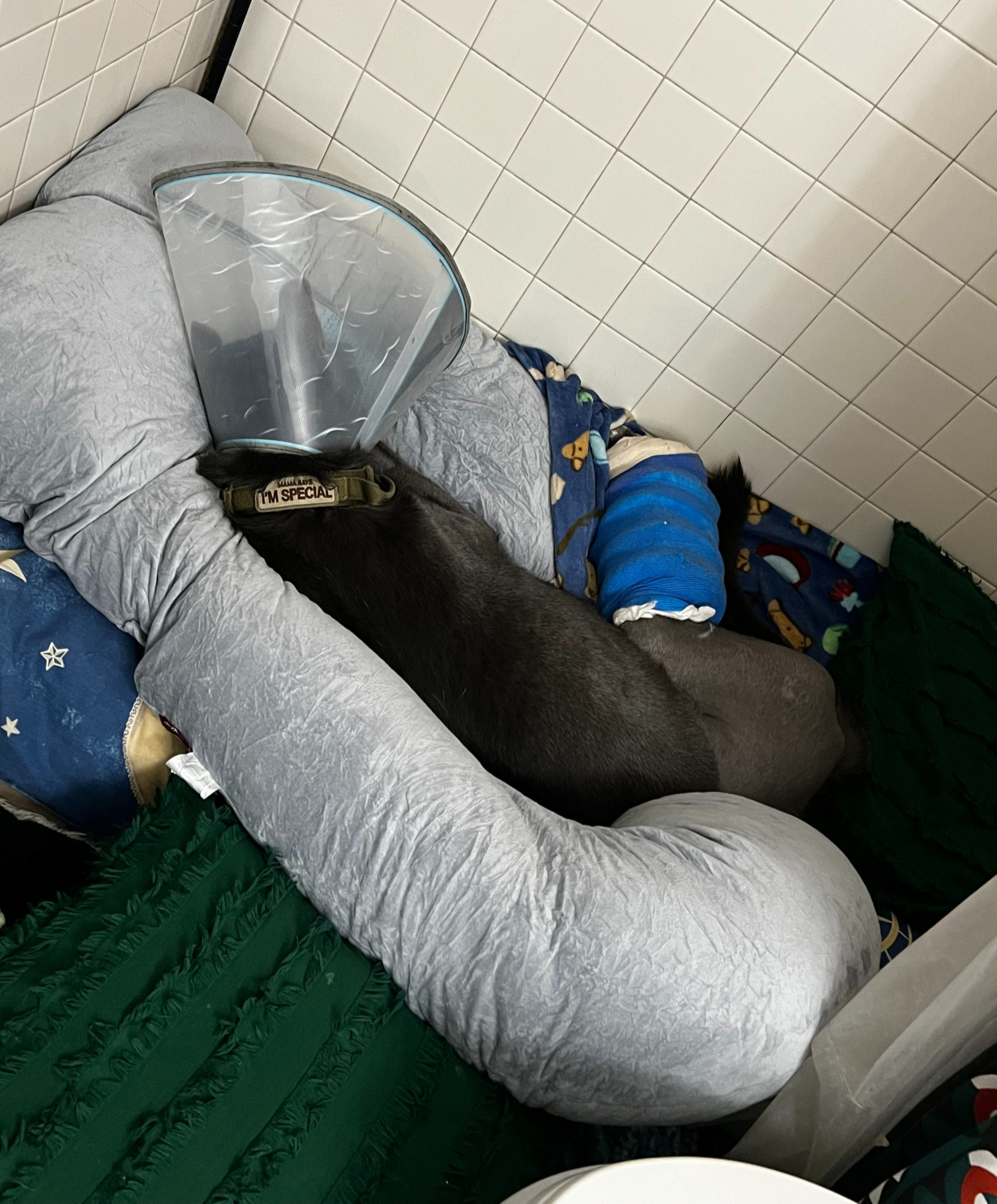
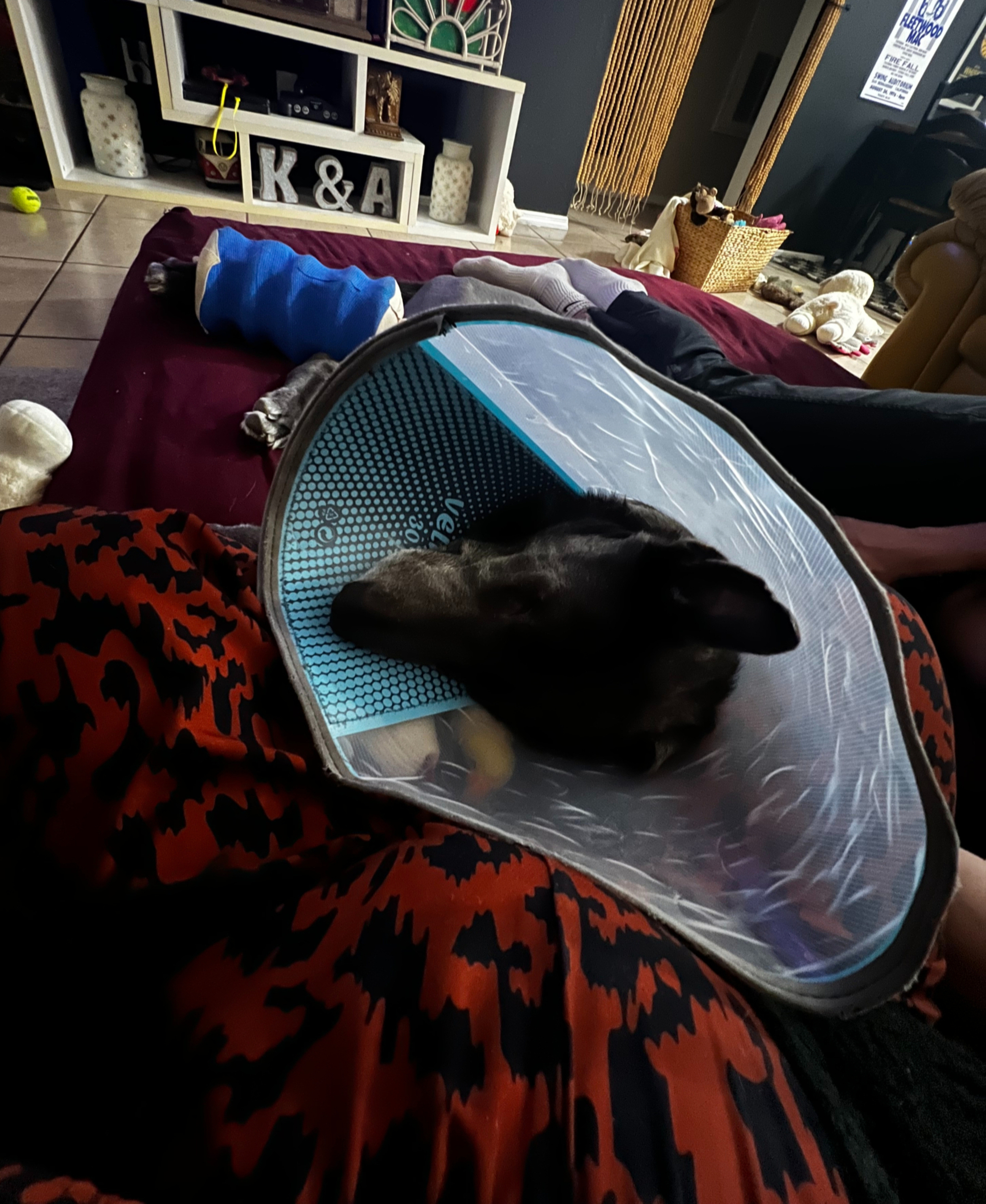
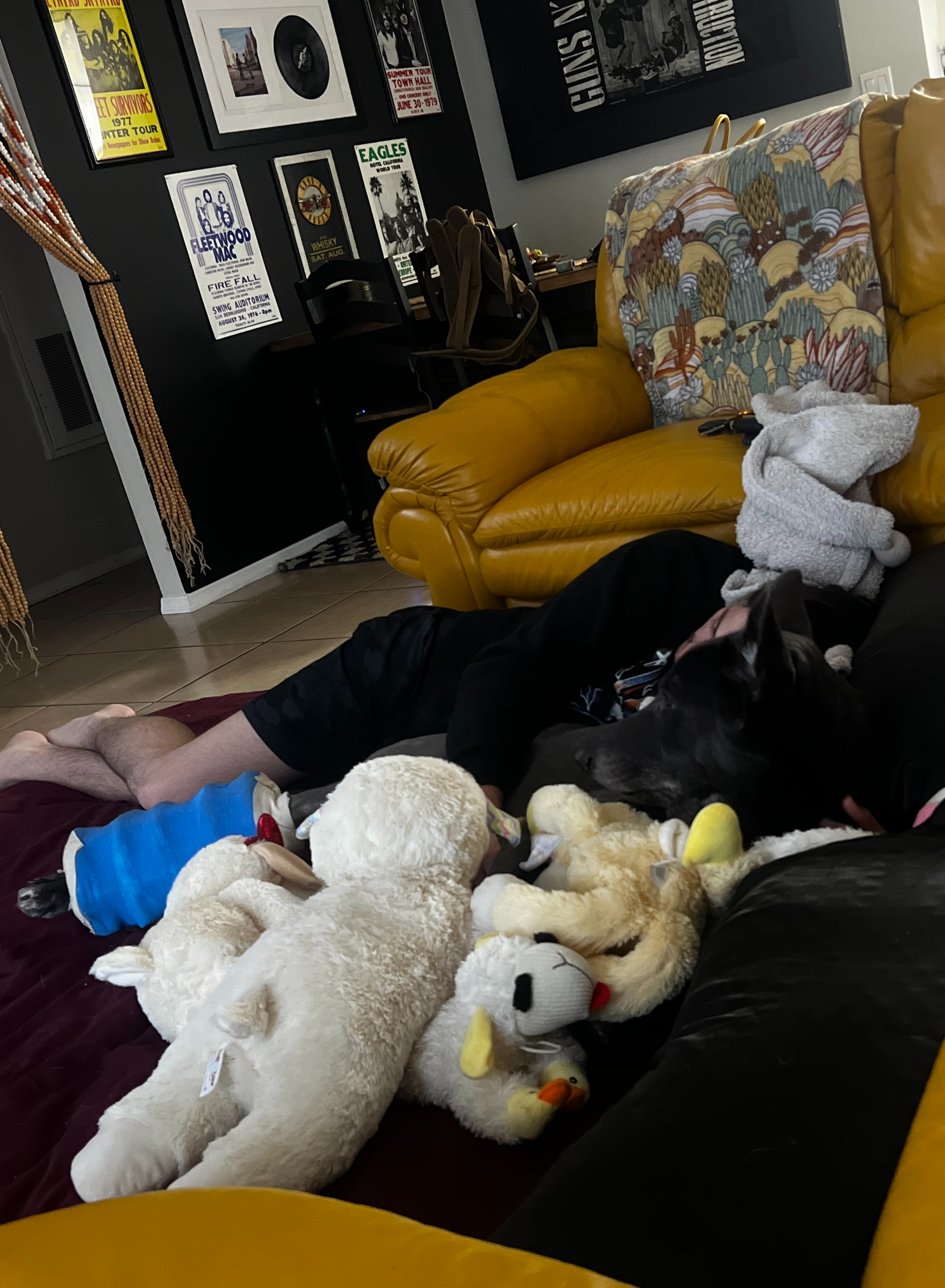
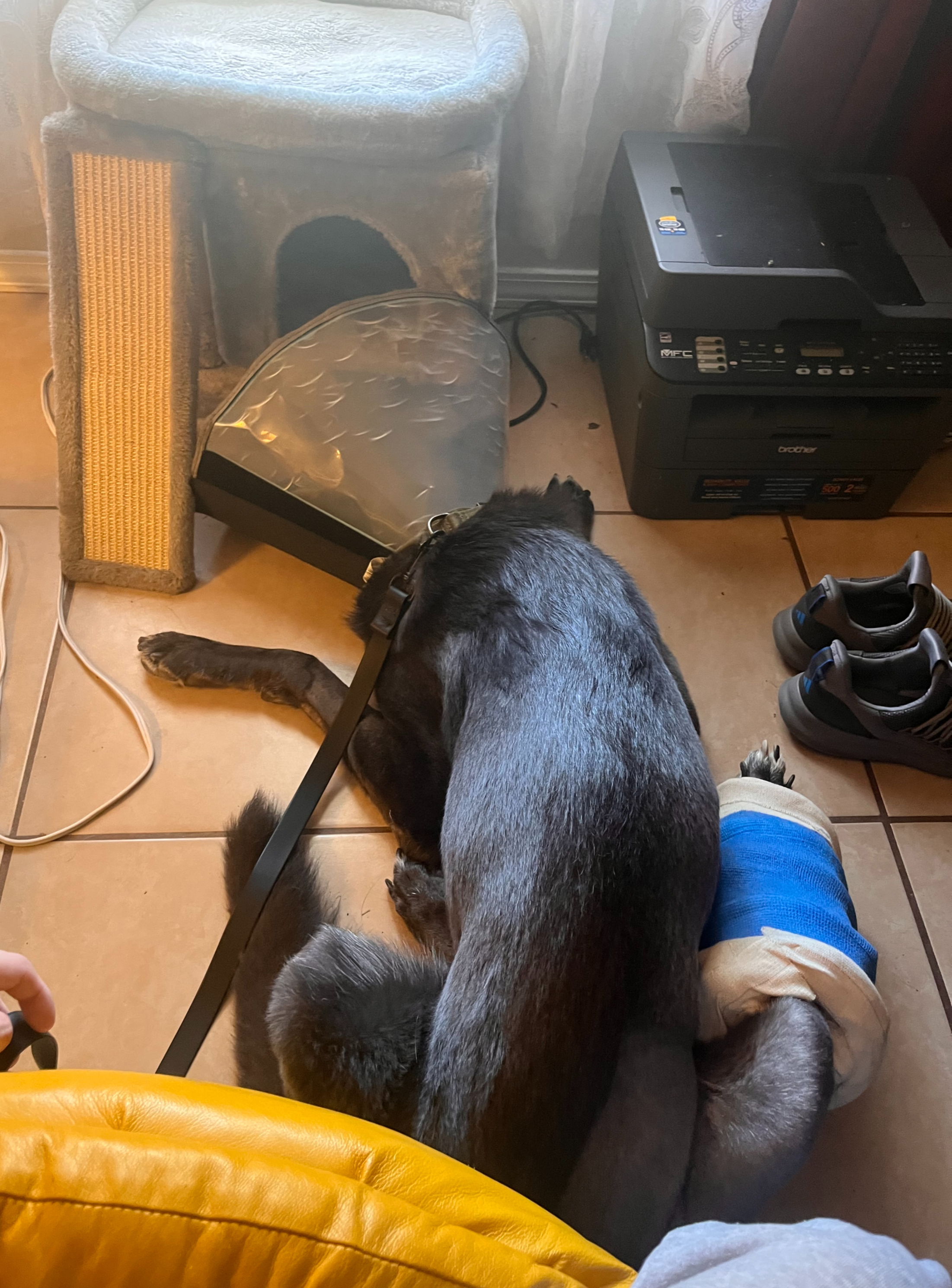
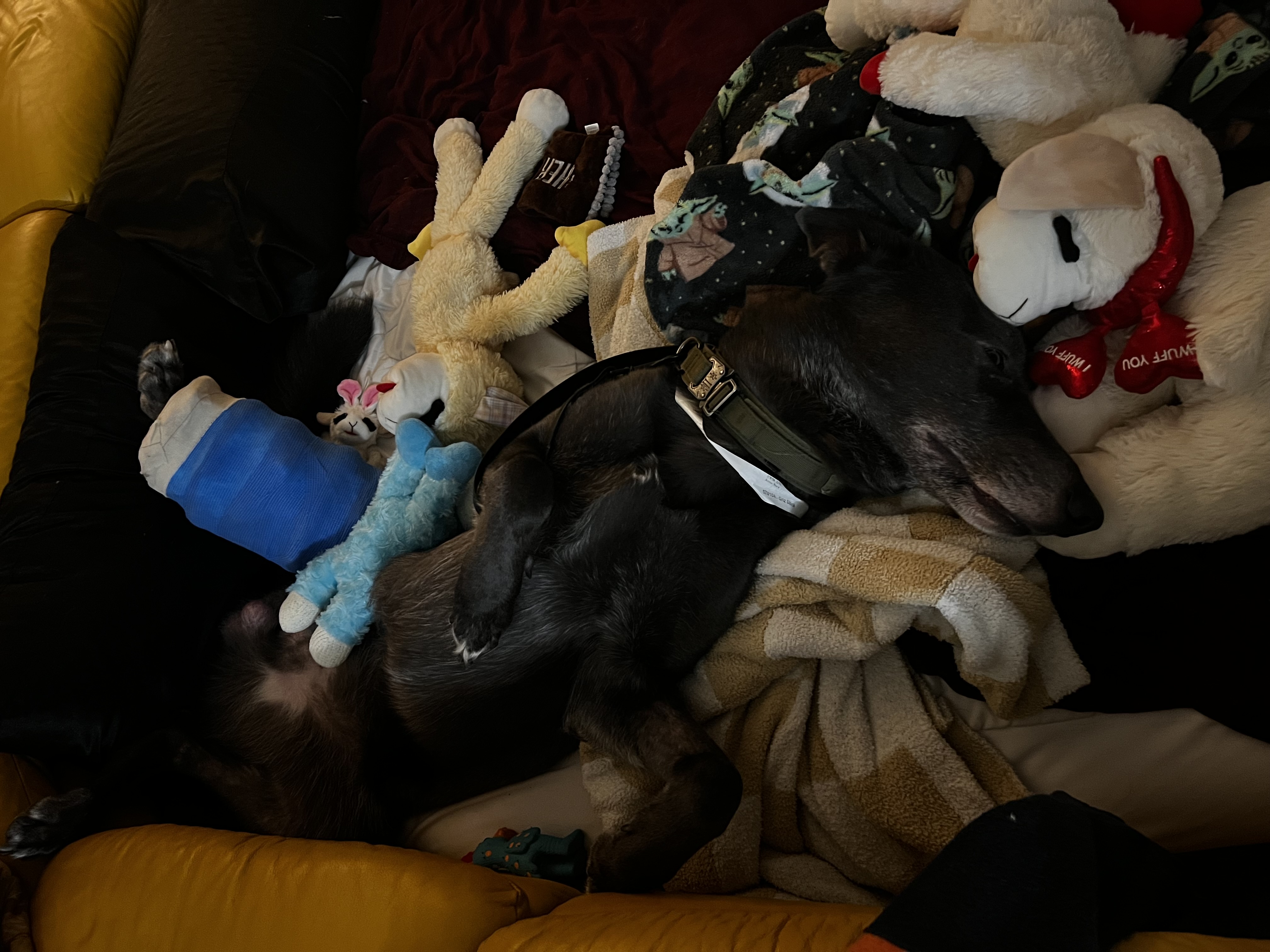
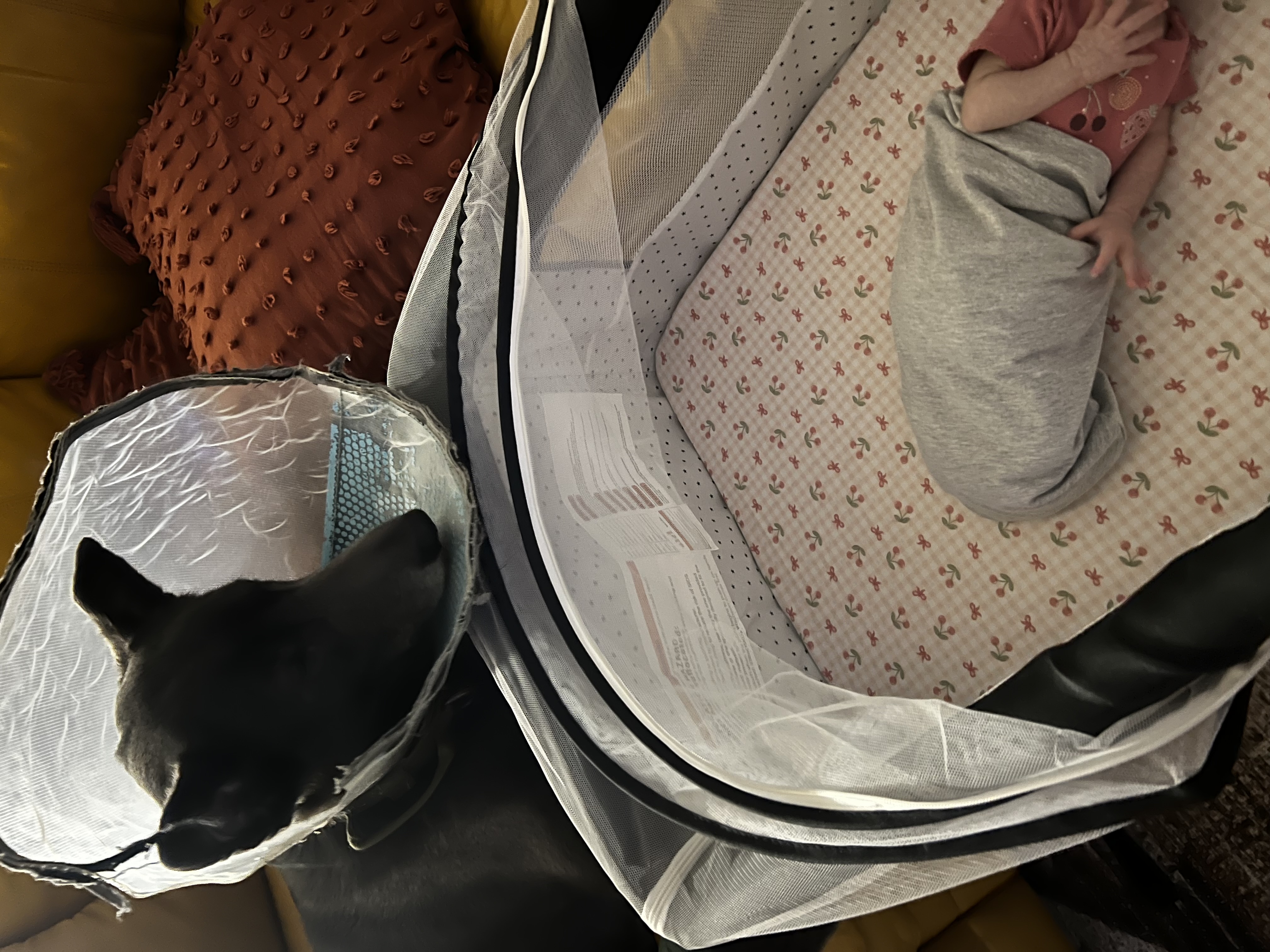
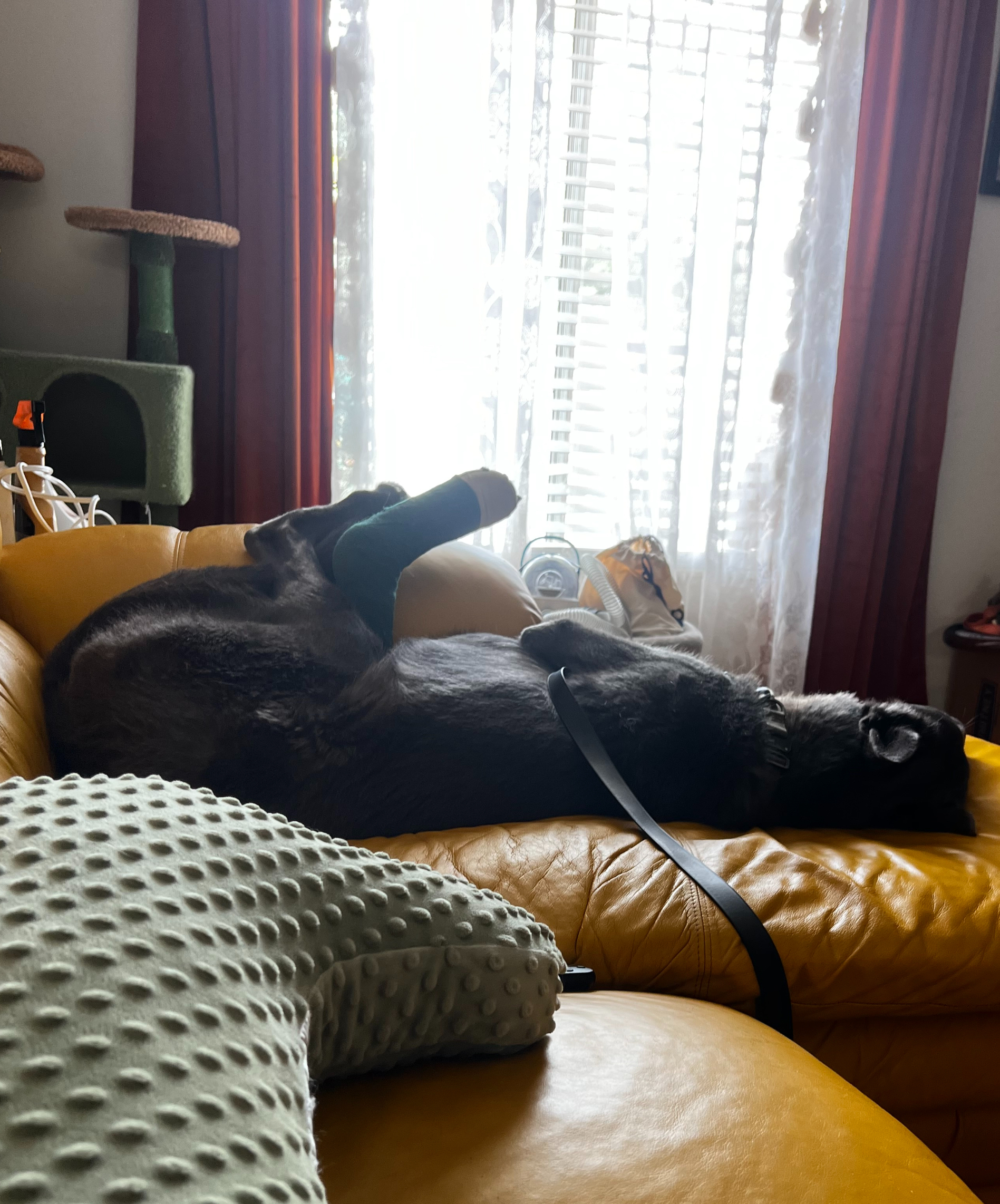
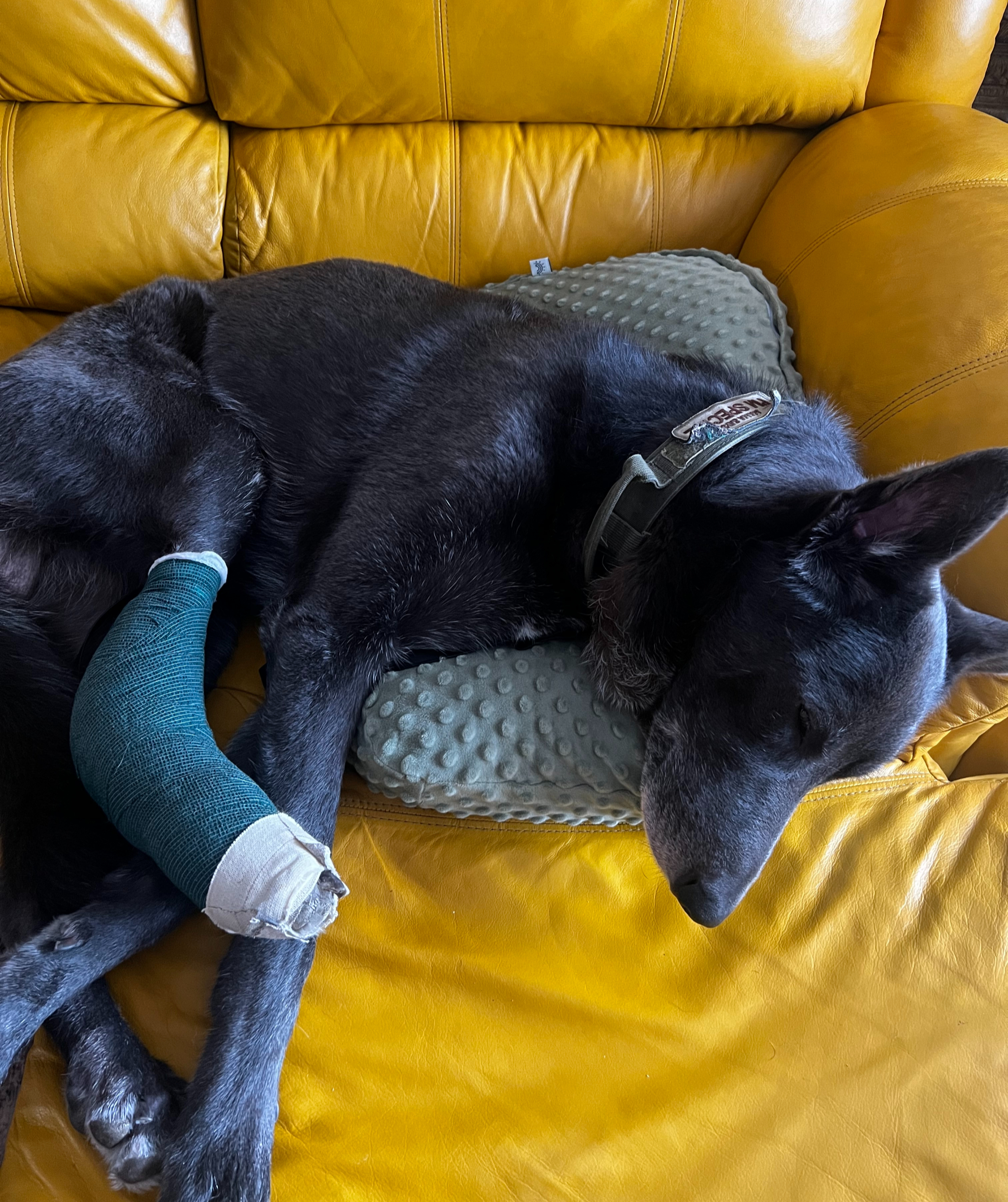
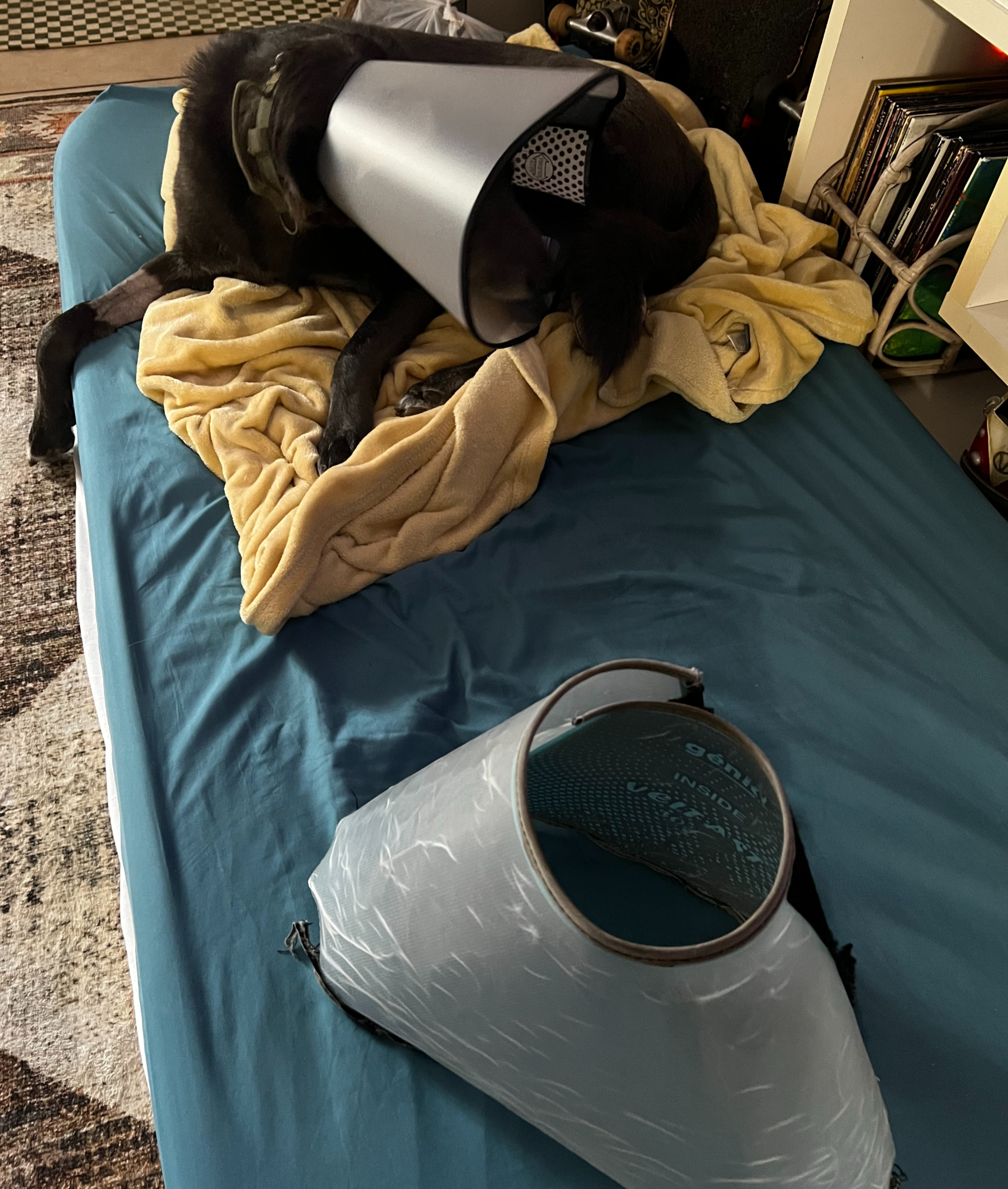
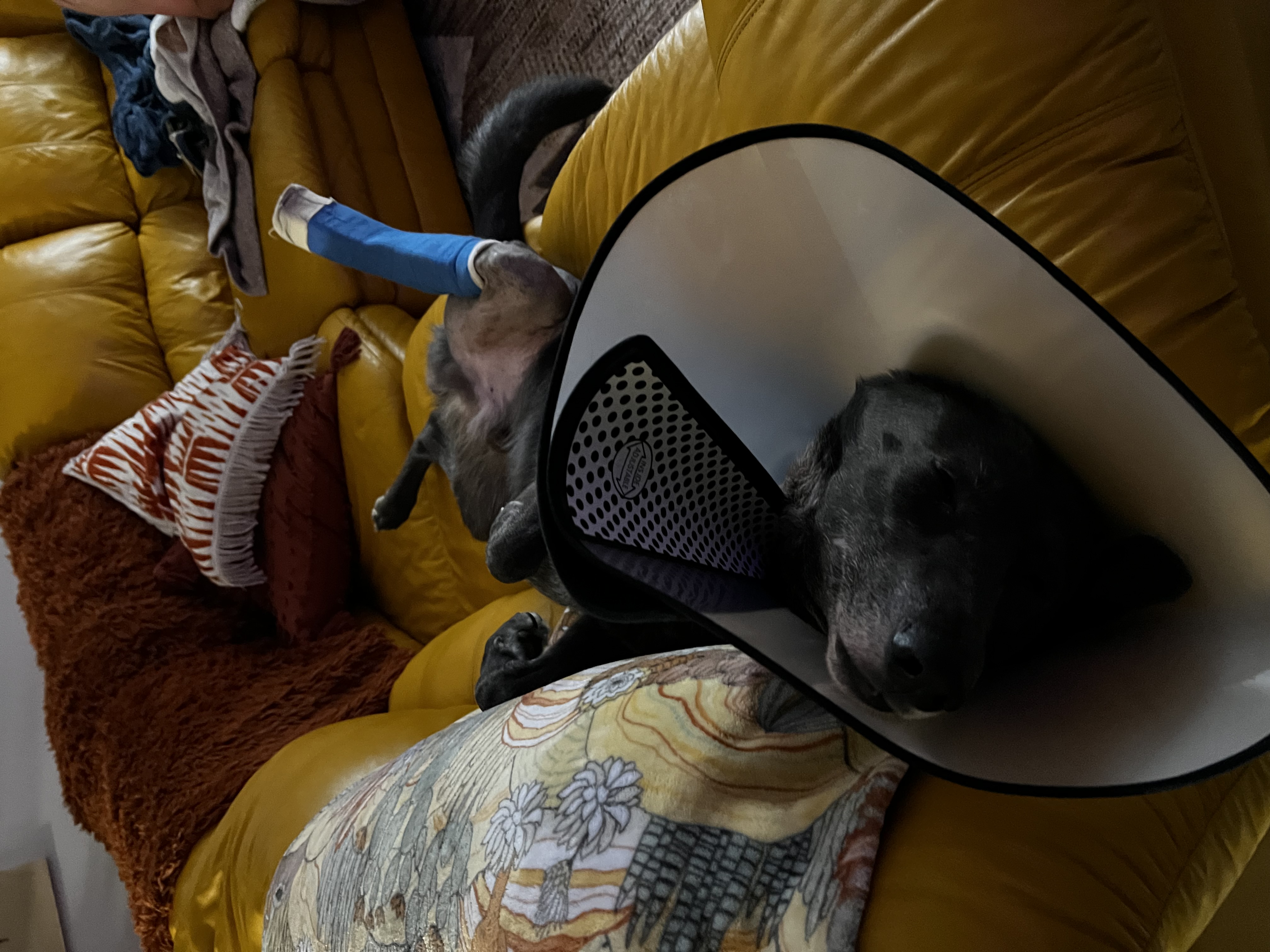
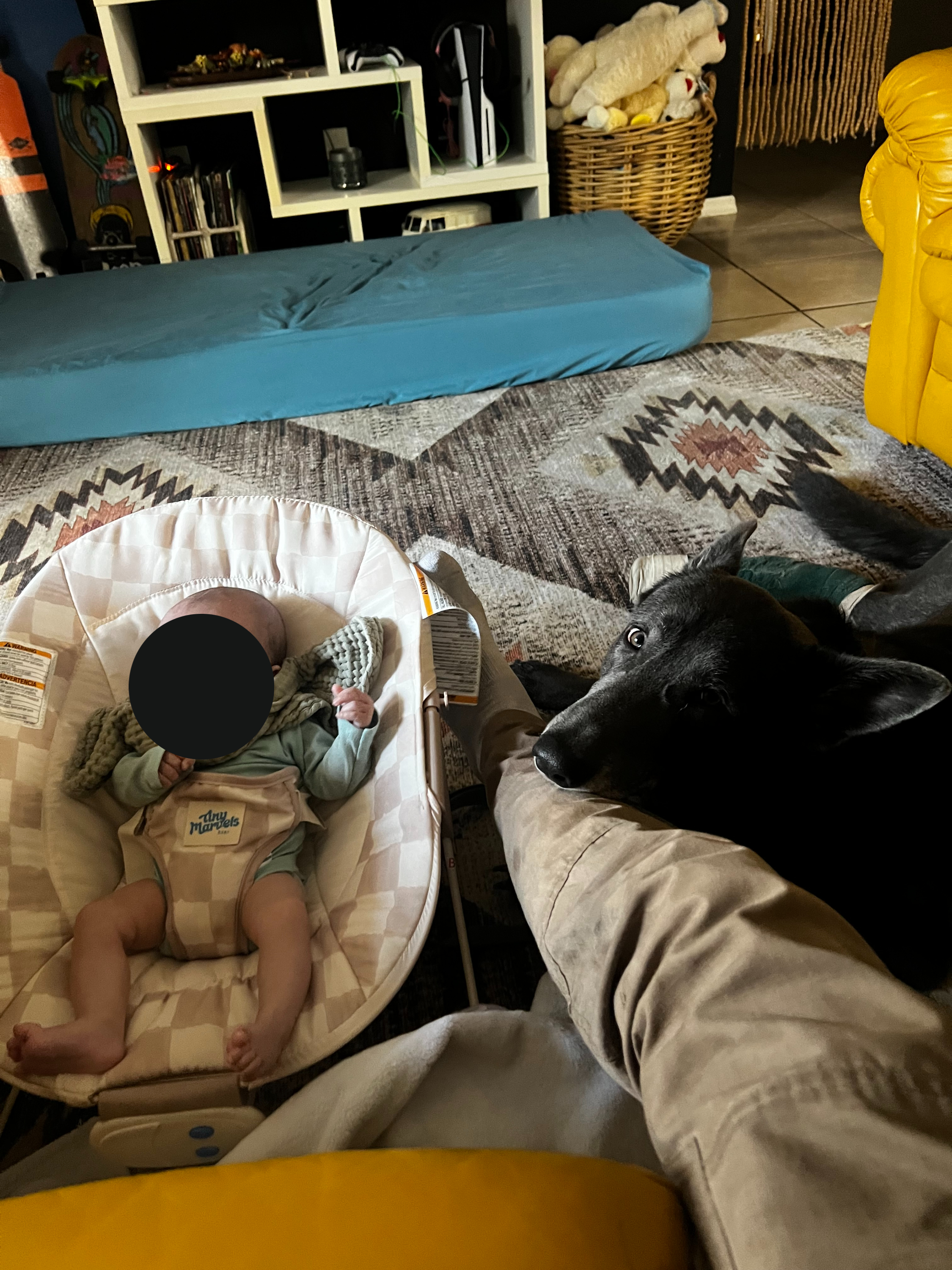
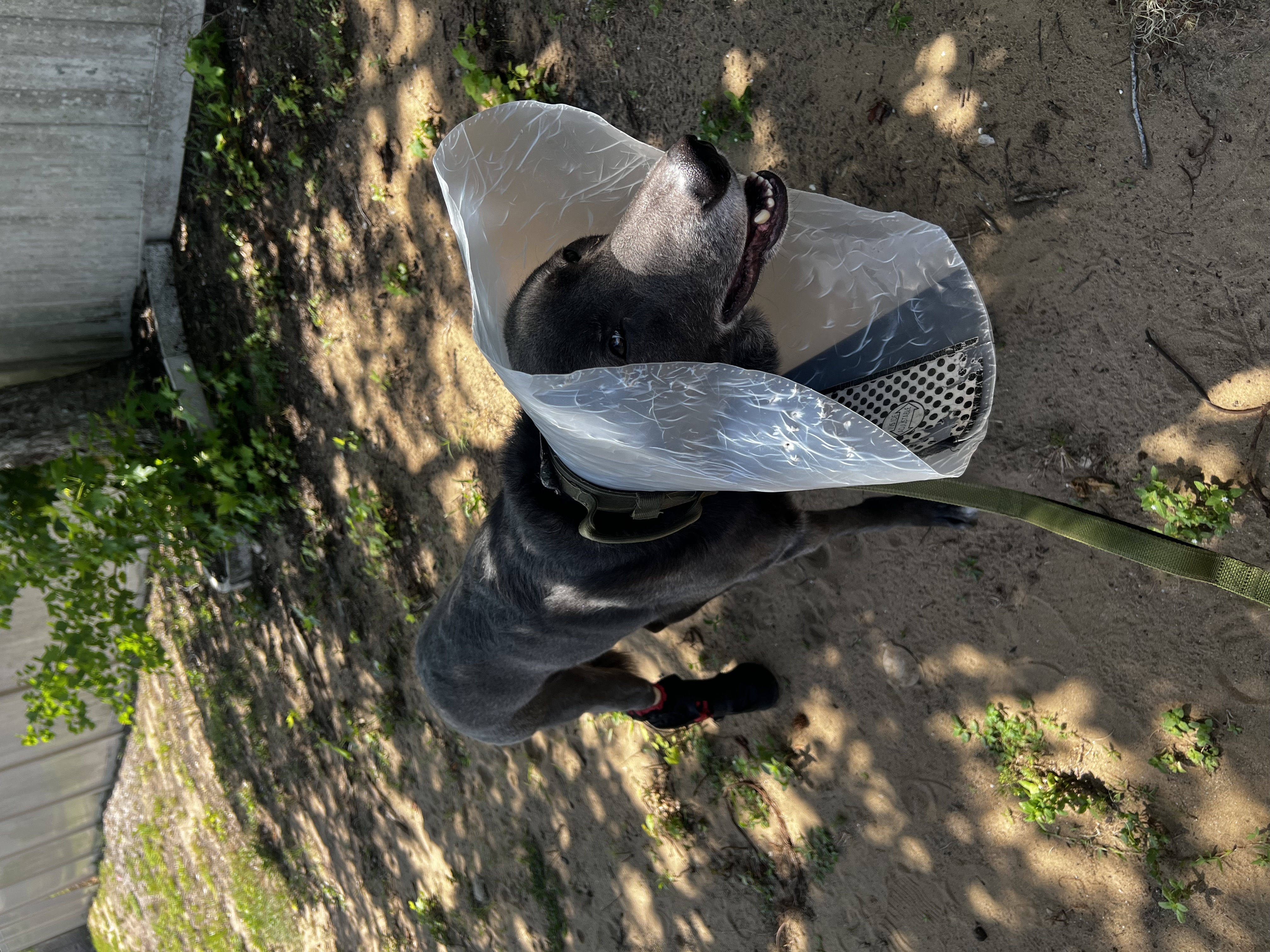
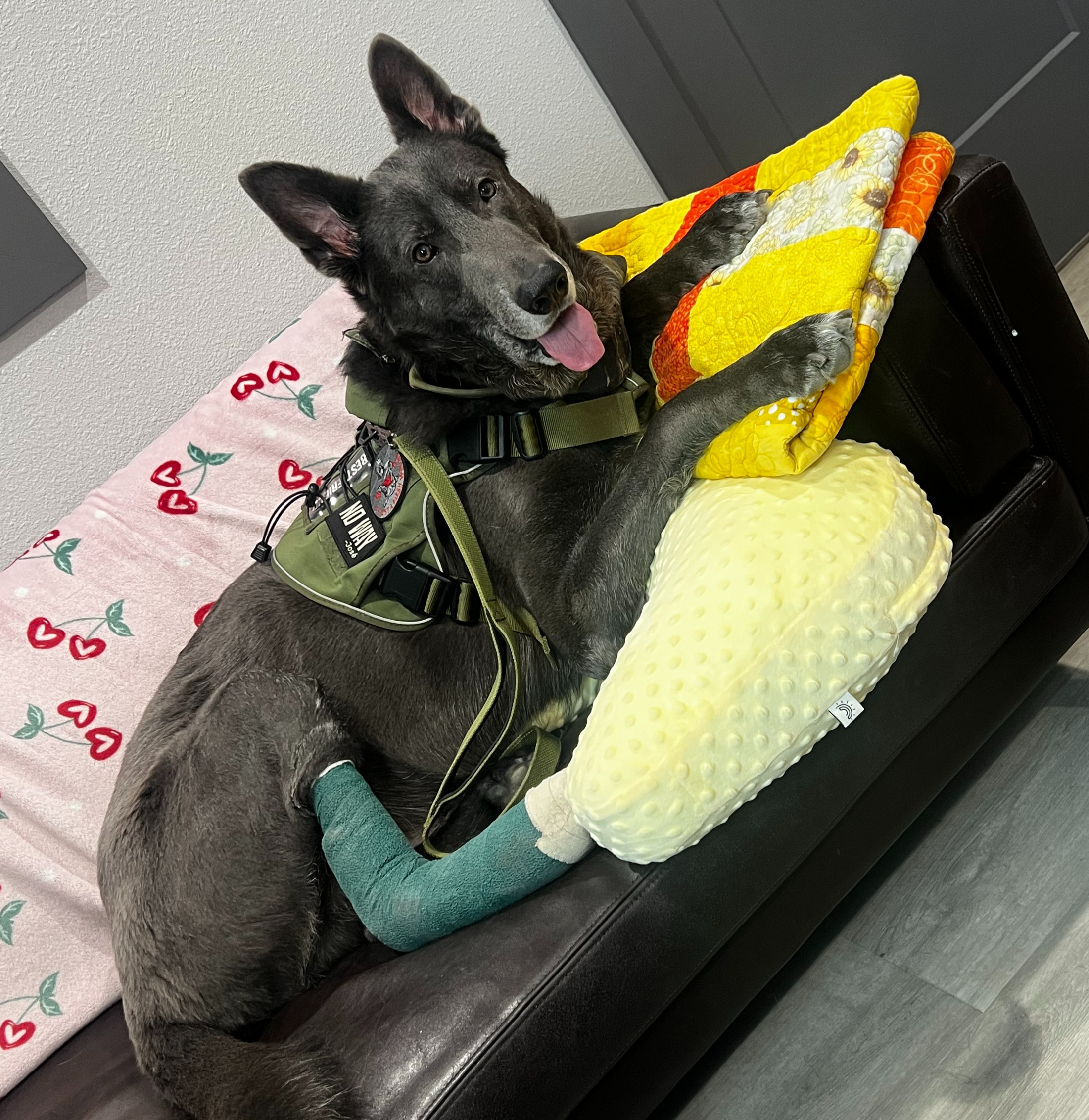
During this stage of recovery, Griz couldn't run, play, or even move around freely. He had to be kept in a small, confined space, and he couldn't be placed in a kennel because the wires from his external fixator could get caught in the crate. We completely rearranged our home, removing the legs from our couches and moving our guest bed into the living room so we could sleep beside him every night. Whenever he wasn't resting in the bathroom, he stayed on a leash to keep him from moving too much and risking further injury. Every part of our daily routine changed to give him the best chance at healing.
February 6, 2026
Griz returned for his first follow-up appointment after the external fixator was placed. Edema (swelling caused by excess fluid) was noted. His medical records stated, "All the pin and wire tracts appeared appropriate for the current stage of healing."
February 13, 2026
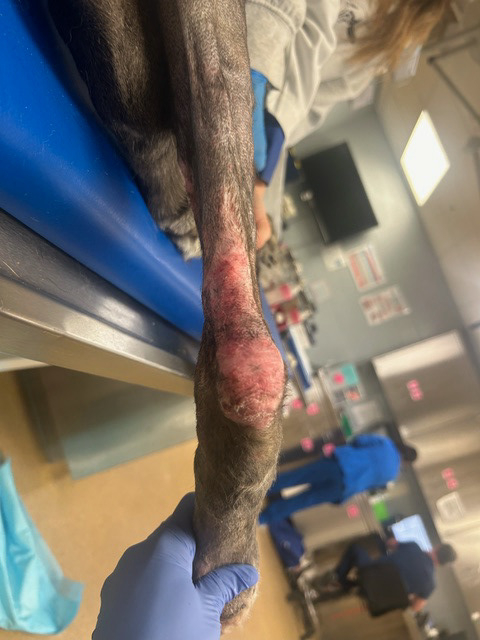
At Griz's next appointment, he had developed a significant post-operative infection. His medical records stated, "There was purulent material and moderate skin sloughing surrounding the incision with leakage from the distal aspect of the incision." They also documented, "A significant amount of discharge was noted when palpating around the incision." The area was debrided (dead tissue was removed).
The culture taken during surgery confirmed Methicillin-Resistant Staphylococcus pseudintermedius (MRSP), a bacteria resistant to many commonly used antibiotics. We were informed, "This is a type of bacteria that can be resistant to many common first-choice antibiotics, so we have switched him to two medications that testing shows will work better."
February 16, 2026
The infection remained, but portions of the incision were beginning to heal. His records stated, "Purulent material and mild skin sloughing were present surrounding the calcaneal region. The proximal aspect of the incision was healing appropriately, while the distal aspect had a small residual wound."
February 19, 2026
Griz continued to improve. His medical records stated, "Significantly less purulent material and the proximal and distal aspects of the incision are healing appropriately. New granulation tissue was observed filling the previously debrided area around the talus, though there still is bone exposure underneath the remaining eschar."
Although healthy tissue was beginning to form, exposed bone remained beneath the remaining eschar (dead tissue).
February 23, 2026
Griz's wound continued to improve. His records stated, "There was minimal serous discharge present associated with Griz's wound. New granulation tissue was observed filling the previously debrided area around the talus, though there is still bone exposure remaining. The previously noted eschar exfoliated once the bandage was removed."
Because one of Griz's antibiotics can affect the liver with prolonged use, bloodwork was performed to monitor his liver values.
February 27, 2026
Griz continued making progress. There was minimal serous discharge, and although bone was still exposed, the wound had decreased in size since his previous appointment.
By the end of February, Griz had endured two surgeries, an emergency transfer, an external fixator, repeated sedation for every appointment, multiple medications, a serious antibiotic-resistant infection, exposed bone, and countless bandage changes—all while adapting to a completely different way of life.




When Life Changed Again
march 2026
March 4, 2026
At Griz's follow-up appointment, his medical records stated, "Griz's right calcaneal tendon was thickened on palpation. There was new epithelialization of his wound filling previous granulation tissue. No bone exposure." For the first time in weeks, there was encouraging progress.
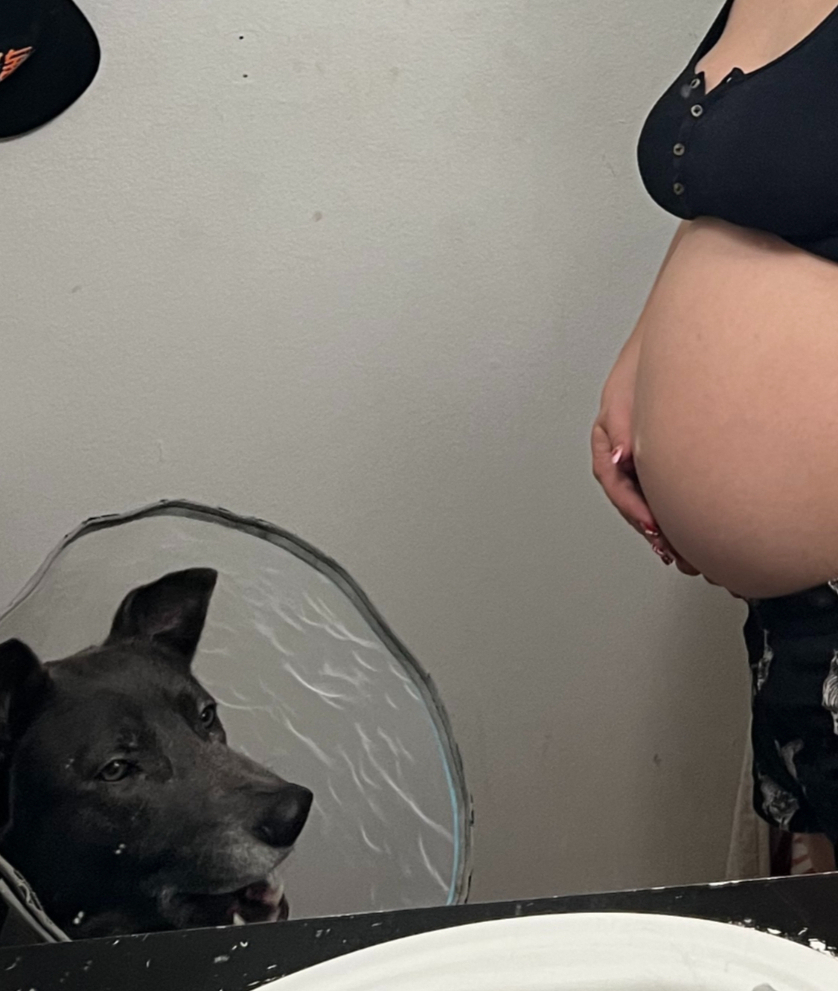
As part of his recovery, Griz's bandages were removed, and we were instructed to clean each of the external fixator pin tracts every day to help prevent infection. Because he wasn't allowed to jump on furniture or beds, my husband and I had to clean his leg together. Even while I was heavily pregnant, we spent about an hour every day carefully cleaning his leg and caring for the external fixator.
Shortly afterward, I was admitted to the hospital with severe preeclampsia. While I remained hospitalized, my mother and mother-in-law took turns making the trips to the University of Florida for Griz's appointments and care.
March 15, 2026
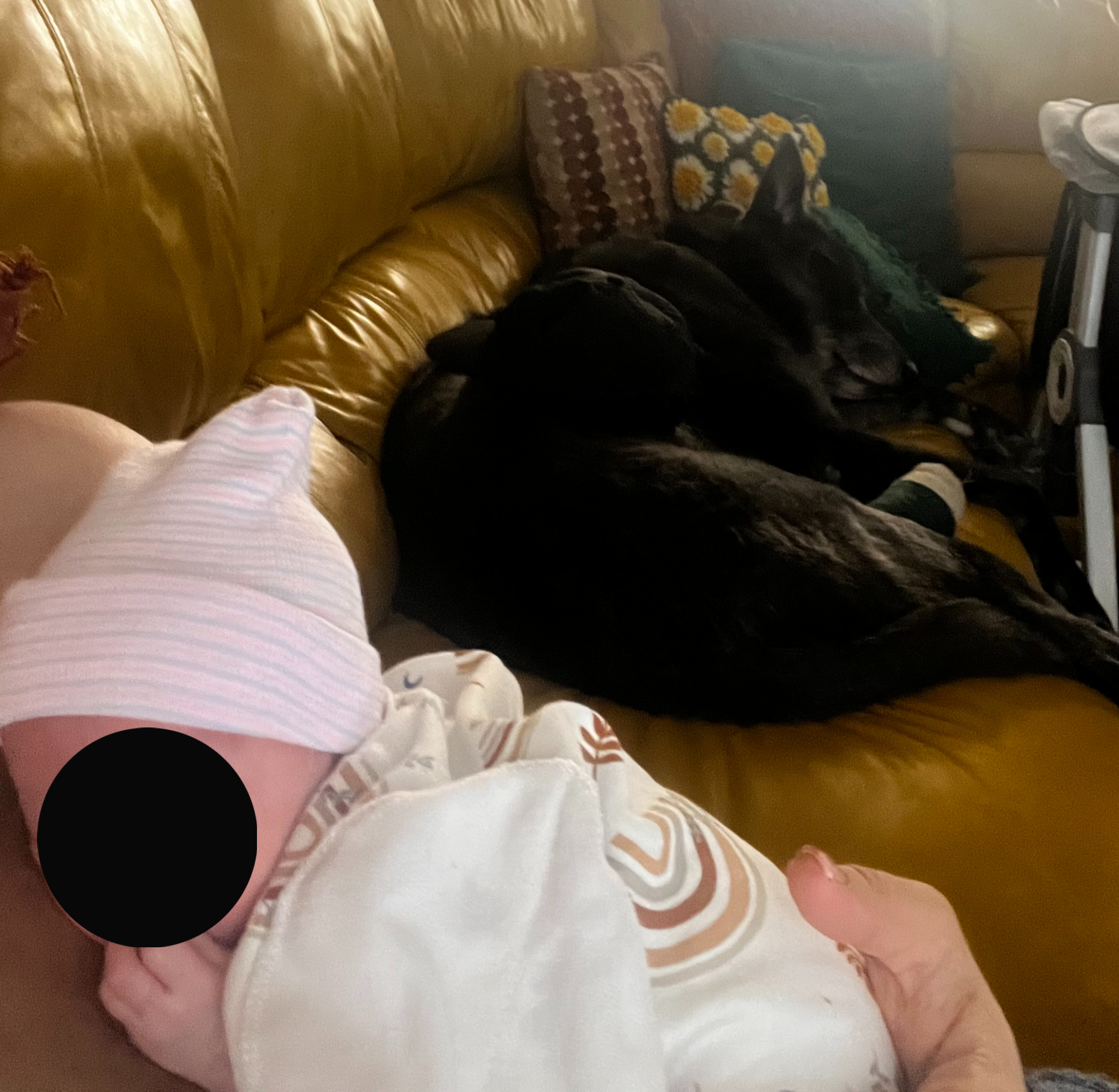
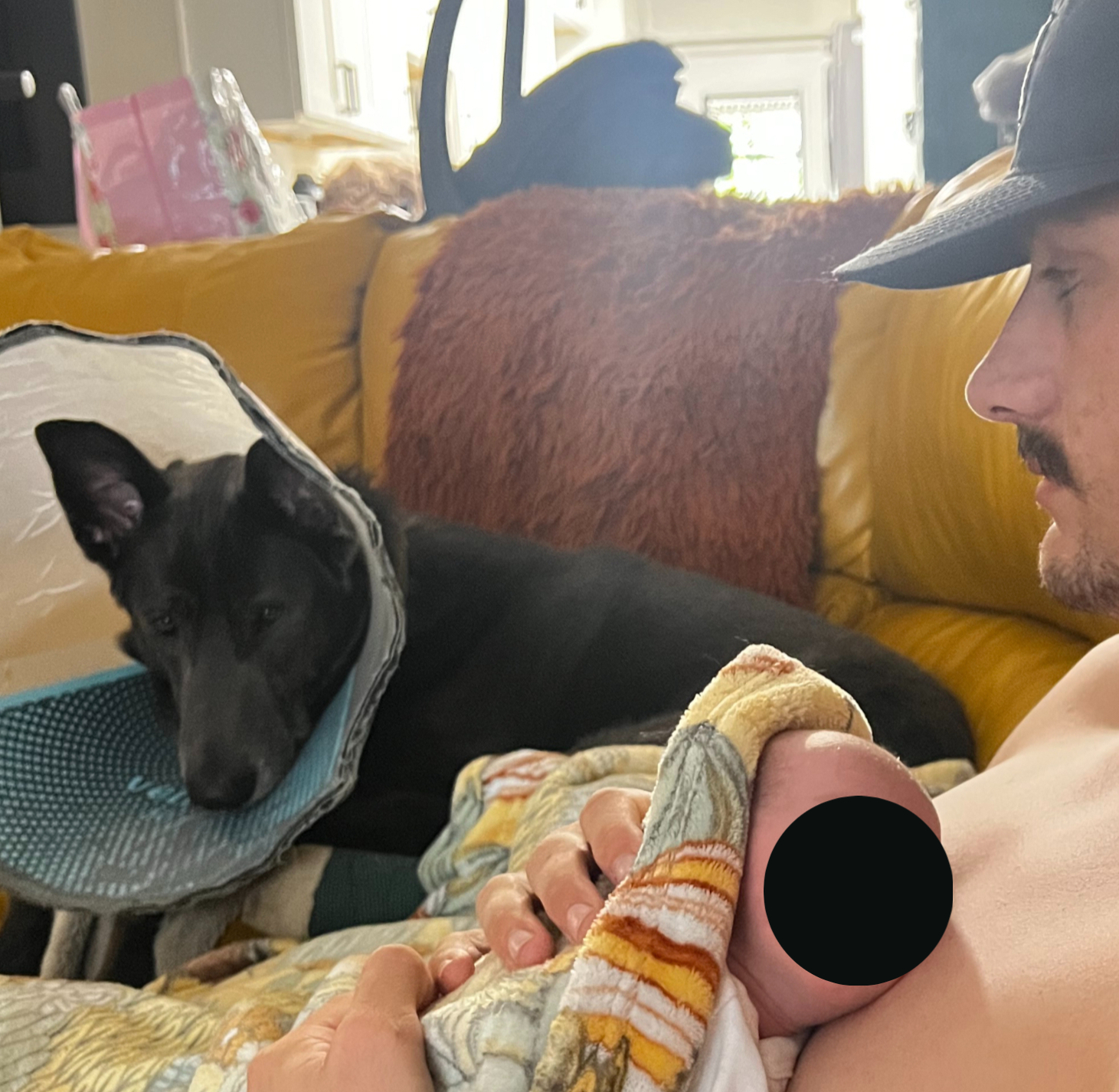
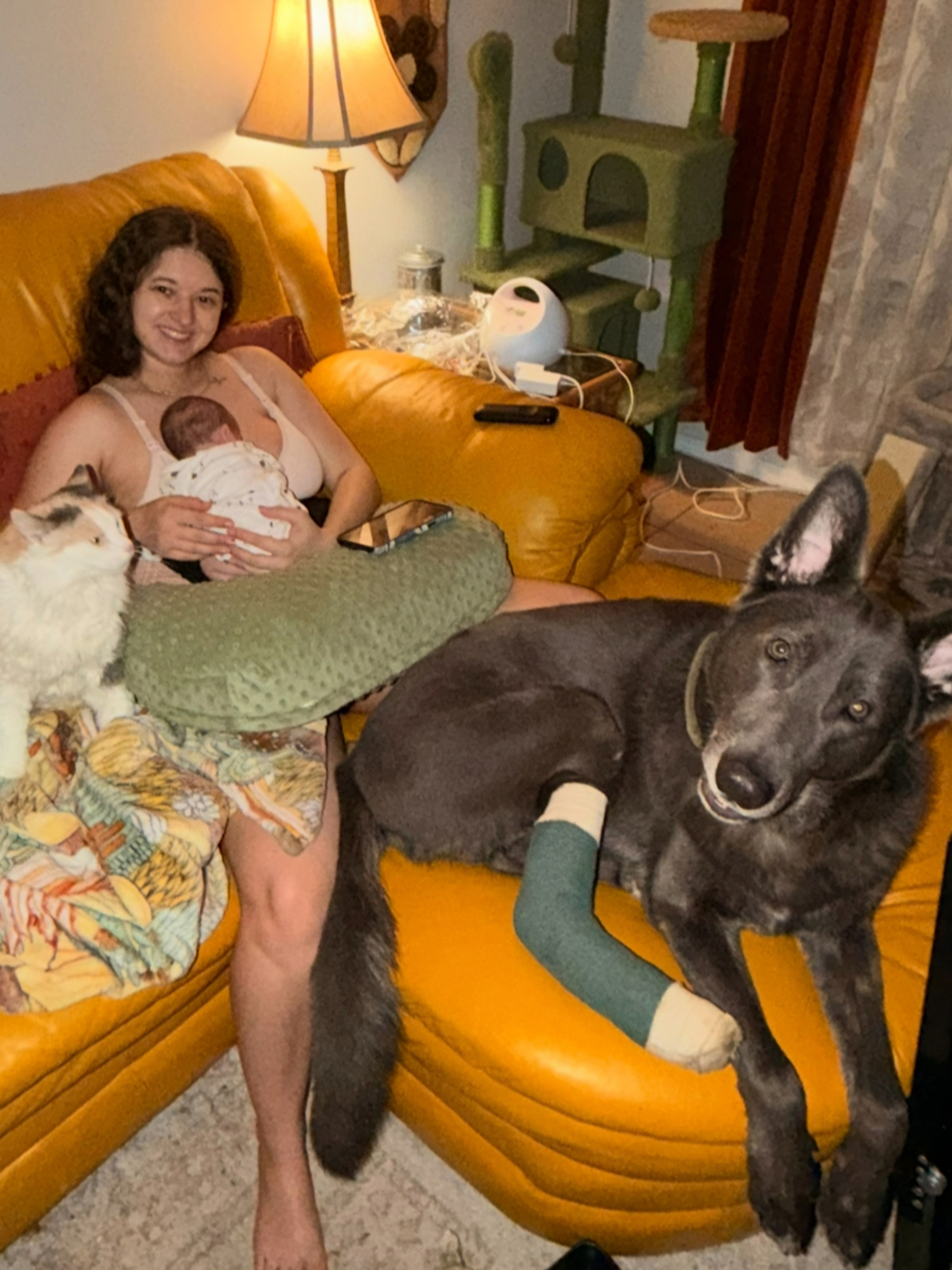
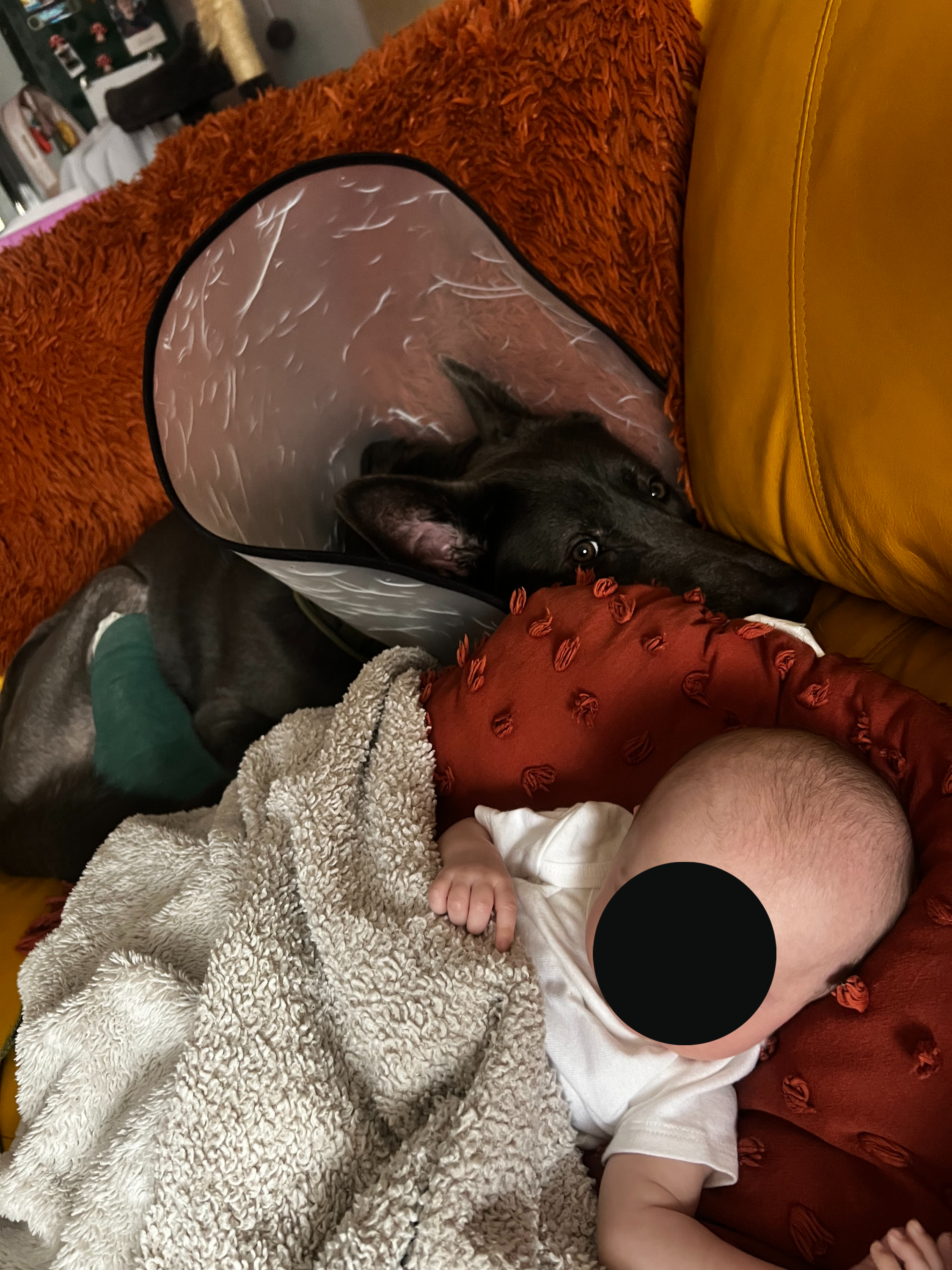
While Griz continued his recovery, our family faced another unexpected challenge. Our daughter was born nearly two months early, weighing just 3 pounds, 1 ounce. She was admitted to the NICU, and I remained hospitalized for another week while doctors closely monitored my blood pressure and recovery.
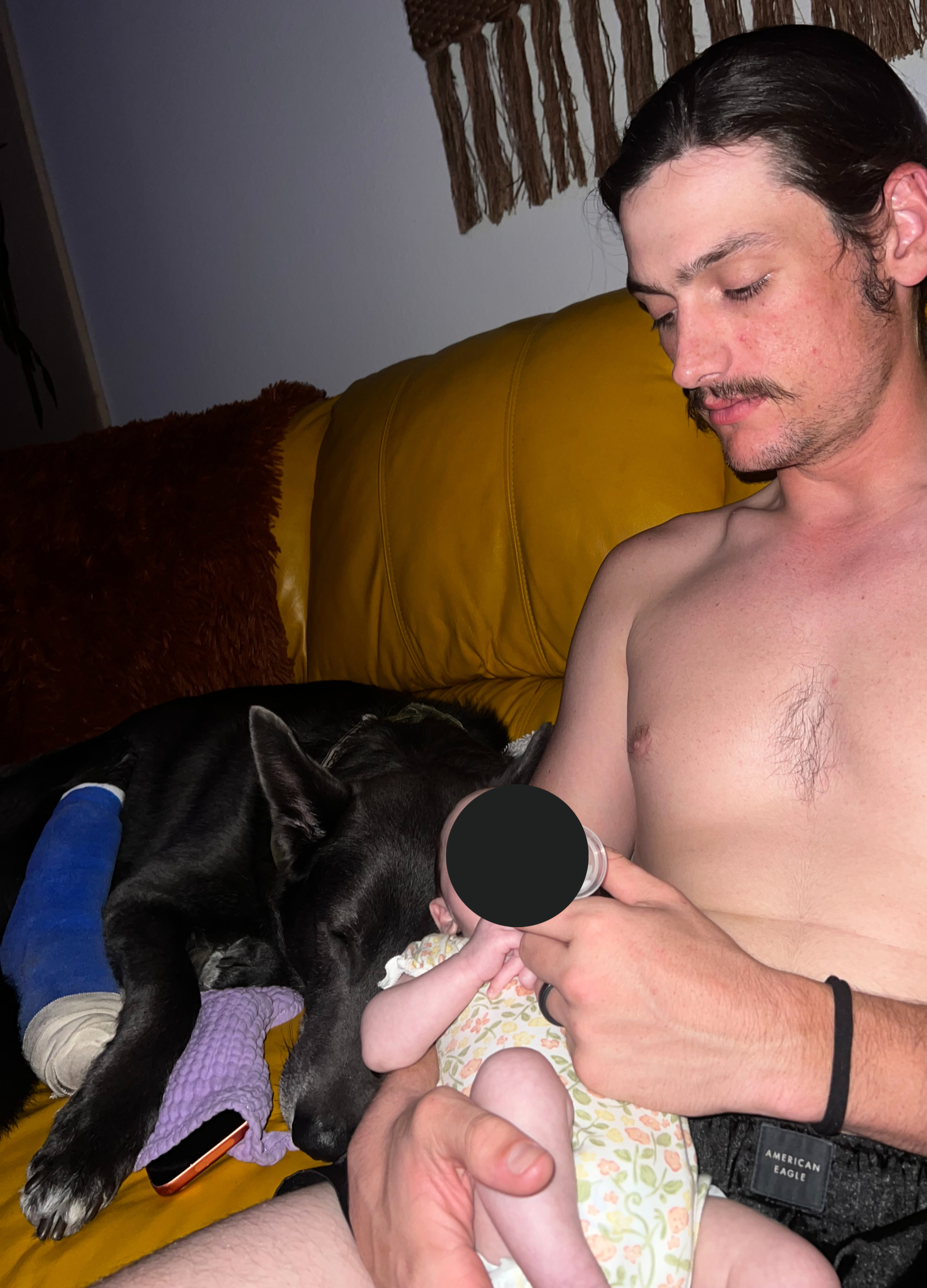
With both me and our daughter in the hospital, and my husband working full-time while spending his evenings with us in the NICU, caring for Griz became a true team effort. Family and friends stayed at our home to help care for him, clean his external fixator every day, and make sure he continued receiving the attention he needed. Cleaning his leg alone took about an hour each day.
March 30, 2026
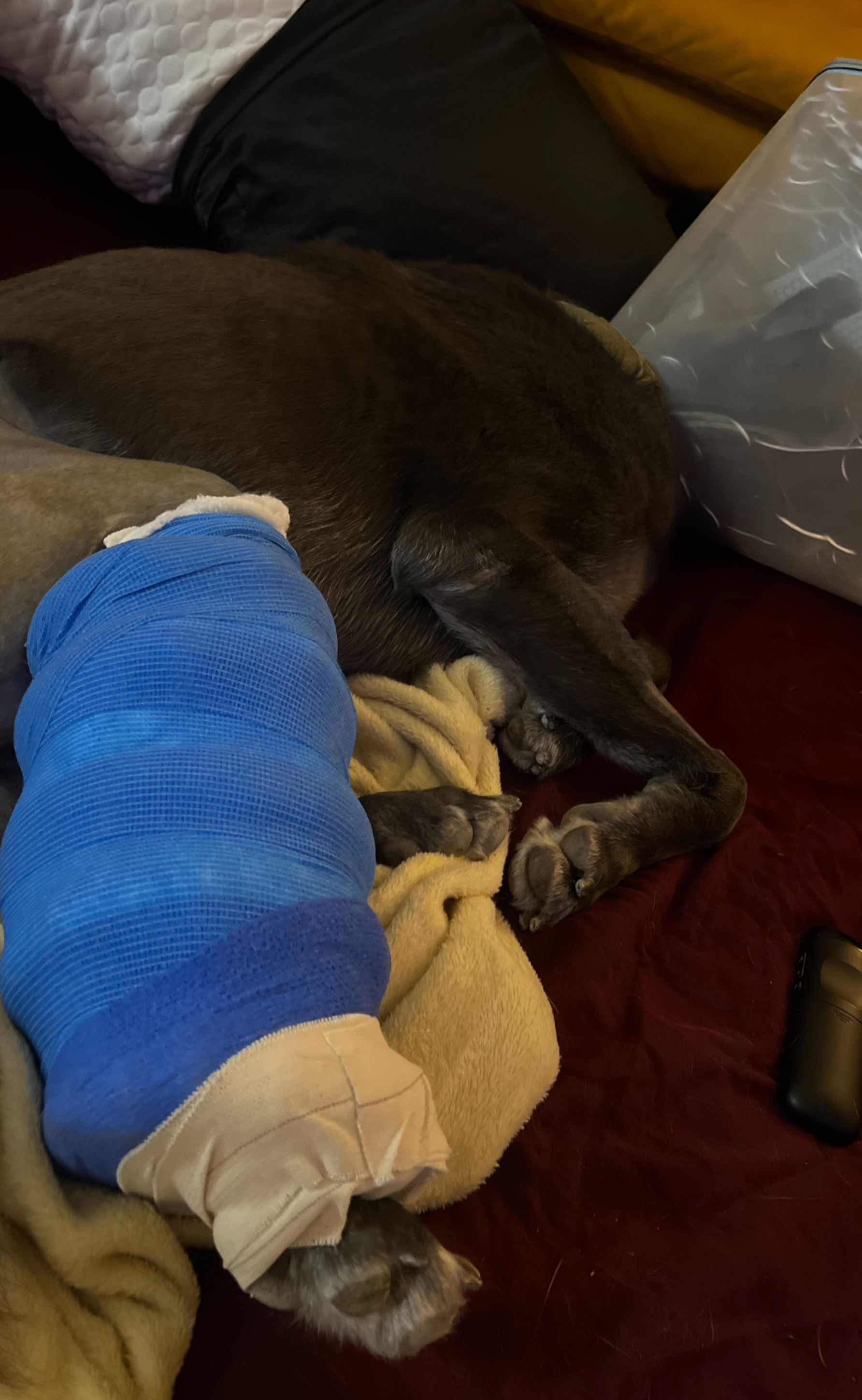
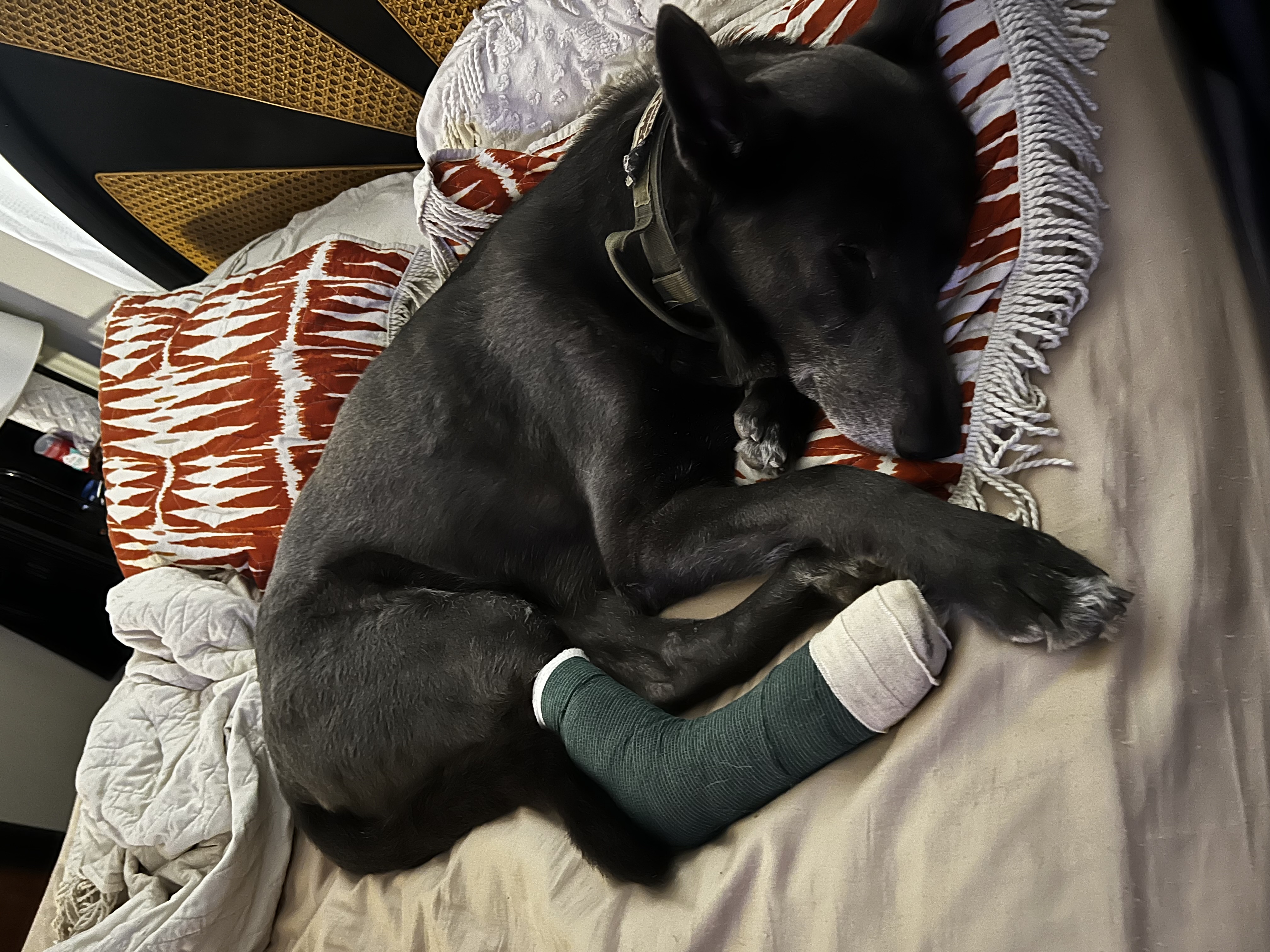
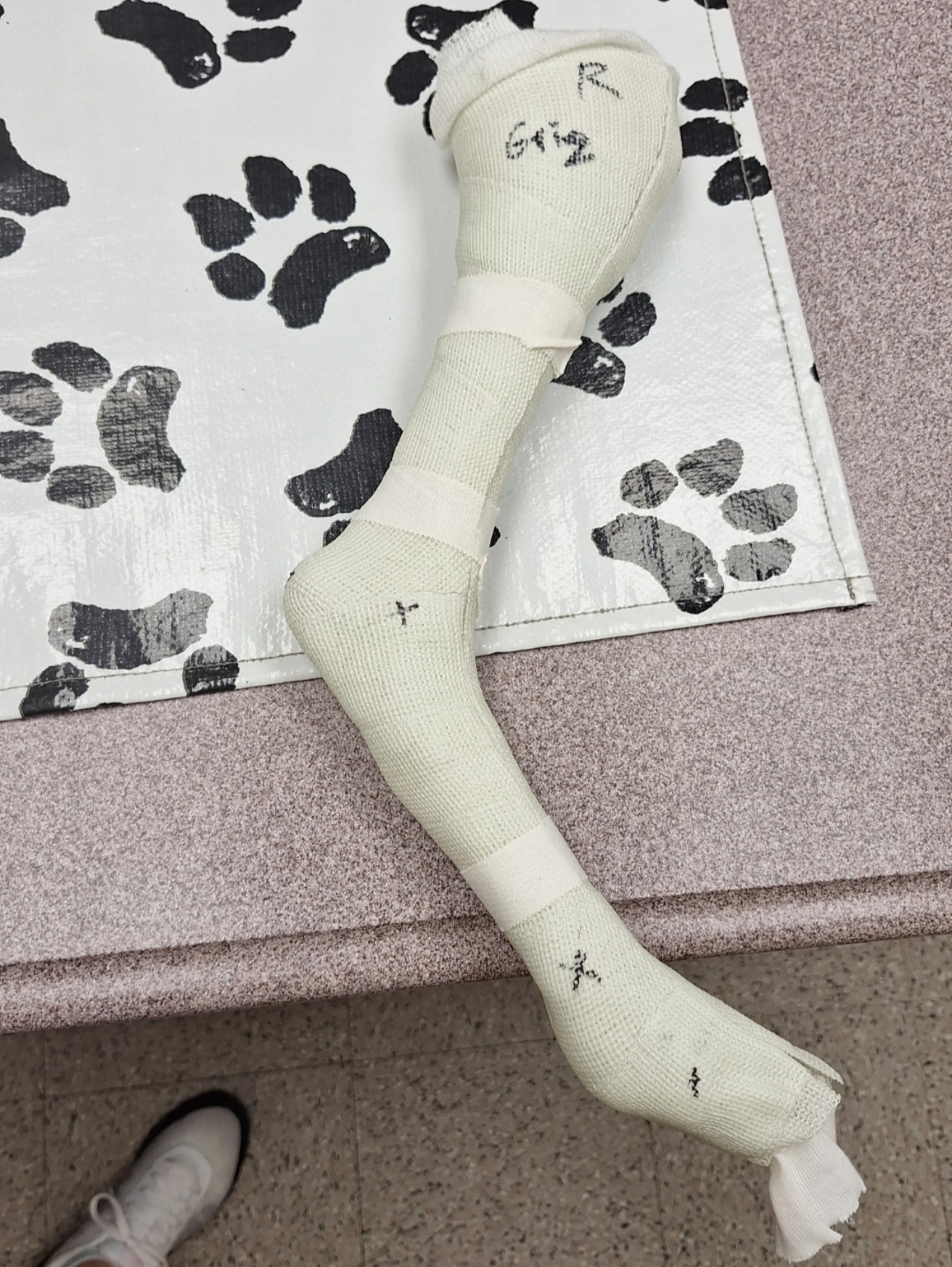
After nearly two months, Griz's external fixator was finally removed, and a bandaged splint was placed to protect the pin tracts while they continued to heal. It was another major milestone in his recovery and one step closer to walking without the external fixator.



APRIL 2026
Continued Healing
April 8, 2026
At Griz's follow-up appointment, his medical records stated, "The limb appeared clean with only mild discharge." It was another encouraging sign that his recovery was moving in the right direction.
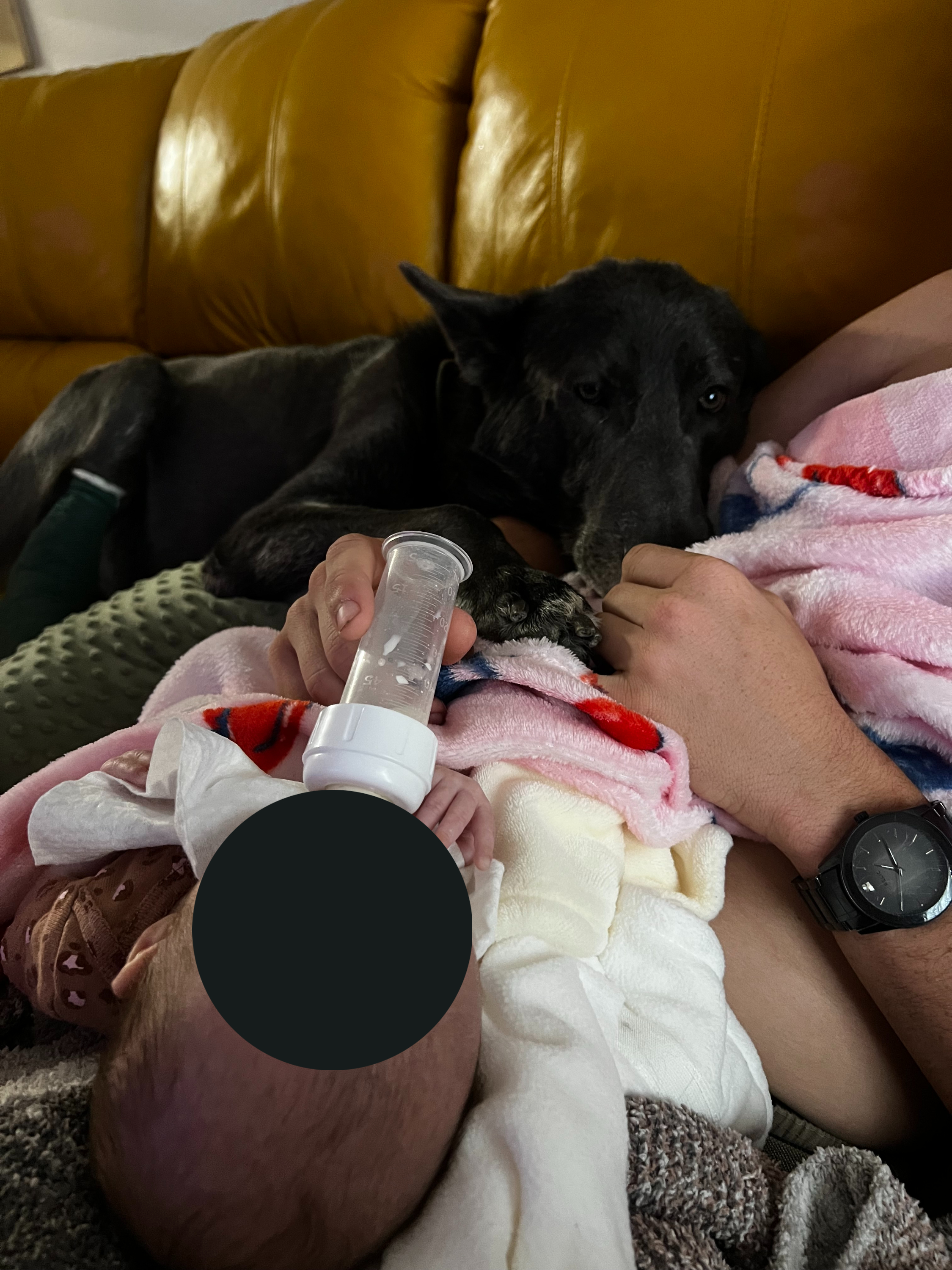
Around this time, our daughter was finally able to come home from the NICU after 27 days. While we were grateful to have her home, our family was still adjusting to caring for a premature newborn while Griz continued his intensive recovery. Family members continued helping by taking Griz to his appointments at the University of Florida, allowing us to focus on both his ongoing treatment and our daughter's care.
April 15, 2026
One week later, Griz's progress remained steady. His medical records again noted, "The limb appeared clean with only mild discharge."
April 29, 2026
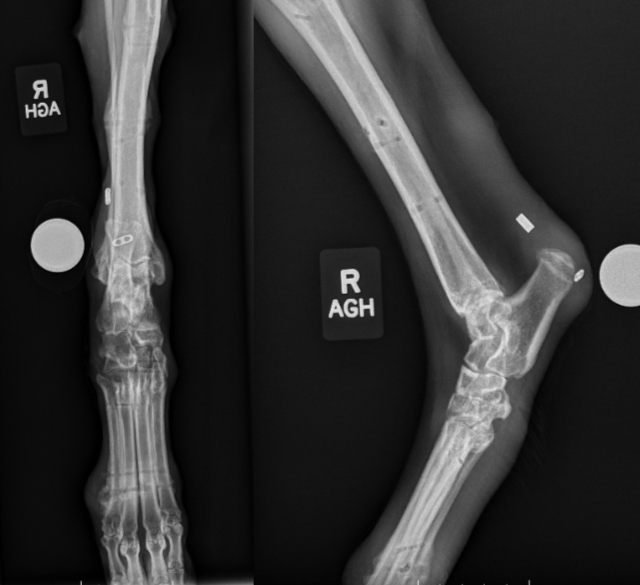
At the end of the month, Griz's examination showed both encouraging progress and a new concern. His medical records stated, "On palpation, the right calcaneal tendon felt intact with mild focal thickening at the region of the surgical site, as well as some mild crepitus of the joint (indicative of mild arthritic changes due to the nature of the injury)."
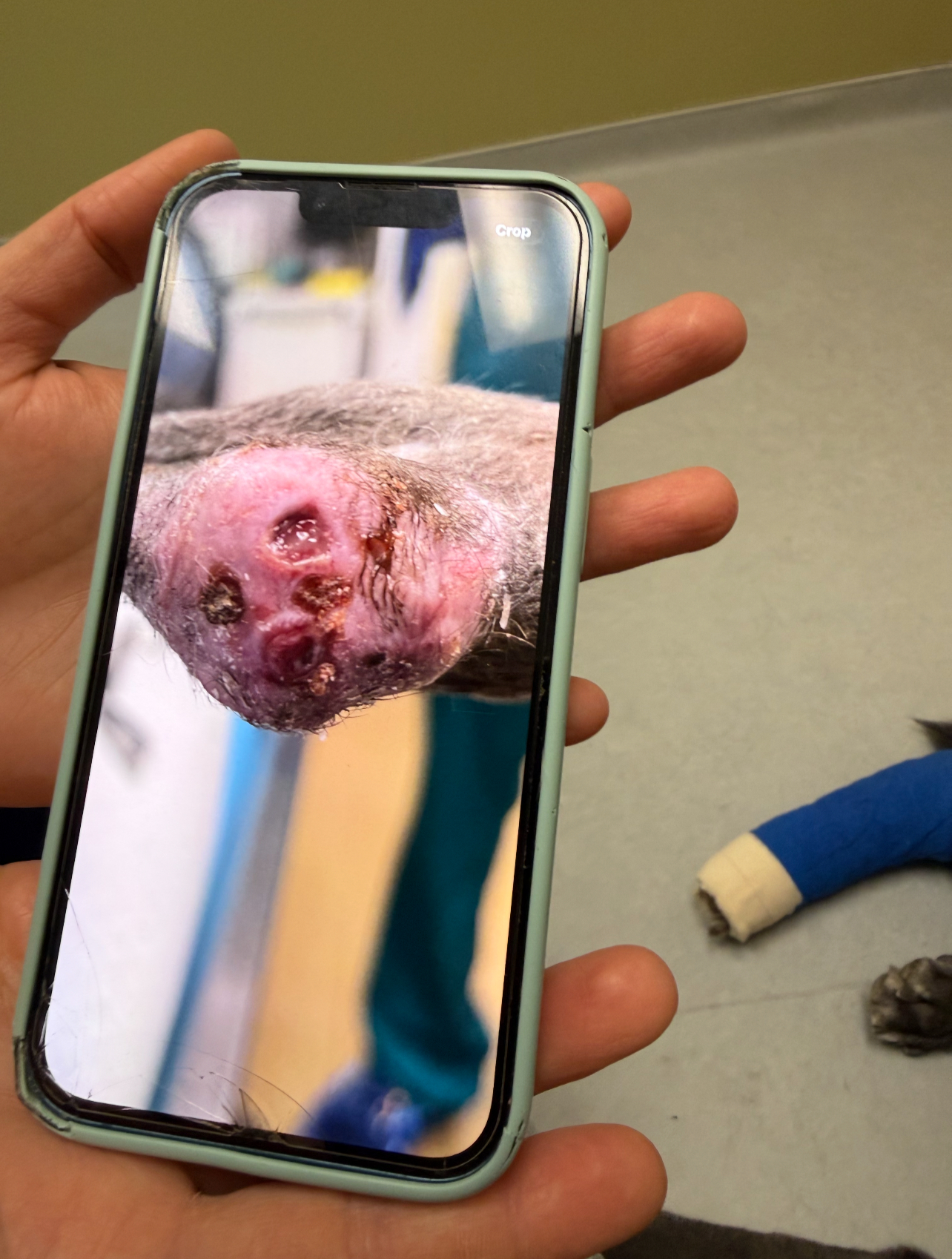
After removing his previous bandage, the veterinary team discovered "a draining tract with purulent material" near the bottom of his heel. The area was cleaned with diluted chlorhexidine (an antiseptic solution), and a sample of the discharge was collected and submitted for culture to determine whether another infection was present.
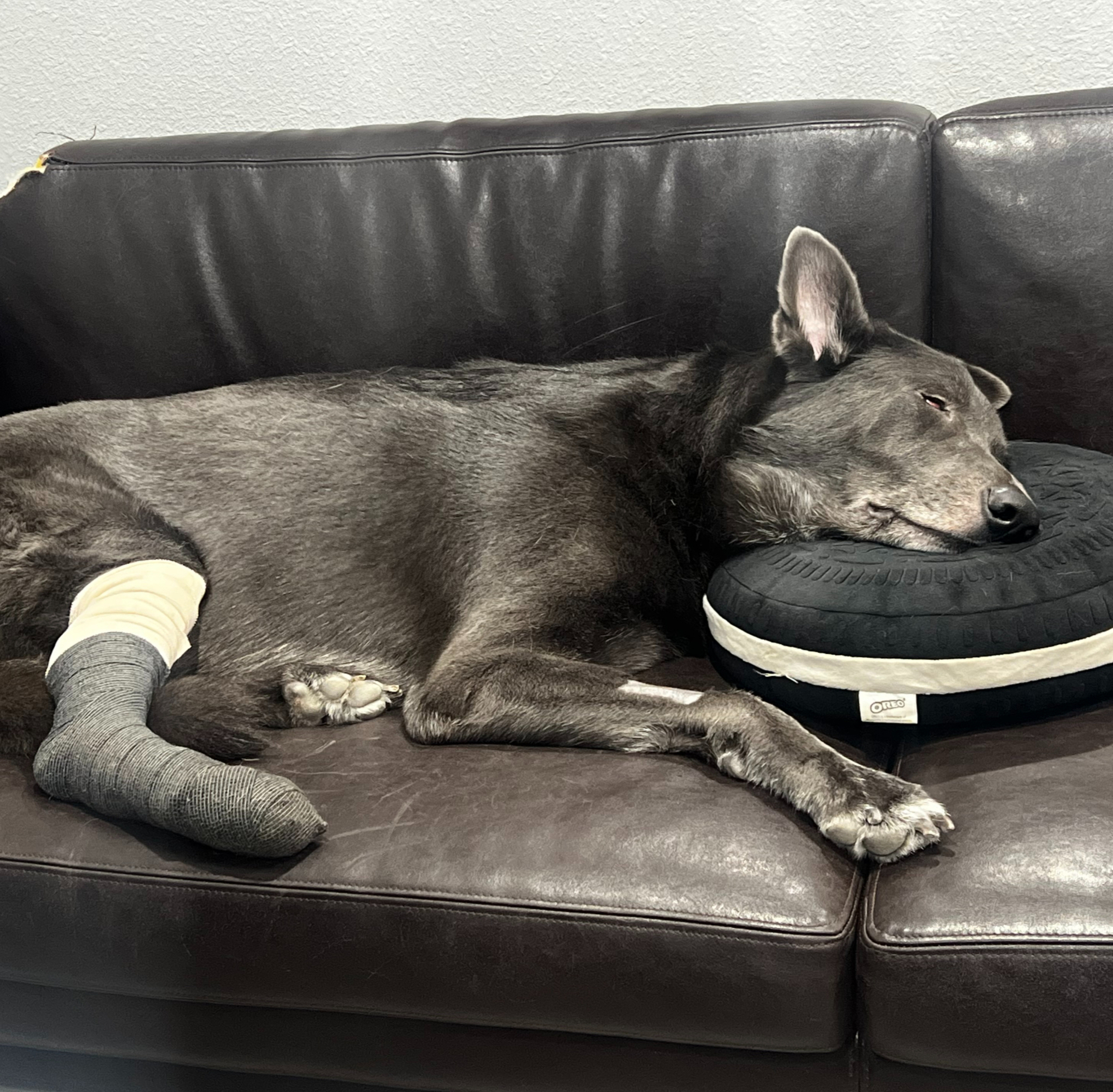
A new bandage and splint were applied using protective foam padding and a donut-shaped cushion to reduce pressure on Griz's healing leg.


MAY 2026
Fighting Through Another Setback
May 5, 2026
Just as Griz's recovery seemed to be moving in the right direction, another setback occurred. His medical records stated,
"The draining tract at the plantar aspect of the calcaneus has increased slightly in size to an approximately 1 cm wound. A small amount of purulent material was noted on the bandage upon removal."
The wound was cleaned with diluted chlorhexidine (an antiseptic solution), and an Amikacin-impregnated pluronic gel was injected directly into the area to deliver a high concentration of antibiotics where the infection was located. A modified Robert Jones bandage and splint were then applied to continue protecting his leg.
Culture results showed the bacteria was susceptible to Rifampin and possibly Amikacin, leading his veterinary team to recommend combination therapy. Their report stated,
"The report stated that his culture shows susceptibility to Rifampin and possibly Amikacin among a few others. As such, a combination therapy of oral Rifampin and Amikacin-injected pluronic gel (50 mg/ml) is our recommended treatment. We are hopeful that this will allow for a very high local concentration of antibiotics to control the infection, as well as systemic antibiotics."
Unfortunately, they also believed the infection may have been surrounding one of the implants from his tendon repair. Their medical records explained,
"At this time, we believe that the draining tract may be due to an infection surrounding the implant. As such, we believe it will be in Griz's best interest to remove the Fiberwire +/- Nylon suture in the future. This will require a small surgical approach and general anesthesia."
Although surgery wasn't scheduled yet, it became another possibility we had to prepare for.
May 8, 2026
Three days later, there was some encouraging improvement. His medical records stated,
"The draining tract at the plantar aspect of the calcaneus has decreased slightly in size from an approximately 1 cm wound. A minimal amount of serosanguinous material was noted on the bandage upon removal. Granulation bed formation was noted."
Because Griz had to remain on Rifampin, the veterinary team closely monitored him for potential side effects. He had already received this medication previously, and prolonged use can affect liver function. His records noted,
"Due to the side effects of this medication, it is important that he comes back next week for a chemistry panel (bloodwork)."
May 13, 2026
By his next appointment, the draining tract had nearly healed. His medical records stated,
"The draining tract that was previously at the plantar aspect of the calcaneus is nearly fully healed. There is no longer an open wound, however, the new skin is quite thin and fragile."
The veterinary team decided to continue Rifampin while monitoring both the healing wound and his bloodwork.
Their report stated,
"His previous draining tract appears improved, and we are continuing rifampin until it is fully healed."
His bloodwork also showed a change that required close observation.
"His bloodwork showed an increase in his creatinine. Although his creatinine is still within the normal reference range, this is something we must watch closely as he has been on carprofen in the past and if it continues to rise potentially hold off on carprofen and use another pain medication."
Although the infection appeared to be improving, they warned us that another procedure might still become necessary.
"Griz may potentially require removal of some parts of his implants in the future with his recurring draining tracts, specifically the button which is associated with one of his implants."
May 20, 2026
At his next recheck, the improvement continued. His medical records stated,
"The previously described draining tract at the plantar aspect of the calcaneus is nearly fully healed and remains closed. The skin around the area remains somewhat thin and irritated but is improved since last visit."
During this appointment, we also began discussing a custom orthotic brace that Griz would likely need to provide additional support for his leg as he continued recovering.
May 27, 2026
Griz continued making gradual progress. His medical records again noted,
"The skin around the area remains somewhat thin and irritated but is improved since last visit."
Because of his ongoing recovery and the previous infection surrounding his surgical repair, the veterinary team planned additional imaging. His records stated an "ultrasound, which will be performed during next week's recheck (6/3/26)."
Although May brought concerns about his implants, additional medications, repeated bloodwork, and the possibility of another surgery, Griz continued to fight through every obstacle. Each appointment brought small improvements, giving us hope that he was moving one step closer to recovery.


june 2026
Another Surgery, More Difficult Decisions
June 3, 2026
At Griz's recheck appointment, his recovery took another difficult turn. His medical records stated,
"The previously described draining tract at the plantar aspect of the calcaneus had re-opened slightly and demonstrated a few drops of purulent discharge. The skin around the area remains somewhat thin and irritated. The tendon and surgical site palpate stable with some focal thickening about 7-8 cm proximal to the calcaneal tuber."
To better evaluate his healing, Griz underwent another ultrasound of his repaired tendon. The report stated,
"The ultrasound demonstrated continued healing of portions of the tendon repair; however, abnormalities were identified within the more proximal gastrocnemius tendon that indicate ongoing tendon pathology and incomplete healing."
Because of these findings, the orthopedic team was concerned that removing his implants too soon could jeopardize the repair.
"Based on these findings, we are concerned about imminently removing the FiberWire and button, as doing so could compromise the integrity of the healing tendon repair."
They recommended continuing his medications while they discussed his case further.
"At this time, we recommend continuing Rifampin for an additional 3 weeks... Our orthopedic surgery team will discuss Griz's case further upon the return of his primary surgeon to UF, and a long-term treatment plan will be formulated and communicated to you once those discussions have taken place."
During this appointment, we were presented with several possible treatment options.
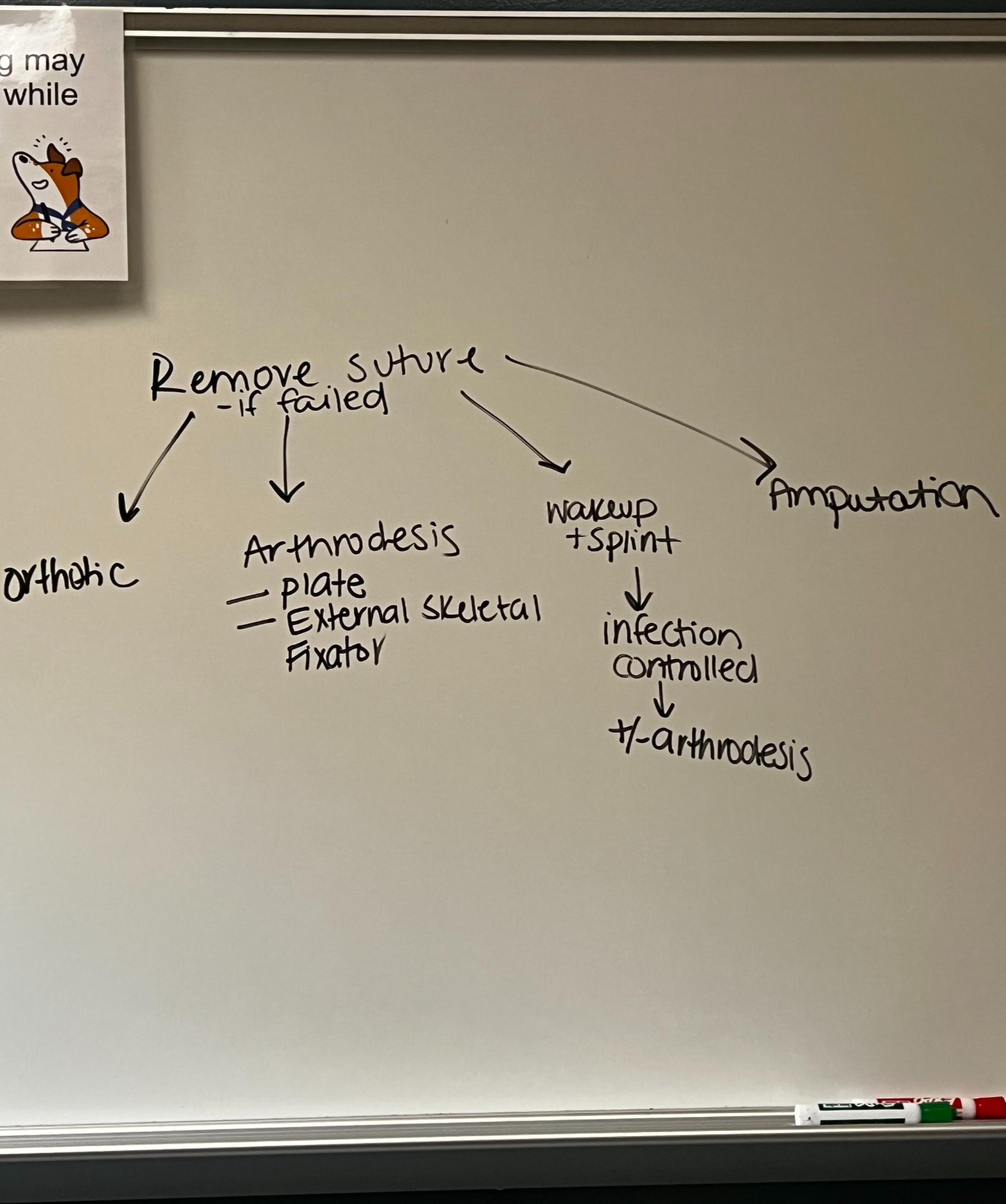
The first option was another surgery to remove the implants if they were determined to be the source of the infection.
The report explained,
"One option is to continue antibiotic therapy in the short term and proceed with surgical implant removal. During this procedure, the previously placed button and wire would be removed and submitted for bacterial culture and susceptibility testing to identify any persistent infection and help guide long-term antimicrobial therapy."
The orthopedic team also explained the risks involved with this procedure.
"Potential complications associated with implant removal and tendon revision include persistent or recurrent infection, delayed healing, failure of the tendon repair, recurrent tendon injury, implant-related complications, continued lameness, and the potential need for additional surgical procedures."
If implant removal was unsuccessful, another salvage option discussed was tarsal arthrodesis, a surgery that permanently fuses the hock joint to provide stability.
Their report stated,
"Following explantation, we also discussed tarsal arthrodesis, a salvage procedure involving surgical fusion of the hock joint to provide long-term stability when restoration of normal tendon function is unlikely."
Finally, the last option presented was one we had prayed we would never hear.
"Lastly, we discussed hind limb amputation as an alternative, salvage treatment option... Although amputation is a major surgery, most dogs adapt well to life on three limbs and often experience improved comfort and quality of life following removal of a chronically painful, dysfunctional, or infected limb."
After everything Griz had already endured, hearing amputation discussed as a realistic possibility was devastating.
June 10–11, 2026
On June 10, Griz was admitted to the University of Florida in preparation for another surgery. The following day, he underwent surgery.
Following the procedure, his medical records stated,
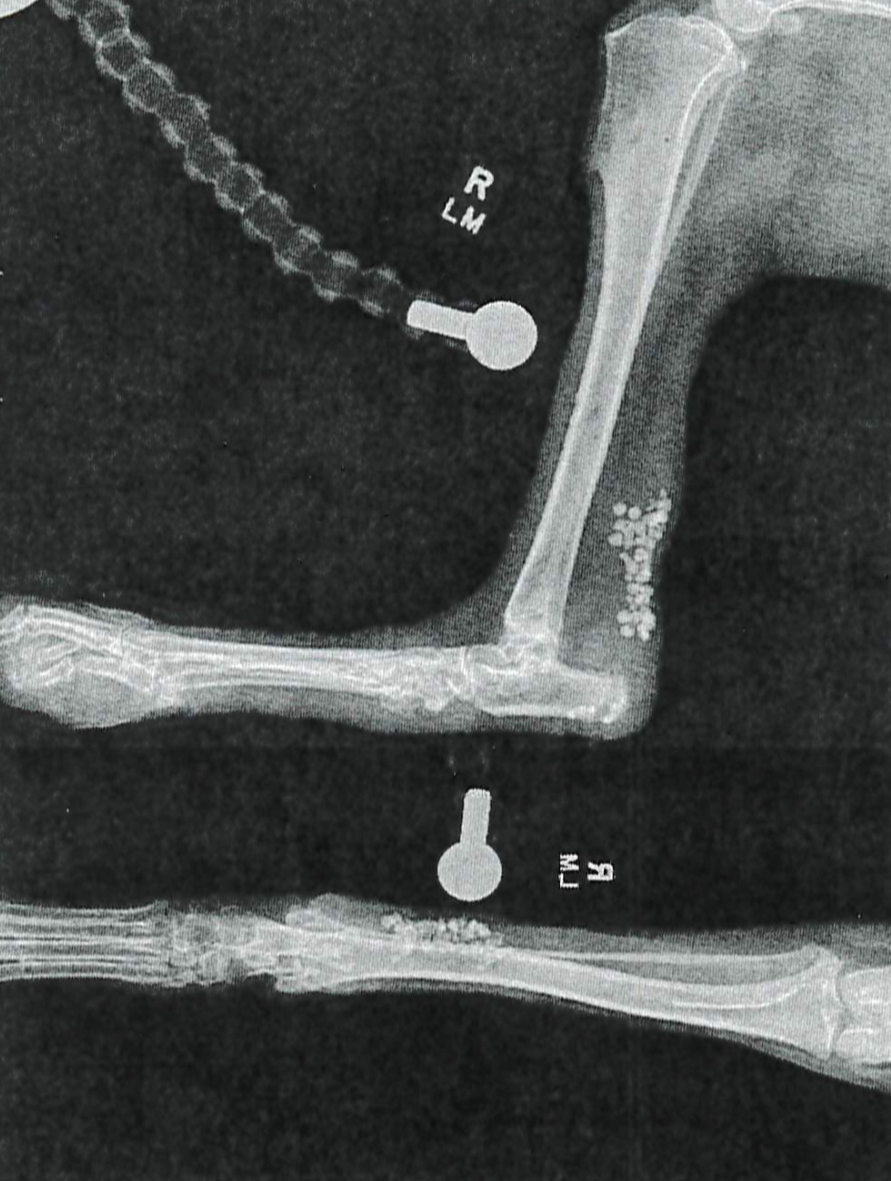
"Moderate soft tissue thickening of the right calcaneus tendon, prior metallic implants are no longer present, and radiopaque antibiotic beads are present."
The antibiotic beads were placed at the surgical site to help treat any remaining infection while Griz continued his recovery.
June 17, 2026
At Griz's first follow-up appointment after surgery, another complication appeared.
His medical records stated,
"A draining tract was noted on the lateral aspect of the surgical site and was suspected to be secondary to excessive fluid accumulation associated with the gentamicin beads vs. a surgical site infection."
The report continued,
"Hemorrhagic fluid and gentamicin beads could be expressed through the draining tract. The incision remained intact, and the sutures were not removed at this time."
Although the drainage was concerning, the orthopedic team believed it may have been caused by the antibiotic beads rather than another active infection.
June 22, 2026
At Griz's next follow-up appointment, there were encouraging signs of progress. His medical records stated,
"On examination, the tarsal joint palpated stable, with similarly reduced tarsal flexion. The previously noted draining tract/wound on the lateral aspect of the surgical site appeared significantly less effusive today compared to last week's bandage change."
The report continued,
"Mild hemorrhagic fluid and gentamicin beads could be expressed through the draining tract... The incision remained intact on the medial side of the leg. Skin sutures were removed from the distal portion of this incision, and the two more proximal skin sutures were left in place."
Although Griz was still dealing with irritation between his toes and a pressure sore from prolonged splinting, the wounds were cleaned, treated, and his splint was replaced.
The appointment ended with the most encouraging update of the month.
"Overall, the wounds and limb appear improved compared to last week and we are pleased with Griz's progress!"




juLY 2026
Ordering Custom Brace
July 6, 2026
At Griz's follow-up appointment, there was some of the best news we had received since his injury. His medical records stated,
"The calcaneal tendon palpates intact with persistent thickening about 7 cm proximal to the calcaneous. The previously noted draining tract/wound on the lateral aspect of the surgical site has closed and there was no further discharge appreciated today."
The report also noted continued improvement of his other wounds.
"The previously noted abrasion on the cranial aspect of the crus is subjectively improved compared to last week, and the abrasions on the caudal aspect of the calcaneous have continued to granulate in and resolve. The incision is intact on the medial side of the leg."
While under sedation, Griz underwent another ultrasound to evaluate his tendon healing. The report stated,
"This showed progressive healing and reorganization of the tendon fibers. The tendon is healing, although not completely healed at this time."
Because of his progress, the orthopedic team consulted the Integrative Medicine Service to determine whether Griz could transition from a splint to a custom brace. Their report stated,
"The Integrative team evaluated Griz and fit him for a brace. This new brace will take 2-3 weeks to be manufactured and delivered."
They also discussed Griz's long-term rehabilitation plan and recommended beginning a structured rehabilitation program once the brace was ready.
July 7, 2026
Following the consultation, we officially ordered Griz's custom brace—another important milestone in his recovery and a step toward beginning his rehabilitation journey.
July 13, 2026
They said "Overall the wounds and limb appeared improved compared to last seek and we are pleased with Griz's
progress!"
July 20, 2026
"The previously noted draining tract/wound on the caudal aspect of the calcaneus appeared slightly larger compared to the prior week's bandage change."
July 31, 2026
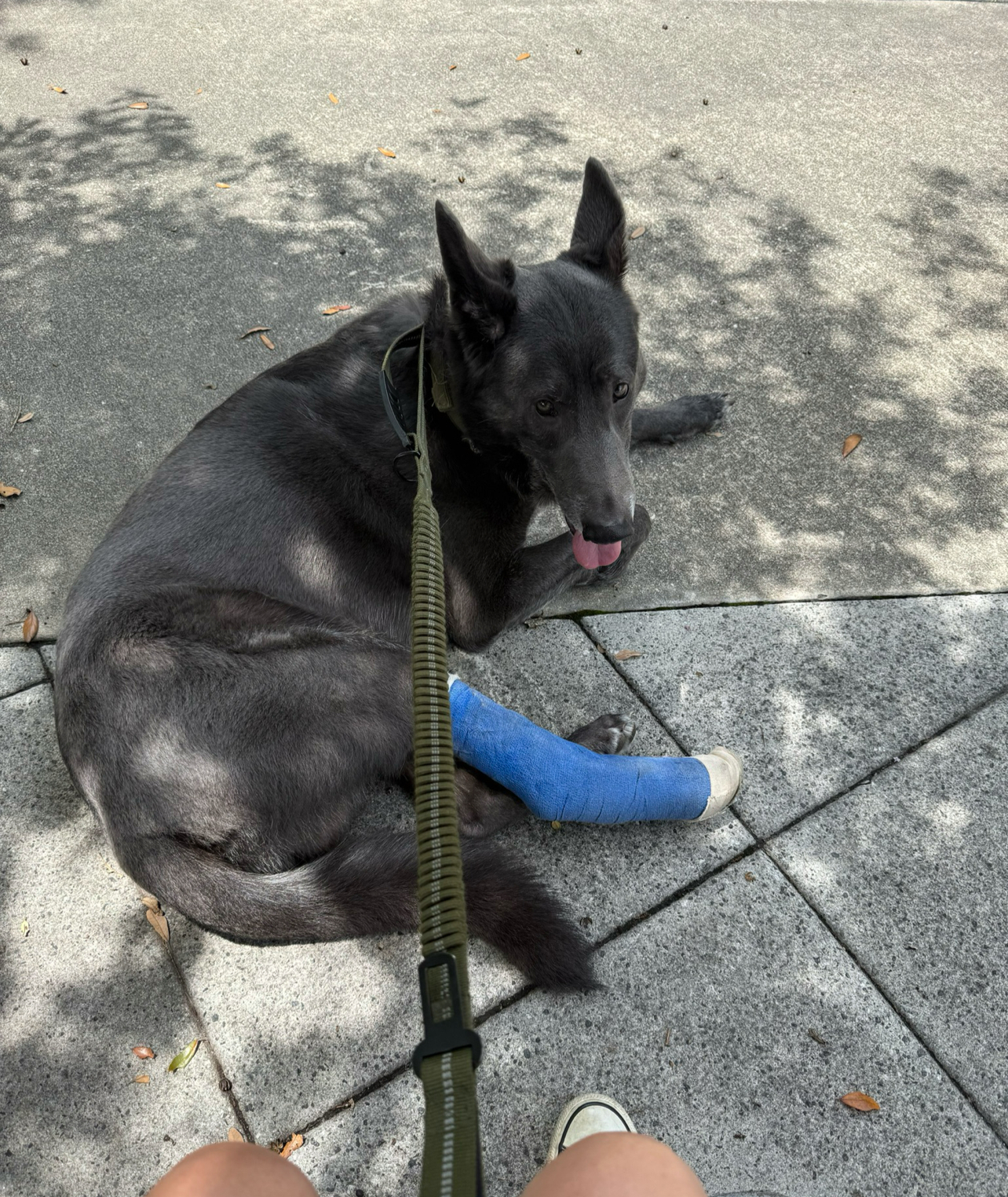
Griz's custom brace finally arrived, and we met with the UF Integrative & Mobility Medicine team to assess the fit. Unfortunately, he was not cleared to wear it because his wound had not fully healed. As noted in his medical record, "We had to place a small localized bandage to assess the general fit of the brace," and "Griz cannot wear the orthotic until his wound has completely healed... [orthotics] are likely to exacerbate an existing wound." The team recommended waiting until the wound was fully healed before beginning brace therapy.


august 2026